
Table of Contents
Retinoids are vitamin A derivatives that accelerate cell turnover from 28 days to 14–18 days, stimulate collagen I and III synthesis, regulate sebum production, and inhibit melanin formation—addressing wrinkles, acne, hyperpigmentation, and texture in a single ingredient class.
Over 500 peer-reviewed studies validate retinoids as the most effective topical anti-aging ingredient available, with prescription tretinoin (retinoic acid) representing the gold standard.
Retinoids work by binding to retinoic acid receptors (RARs) in the nucleus of skin cells, directly activating genes that produce collagen, regulate cell differentiation, and suppress matrix metalloproteinases (MMPs)—the enzymes that break down collagen and elastin. No other over-the-counter ingredient achieves this level of gene-level skin remodeling.
What Is the Retinoid Conversion Hierarchy?
All retinoids must convert to retinoic acid (tretinoin) within the skin to become active. The conversion chain determines potency: retinyl palmitate → retinol → retinaldehyde → retinoic acid. Each conversion step reduces potency by approximately 10–20x.
Tretinoin requires no conversion and delivers immediate activity—which explains both its superior efficacy and higher irritation potential.
- Tretinoin (0.025–0.1%): Prescription-only. Strongest retinoid. Visible wrinkle reduction in 12–24 weeks. Highest irritation risk.
- Retinaldehyde (0.05–0.1%): One conversion step from active form. 11x more bioavailable than retinol. Lower irritation than tretinoin.
- Retinol (0.25–1%): Most common OTC retinoid. Two conversion steps from active. Results in 16–36 weeks. Widely available at GlowBD.com.
- Retinyl palmitate (0.5–1%): Mildest retinoid. Three conversion steps. Minimal efficacy for anti-aging. Suitable only as introduction for extremely sensitive skin.
How to Start Using Retinol Without Damaging the Skin Barrier?
Start retinol at the lowest concentration (0.025–0.05%) applied every third night for 2 weeks, then every other night for 2 weeks, then nightly.
This graduated introduction allows retinoid receptors to upregulate and the barrier to adapt. Jumping to nightly use immediately causes retinoid dermatitis—peeling, redness, burning, and increased sensitivity that takes 2–4 weeks to resolve.
Apply retinol to dry skin (not damp—moisture increases penetration and irritation) 20 minutes after cleansing, when the skin’s pH has stabilized. Follow with ceramide-rich moisturizer to buffer potential irritation.
What Is the Retinol Sandwich Method?
The sandwich method applies moisturizer before and after retinol, creating a buffer that reduces irritation by 40–60% while maintaining 80–90% of the retinoid’s efficacy.
Apply a thin layer of moisturizer, wait 5 minutes, apply retinol, wait 5 minutes, apply a second moisturizer layer. This technique is essential for Bangladeshi skin types (Fitzpatrick IV–V) that carry higher risk of post-inflammatory hyperpigmentation from retinoid irritation.
What Are the Side Effects of Retinol and How to Manage Them?
Retinol causes 3 predictable side effects during the adjustment period (weeks 1–8): dryness/flaking, redness/sensitivity, and purging (temporary increase in breakouts as trapped comedones accelerate to the surface).
All 3 resolve by week 8–12 as the skin completes retinoid adaptation. Discontinue only if symptoms worsen after week 8.
Which Skin Concerns Do Retinoids Treat Most Effectively?
Retinoids deliver the strongest results for 4 concerns: fine lines and wrinkles (30–50% improvement in 24 weeks), acne (comparable to benzoyl peroxide for comedonal acne), hyperpigmentation (40–60% improvement in 16–24 weeks), and rough texture (visible smoothing within 8–12 weeks).
Retinoids address these concerns simultaneously because accelerated cell turnover benefits all four conditions through the same mechanism.
Anti-aging serums | Night creams | All anti-aging products
Frequently Asked Questions
Q: Is retinol safe for darker Bangladeshi skin tones?
A: Retinol is safe for Fitzpatrick IV–V skin tones when introduced at low concentration (0.025%) with the sandwich method. Darker skin tones produce more melanin in response to inflammation—aggressive retinoid use triggers post-inflammatory hyperpigmentation (PIH) that worsens the very concerns retinol treats. Gradual introduction prevents this response.
Q: Can retinol be used in summer or only winter?
A: Retinol can be used year-round with mandatory daily SPF 50+ PA++++ application. Retinoids increase photosensitivity by thinning the stratum corneum through accelerated cell turnover. Apply retinol at night only, and apply sunscreen every morning regardless of weather or indoor/outdoor plans.
Q: At what age should someone start using retinol?
A: Start preventive retinol at age 25–28 (0.025–0.05%) to slow collagen decline before visible signs appear. Increase to 0.5–1% at age 30–35 for active anti-aging treatment. Starting at 25 provides 15–20 years of cumulative collagen-protective benefit before the most visible aging signs develop.

You May Also Like
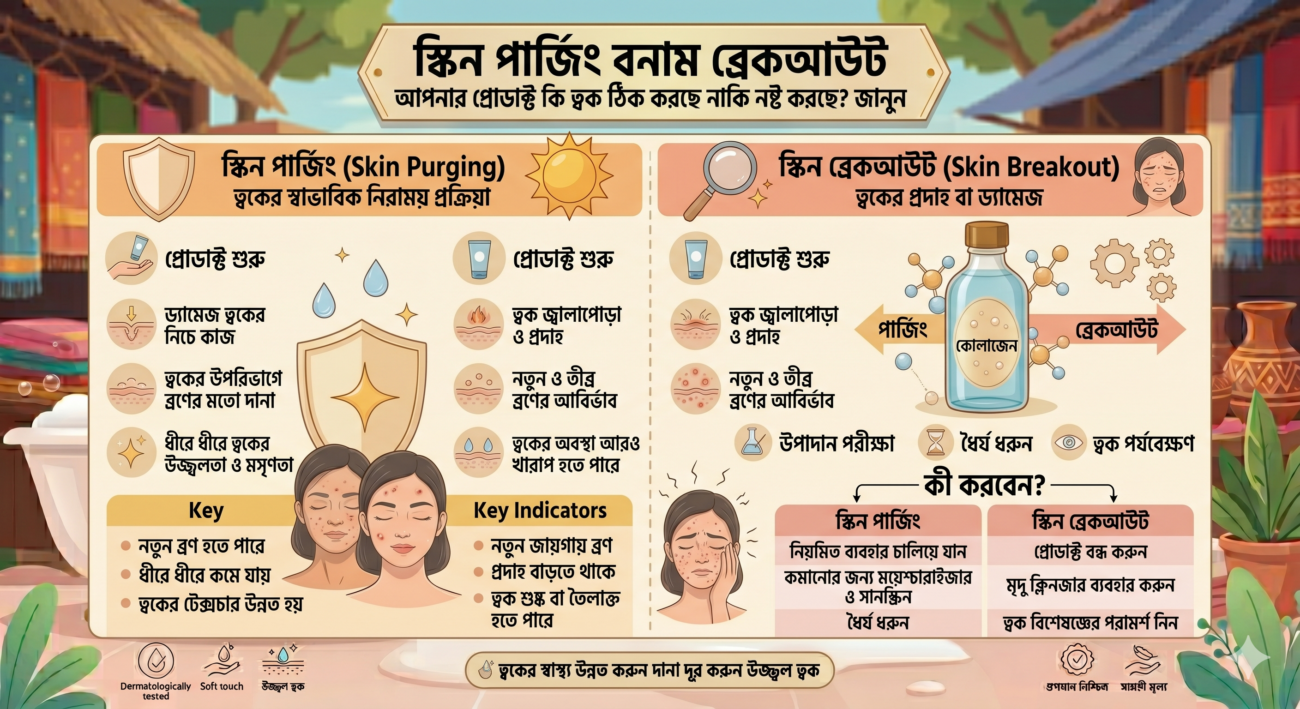
নতুন স্কিনকেয়ার প্রোডাক্ট শুরু করার পর ব্রণ বেড়ে গেছে? এখন ছেড়ে দেবেন নাকি চালিয়ে যাবেন?...
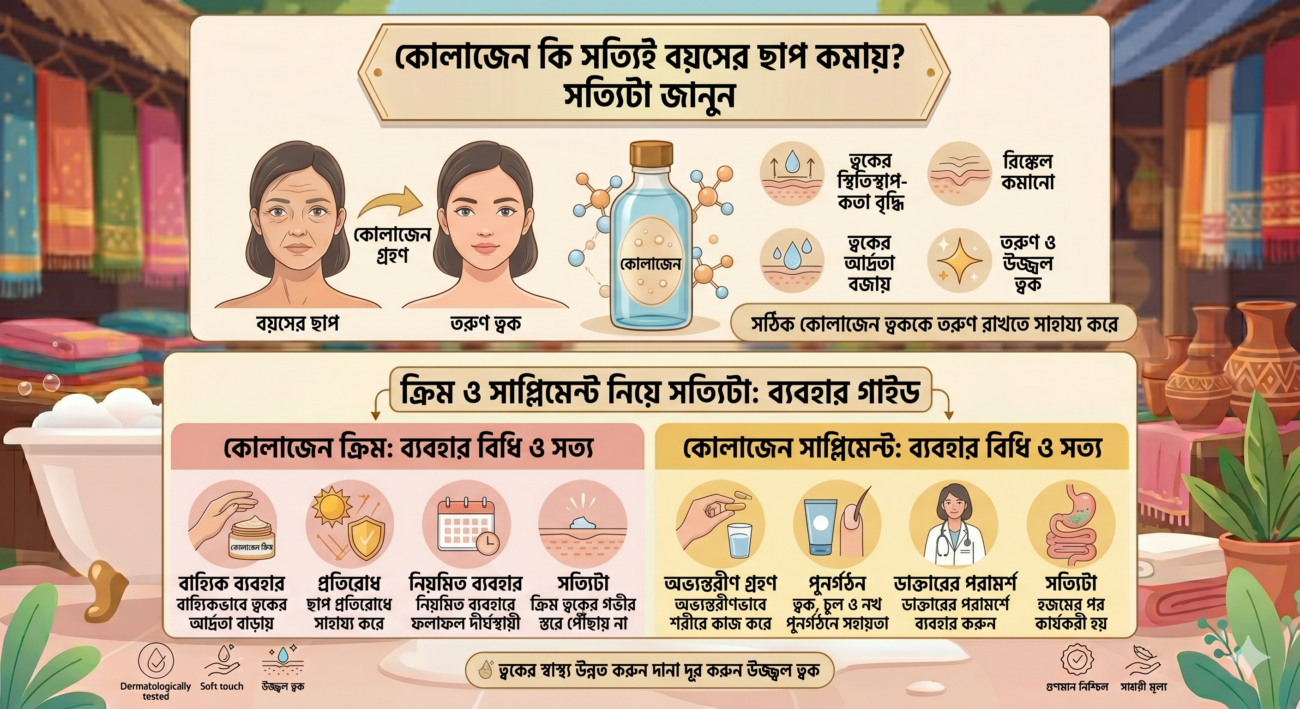
কোলাজেন — অ্যান্টি-এজিং মার্কেটে এই শব্দটা সবচেয়ে বেশি ব্যবহৃত হয়। কোলাজেন ক্রিম, কোলাজেন সাপ্লিমেন্ট, কোলাজেন...
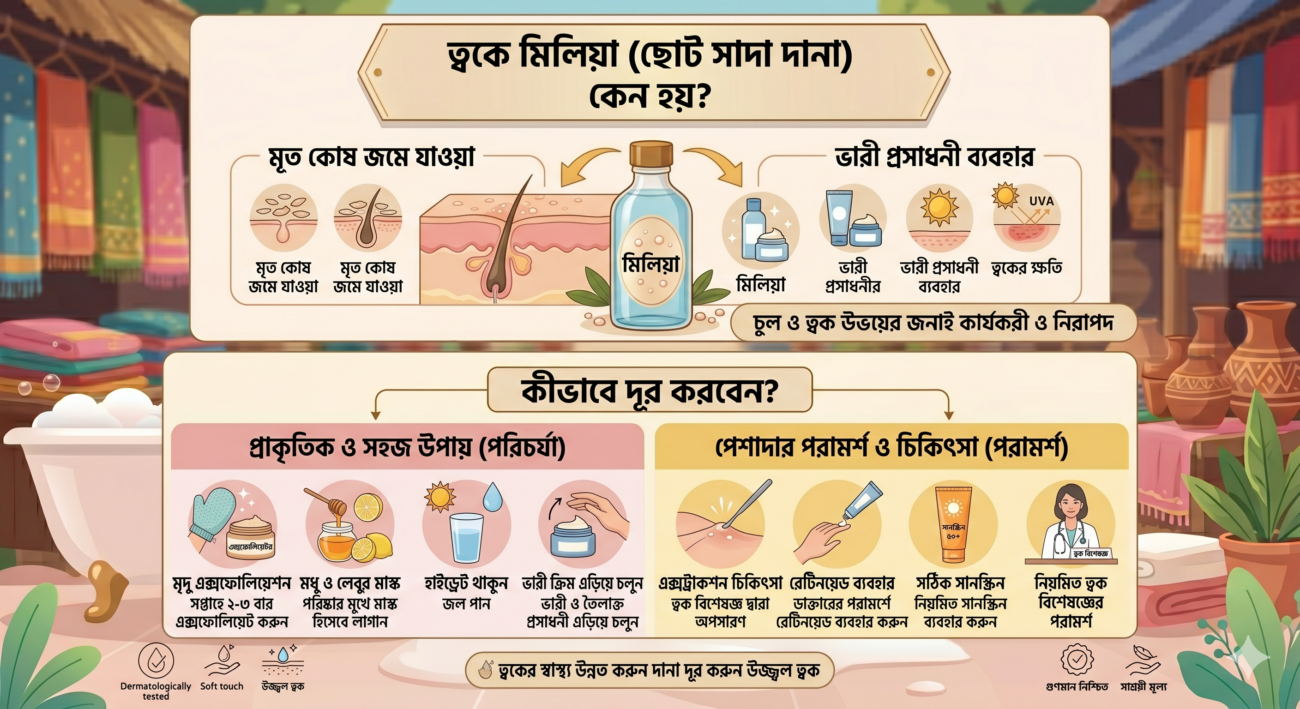
চোখের চারপাশে বা গালে ছোট ছোট শক্ত সাদা দানা দেখা দিচ্ছে? এগুলো হয়তো মিলিয়া। ব্রণের...



 Serums and Treatments
 Moisturizer
 Cleanser
 Face Mask
 Acne Treatment Products
 Sun Protection
 Skin Care Sets & Kits
 Eye Care Products
 Lip Care Products
 Toners & Exfoliators
 Active Ingredient Products
 Body Butter
 Men’s Face Wash
 Moisturizer for Men
 Men’s Hair Care Products
 Brightening Skincare Products
 Acne Skincare Products
 Pore Minimizing Products
 Anti-Aging Skincare Products
 Pigmentation Treatment Products
 Dehydration Skincare Products
 Blackheads & Whiteheads Treatment Products
 Bumpy Skin Treatment Products
 Blemish & Spot Treatment Products
 Dark Circles Treatment Products
 Sensitive Skin Care Products
