
Table of Contents
Most Bangladeshi men begin paying serious attention to skin aging in their late 30s to mid-40s — a decade or more after the cumulative UV damage, collagen loss, and expression-line formation that creates visible aging has already been accumulating. The good news: it is never too late to start anti-aging skincare, and men’s thicker dermis (approximately 25% more collagen than women’s skin) means there is proportionally more structural reserve to work with. Evidence-based anti-aging ingredients — retinol, vitamin C, peptides, and above all SPF 50 — produce measurable results even when introduced in the 40s and 50s. The key is starting with the right priorities and realistic expectations about timeline.
Shop men’s skin care , anti-aging serums , and retinoid treatments at skincare and makeup Bangladesh .
How Does Men’s Skin Age Differently?
Later onset of visible aging: Men’s thicker dermis and higher collagen density means skin aging becomes visible approximately 5–10 years later than comparable female skin. Men tend to look younger in their 30s–40s. More dramatic change when it arrives: When collagen loss accelerates in men (typically mid-40s to 50s), the change is faster and more visible than in women — from relatively smooth to significantly lined within a few years. UV damage accumulation: Bangladeshi men accumulate significantly more UV exposure than women on average (outdoor commuting, manual labour, sport, lack of SPF use) — making photoaging the primary cause of premature facial aging in men rather than intrinsic aging alone. Collagen loss rate: After age 40, collagen is lost at approximately 1–2% per year regardless of sex. Men’s larger collagen reserve means this matters less initially — but the rate accelerates with continued UV exposure without protection.
What Are the Most Important Anti-Aging Steps for Men Who Start Late?
Priority 1: SPF 50 PA++++ daily — immediately
For a man starting anti-aging skincare at 35, 40, or 50, SPF 50 applied every single morning is the most impactful intervention available. It stops new UV-induced collagen degradation — the primary driver of ongoing skin aging in Bangladesh’s UV environment. Without daily SPF, every other anti-aging ingredient is fighting a battle with one hand tied: vitamin C and retinol repair previous damage while UV continuously creates new damage. The return on SPF is higher than any other anti-aging product.
Priority 2: Retinol — the collagen rebuilder
Retinol at 0.025–0.1% used nightly is the most evidence-based OTC treatment for reversing established skin aging. For men starting in their 40s: retinol stimulates collagen synthesis in fibroblasts, normalises cell turnover, reduces fine line depth, and improves skin texture over 12–24 weeks of consistent use. Start at 0.025% (the lowest irritation risk), apply every third night for the first 4 weeks, then increase to every other night, then nightly over 3 months. Men’s thicker skin typically tolerates retinol adaptation faster than women’s with less initial peeling and redness.
Priority 3: Vitamin C serum — morning antioxidant
Vitamin C (10–15% L-ascorbic acid or ethyl ascorbic acid) applied in the morning under SPF provides antioxidant neutralisation of UV-generated free radicals that SPF does not fully block. It also directly inhibits melanin production (reducing sun spots and uneven tone common in men with years of unprotected outdoor exposure in Bangladesh) and stimulates collagen synthesis independently of retinol. The morning pairing of vitamin C + SPF 50 is the most evidence-supported anti-aging combination for daily use.
Priority 4: Peptide serum — structural repair support
Collagen-stimulating peptides (palmitoyl pentapeptide-4, palmitoyl tripeptide-1) provide additional fibroblast stimulation without the irritation of retinol — appropriate for men who find daily retinol too much initially, or as a complementary morning treatment alongside vitamin C. Peptides are safe for all skin types, have no photosensitivity risk, and can be used both morning and evening.
What Is the Optimal Men’s Anti-Aging Routine?
Morning: Gentle cleanser → vitamin C serum (10–15%) → peptide serum (optional) → lightweight moisturiser → SPF 50 PA++++. Total time: 3–4 minutes. Evening: Cleanser (double cleanse if wearing SPF) → BHA toner (for men with acne tendency) → retinol serum (0.025–0.1%) → ceramide moisturiser. Total time: 3–4 minutes. Weekly: AHA exfoliating toner or facial mask 1–2x per week to accelerate surface cell renewal and improve the texture and radiance that makes skin look younger.
What Results Are Realistic for Men Who Start Late?
With consistent application of SPF 50, retinol, and vitamin C: within 4–8 weeks, skin texture improves (smoother surface, less visible roughness); within 12–16 weeks, fine lines reduce measurably and skin tone becomes more even; within 6–12 months, deeper lines show partial improvement and collagen loss rate is significantly slowed. Existing deep static wrinkles will not disappear with topical treatment alone — professional options (chemical peels, retinoid prescriptions, Botox, radiofrequency tightening) produce faster and more dramatic results for advanced signs of aging. But even starting at 50, consistent topical anti-aging skincare produces visible, meaningful improvement within 3–6 months.
Frequently Asked Questions About Men’s Anti-Aging Skincare
Is it too late to start anti-aging skincare at 50?
No — retinol, vitamin C, and SPF produce measurable results at any age. The collagen remodelling response to retinol and the antioxidant protection from vitamin C occur regardless of age. Results take longer to appear in older skin and may be less dramatic, but consistent use always improves baseline skin quality.
Does eye cream matter for men?
The periorbital area (around the eyes) has the thinnest, most fragile skin on the face and shows aging earliest — crow’s feet, under-eye hollowing, and loss of firmness. A lightweight eye cream with peptides and caffeine (for de-puffing) applied morning and evening is a targeted addition that the general face moisturiser does not adequately cover.
How long before men see anti-aging results?
SPF prevents further UV damage immediately. Surface texture improvement: 4–8 weeks. Measurable line reduction with retinol: 12–24 weeks. Collagen density improvement: 6–12 months. Realistic expectation: meaningful visible improvement within 3–4 months of consistent full routine use.
Can men use women’s anti-aging products?
Yes — anti-aging ingredients (retinol, vitamin C, peptides, SPF) work identically in male and female skin. Men may prefer lighter textures (gel vs cream) and fragrance-free formulations. The “men’s” label on skincare is primarily marketing — any high-quality anti-aging product works for men.
What professional anti-aging treatments work best for men in Bangladesh?
Chemical peels (glycolic acid 30–50%): improve texture and even tone — 3–4 sessions. Retinoid prescription (tretinoin 0.025–0.1%): faster and more potent than OTC retinol. Botox (for expression lines): 3–4 month results for forehead and crow’s feet lines. Radiofrequency tightening: non-surgical skin tightening for loose skin at the jaw and neck. All available at dermatology clinics in Dhaka.

You May Also Like
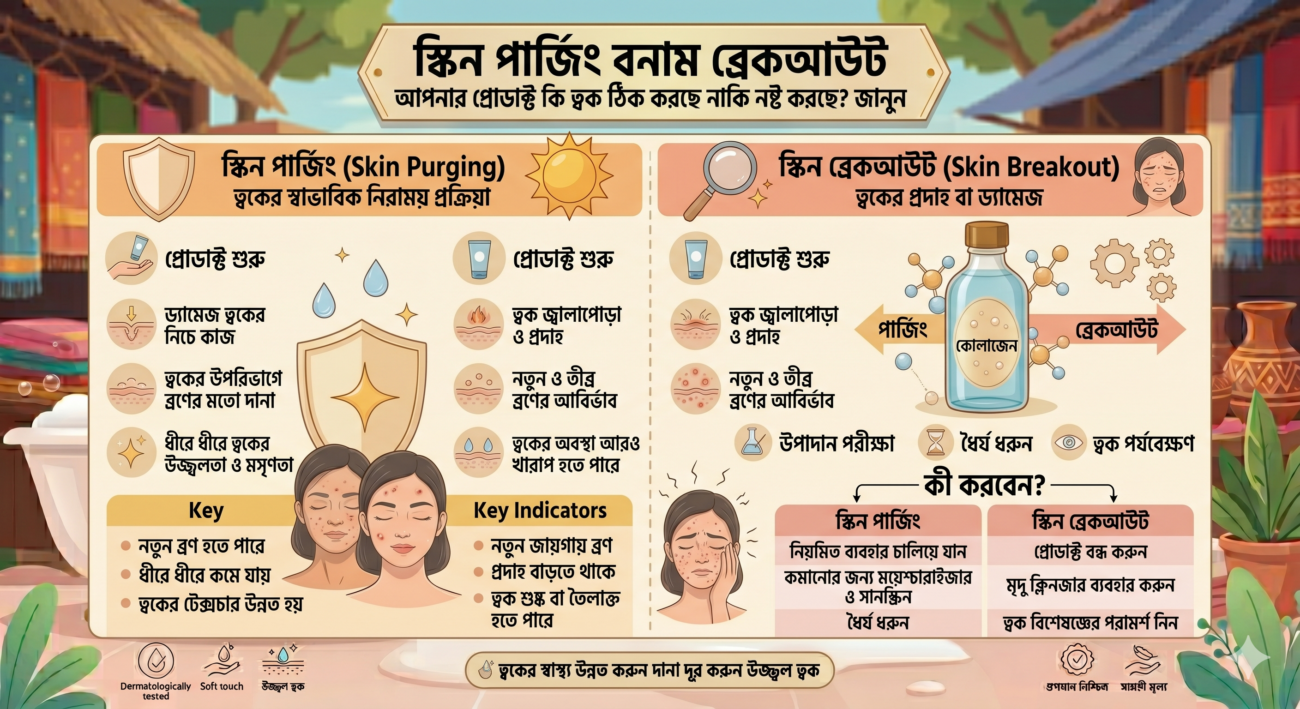
নতুন স্কিনকেয়ার প্রোডাক্ট শুরু করার পর ব্রণ বেড়ে গেছে? এখন ছেড়ে দেবেন নাকি চালিয়ে যাবেন?...

কোলাজেন — অ্যান্টি-এজিং মার্কেটে এই শব্দটা সবচেয়ে বেশি ব্যবহৃত হয়। কোলাজেন ক্রিম, কোলাজেন সাপ্লিমেন্ট, কোলাজেন...

চোখের চারপাশে বা গালে ছোট ছোট শক্ত সাদা দানা দেখা দিচ্ছে? এগুলো হয়তো মিলিয়া। ব্রণের...



 Serums and Treatments
 Moisturizer
 Cleanser
 Face Mask
 Acne Treatment Products
 Sun Protection
 Skin Care Sets & Kits
 Eye Care Products
 Lip Care Products
 Toners & Exfoliators
 Active Ingredient Products
 Body Butter
 Men’s Face Wash
 Moisturizer for Men
 Men’s Hair Care Products
 Brightening Skincare Products
 Acne Skincare Products
 Pore Minimizing Products
 Anti-Aging Skincare Products
 Pigmentation Treatment Products
 Dehydration Skincare Products
 Blackheads & Whiteheads Treatment Products
 Bumpy Skin Treatment Products
 Blemish & Spot Treatment Products
 Dark Circles Treatment Products
 Sensitive Skin Care Products
