
Table of Contents
Exfoliation is one of the most impactful steps in any skincare routine — and one of the most commonly done incorrectly. Over-exfoliation is among the most frequently reported skincare mistakes in Bangladesh: using harsh physical scrubs daily, layering multiple chemical exfoliants in a single session, or applying high-concentration AHAs without gradually adapting skin all produce the same result — a compromised skin barrier characterised by redness, increased sensitivity, breakouts, and the appearance of “thin” or “raw” skin that reacts to everything. This guide provides the complete framework for effective, safe exfoliation that delivers results without barrier damage.
Shop chemical exfoliators , exfoliating toners , and exfoliating cleansers at skincare and makeup Bangladesh .
What Is Exfoliation and Why Does the Skin Need It?
The skin naturally sheds approximately 30,000–40,000 dead skin cells per day through a process called desquamation — the enzymatic breakdown of the protein bonds (desmosomes) holding corneocytes (dead surface cells) together. This process slows significantly with age, sun damage, and humidity disruption. When dead cells accumulate on the surface rather than shedding efficiently, they create visible dullness, rough texture, blocked follicles (blackheads, whiteheads, milia), and reduced penetration of subsequently applied skincare actives. Exfoliation — whether chemical or physical — accelerates this natural shedding process. The goal is to assist, not overwhelm, the skin’s own renewal system.
The Correct Way to Use Chemical Exfoliants
How do you introduce an AHA toner without irritation?
Week 1–2: Apply the AHA toner to cleansed skin 2 nights per week (e.g., Monday and Thursday evenings). Allow to absorb for 1–2 minutes, then apply moisturiser immediately after. This initial frequency gives skin time to adapt the desquamation enzyme activity upward. Week 3–4: Increase to 3 nights per week if no irritation (redness, tightness, flaking) has occurred. Week 5–8: Increase to 4–5 nights per week if skin remains comfortable. This is the target maintenance frequency for most AHA toners at 5–10% concentration. Morning after AHA: Always apply SPF 50 PA++++ — AHA use increases photosensitivity by 15–25% for 24–48 hours after application. Skipping SPF after AHA use causes faster UV-induced pigmentation, counteracting the AHA’s PIH-fading benefits.
How do you introduce a BHA toner safely?
BHA (salicylic acid 1–2%) is generally better tolerated than AHA in the introduction phase because it is anti-inflammatory as well as exfoliating. Start at 3 nights per week, increase to daily use over 4–6 weeks for oily and acne-prone skin. BHA can be used daily at 1–2% without barrier disruption once adapted — this is actually its most effective usage frequency for ongoing pore clearance.
Signs of Over-Exfoliation — and What to Do
How do you know if you’re over-exfoliating?
Over-exfoliation presents as: persistent redness or flushing that does not resolve within 24 hours after exfoliant application; tightness or stinging when applying moisturiser to cleansed skin; new breakouts in unusual patterns or locations (not your typical acne zones); skin that looks shiny, raw, or “thin” in texture; increased sensitivity to products that were previously tolerated. These signs indicate the skin barrier has been compromised — the lipid layer between cells has been over-stripped, increasing TEWL and leaving nerve endings more exposed.
What to do when you’ve over-exfoliated
Step 1: Stop all chemical and physical exfoliation immediately. Step 2: Simplify your routine to 3 products: a gentle, fragrance-free cleanser → ceramide-rich moisturiser → SPF 50. Nothing else. Step 3: Apply centella asiatica serum or aloe vera gel (fragrance-free) after cleansing — reduces the inflammatory response and supports barrier repair. Step 4: Continue the simplified routine for 7–14 days until the redness, sensitivity, and rawness resolve. Step 5: Reintroduce exfoliation from the beginning — start at 1–2 nights per week with the lowest available concentration, not where you left off.
Exfoliation Rules for Different Skin Types in Bangladesh
Oily and acne-prone skin: BHA toner (salicylic acid 2%) up to daily — the anti-inflammatory properties make it well tolerated at high frequency. AHA 3–4x per week for surface brightening in addition to BHA. Combination skin: AHA/BHA toner 3–4 nights per week. Apply BHA to the T-zone only on additional nights if the T-zone needs extra attention. Dry skin: Lactic acid AHA 2–3x per week only. Lactic acid is simultaneously exfoliating and humectant — it does not dry skin the way glycolic acid can. Sensitive and rosacea skin: PHA toner (gluconolactone) 1–2x per week — the only exfoliant appropriate for rosacea and very reactive skin. Avoid AHA and BHA during active flares. Fitzpatrick IV–VI (darker skin tones): Begin with mandelic acid (the lowest-irritancy AHA) before transitioning to glycolic acid. The risk of post-exfoliation PIH is higher in darker tones with aggressive exfoliation. Introduce slowly.
Exfoliation Mistakes to Avoid
Mistake 1 — Using a physical scrub and a chemical exfoliant on the same day: Double exfoliation in a single session doubles barrier disruption risk. Use one method per session. Mistake 2 — Applying retinol on the same night as AHA or BHA: Both retinol and acids exfoliate through different mechanisms — combining them causes additive irritation. Use retinol and acids on alternating nights. Mistake 3 — Skipping moisturiser after exfoliation: Chemical exfoliants temporarily increase TEWL — always follow with moisturiser to seal the skin surface. Mistake 4 — Using hot water to rinse off an acid exfoliant: Hot water raises skin pH and increases acid irritation. Use cool or lukewarm water. Mistake 5 — Exfoliating sunburned or UV-stressed skin: Never exfoliate skin that is already compromised from sun exposure. Wait until the skin has recovered before resuming exfoliation.
Frequently Asked Questions About Safe Exfoliation
How often should you exfoliate in Bangladesh’s climate?
Oily skin in humidity: BHA daily, AHA 3–4x/week. Normal and combination skin: AHA or combined AHA/BHA 3–4x/week. Dry skin: lactic acid AHA 2–3x/week. Sensitive skin: PHA 1–2x/week.
Can you exfoliate every day?
BHA (salicylic acid 1–2%) can be used daily for adapted oily and acne-prone skin. AHA at 5–10% daily use is possible for adapted skin but not recommended in the introduction phase. PHAs are suitable for daily use from the start. Physical scrubs should never be used daily on the face.
Should you exfoliate before or after cleansing?
After cleansing — apply exfoliants to clean, dry skin. Sebum and product residue on uncleansed skin reduces acid penetration and consistency. Leave-on exfoliants (AHA/BHA toners) are applied after cleansing as the first treatment step.
Can you exfoliate if you have active acne?
Yes — BHA (salicylic acid) is specifically beneficial for active acne, penetrating into pores and reducing C. acnes bacterial counts. Avoid physical scrubs on inflamed acne — friction worsens inflammation and spreads bacteria. Chemical BHA exfoliation is the recommended approach for active acne.
Does exfoliation cause purging?
Yes — AHA, BHA, and PHA exfoliants accelerate cell turnover, which brings pre-existing microcomedones (blocked follicles developing beneath the surface) to the surface faster. This creates a temporary increase in breakouts (purging) in the first 2–4 weeks. Purging resolves with continued use. Purging occurs only in your usual breakout zones — new breakout locations indicate product irritation, not purging.

You May Also Like
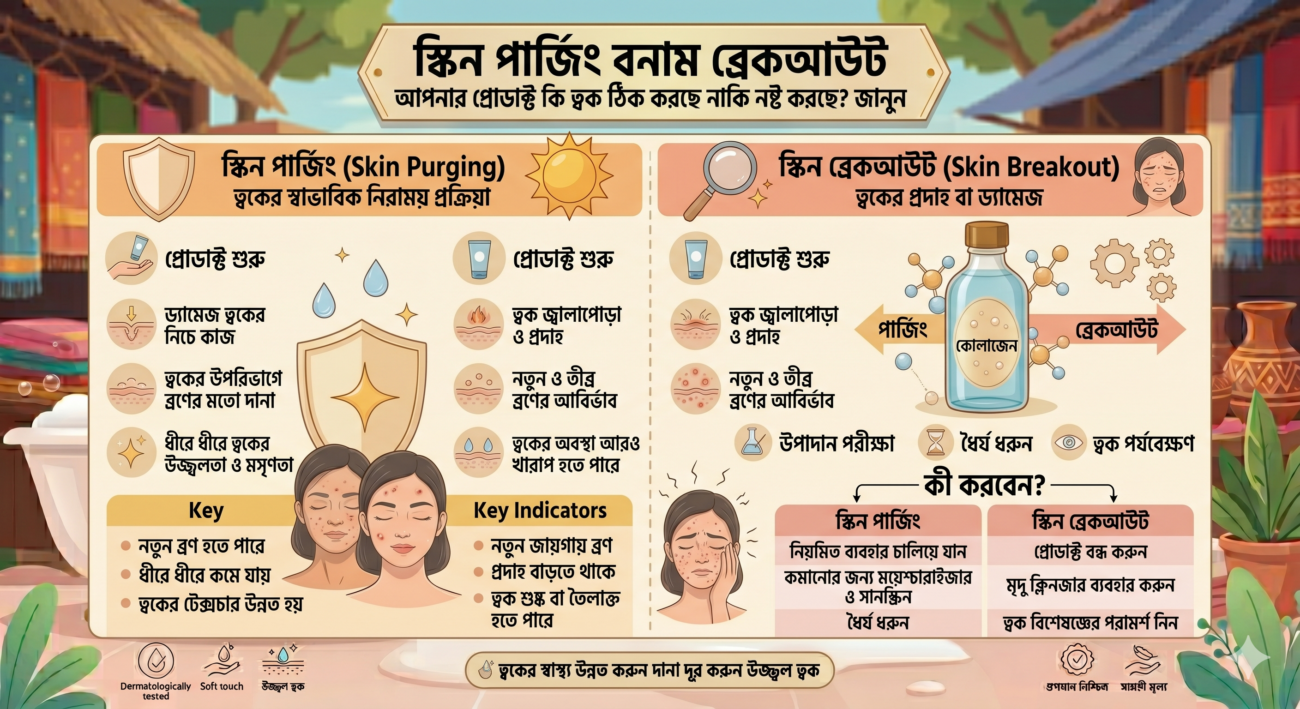
নতুন স্কিনকেয়ার প্রোডাক্ট শুরু করার পর ব্রণ বেড়ে গেছে? এখন ছেড়ে দেবেন নাকি চালিয়ে যাবেন?...
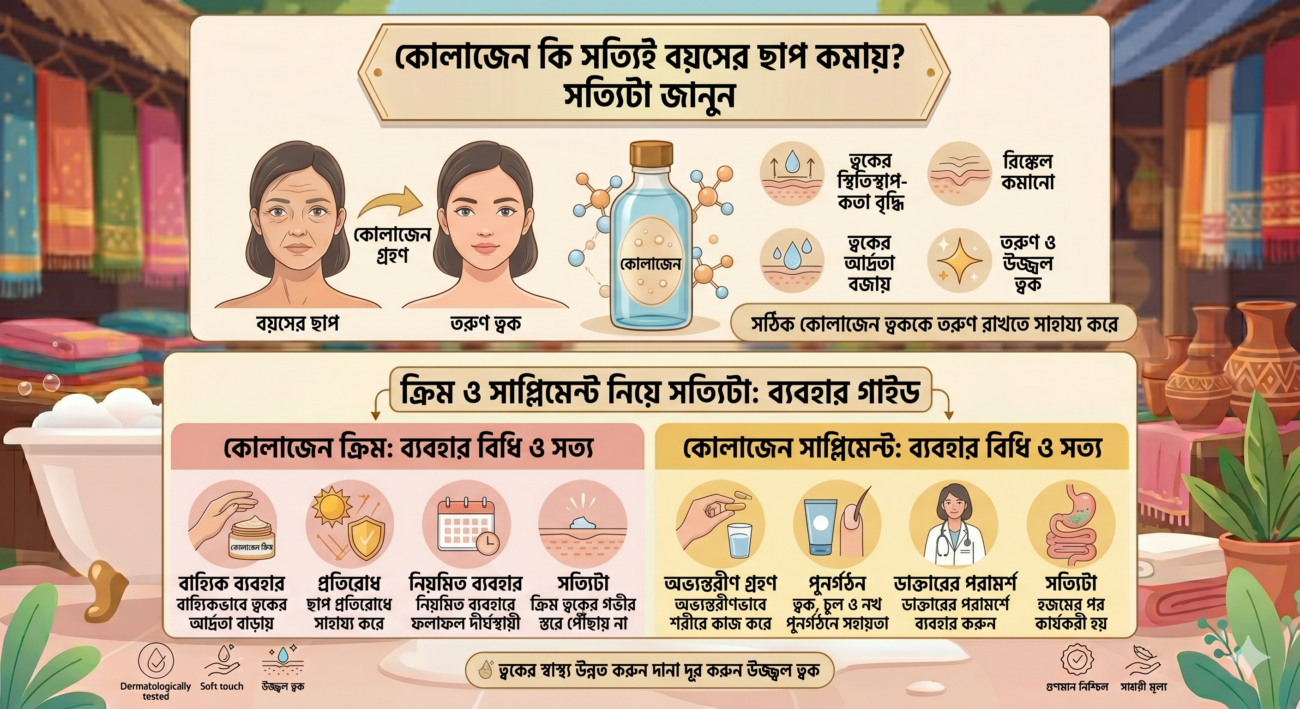
কোলাজেন — অ্যান্টি-এজিং মার্কেটে এই শব্দটা সবচেয়ে বেশি ব্যবহৃত হয়। কোলাজেন ক্রিম, কোলাজেন সাপ্লিমেন্ট, কোলাজেন...
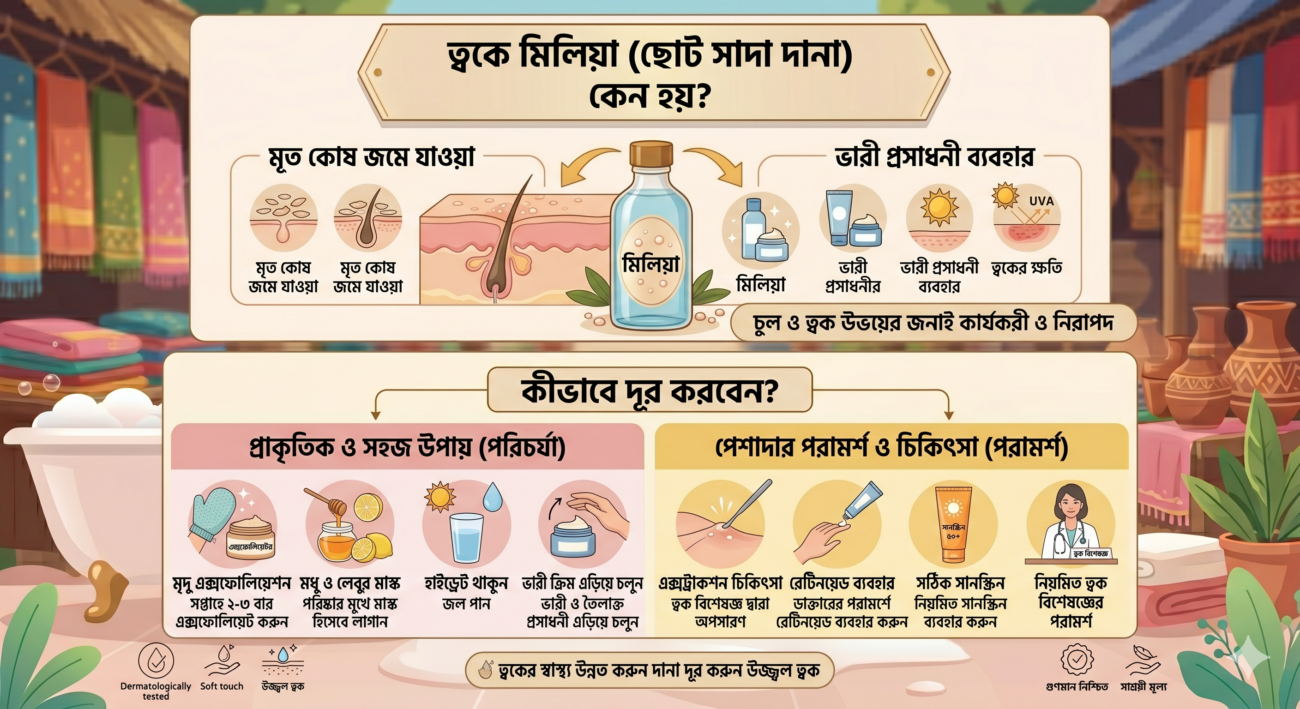
চোখের চারপাশে বা গালে ছোট ছোট শক্ত সাদা দানা দেখা দিচ্ছে? এগুলো হয়তো মিলিয়া। ব্রণের...



 Serums and Treatments
 Moisturizer
 Cleanser
 Face Mask
 Acne Treatment Products
 Sun Protection
 Skin Care Sets & Kits
 Eye Care Products
 Lip Care Products
 Toners & Exfoliators
 Active Ingredient Products
 Body Butter
 Men’s Face Wash
 Moisturizer for Men
 Men’s Hair Care Products
 Brightening Skincare Products
 Acne Skincare Products
 Pore Minimizing Products
 Anti-Aging Skincare Products
 Pigmentation Treatment Products
 Dehydration Skincare Products
 Blackheads & Whiteheads Treatment Products
 Bumpy Skin Treatment Products
 Blemish & Spot Treatment Products
 Dark Circles Treatment Products
 Sensitive Skin Care Products
