
Table of Contents
A full-body skincare routine covers 4 care zones in sequence: face (6 steps) → body (4 steps) → hair (3 steps) → sun protection (face + body) , requiring a total of 30–45 minutes for the complete routine. Most skincare guides address only the face — neglecting the body and hair means inconsistent overall skin health outcomes.
All full-body skincare products — from face serums to body lotions, hair oils, and body SPF — are available with cosmetics with fast delivery BD at GlowBD.
Why Is a Full-Body Routine More Effective Than a Face-Only Routine?
A full-body routine produces superior outcomes because body skin covering 95% of total surface area experiences the same UV damage, pollution exposure, and dehydration as facial skin — but receives 0% of the targeted treatment that face-only routines provide . Sun-exposed body skin (arms, décolletage, neck) accumulates photoaging at the same rate as the face without SPF and antioxidant protection.
What Are the 6 Steps of the Face Routine in a Full-Body Protocol?
The facial component of the full-body morning routine covers 6 steps: cleanser → toner → Vitamin C serum → eye cream → moisturizer → SPF 50 . The evening facial routine adds double cleansing as the first step and replaces SPF with a night cream.
All facial skincare products — from cleansers to serums — are available in the skincare category at GlowBD with formulations for every skin type and concern.
What Are the 4 Steps of a Body Skincare Routine?
Body Step 1: How Should the Body Be Cleansed?
Body cleansing uses a pH-balanced (5.5) body wash with moisturizing ingredients — alkaline bar soap strips the body’s acid mantle, causing dryness and increasing susceptibility to fungal infections in Bangladesh’s humidity .
Use a moisturizing body wash with glycerin and ceramides. Limit shower temperature to lukewarm — hot showers strip body skin lipids faster than facial cleansing strips facial lipids, causing widespread post-shower dryness.
Body Step 2: How Should Body Exfoliation Be Done?
Body exfoliation should be performed 2x per week using a physical or chemical body scrub to remove the dead skin cell buildup that causes dullness, uneven tone, and rough texture on arms, legs, and back. Apply to damp skin during the shower using circular motions, then rinse.
Avoid daily body scrubbing — the body’s skin barrier is thicker than the face but still disrupted by over-exfoliation, causing increased dryness and sensitivity in low-humidity periods.
Body Step 3: What Body Moisturizer Should Be Applied and When?
A ceramide or shea butter body lotion applied to damp skin within 3 minutes of showering is the most effective body moisturizing technique — the “wet skin application” method traps residual shower moisture in the stratum corneum, producing 40–60% greater hydration retention than application to fully dry skin.
Apply body lotion or ceramide body cream immediately after patting the body. Focus on dry-prone areas: shins, elbows, knees, and heels. Reapply to exposed areas in air-conditioned environments during the day.
Body Step 4: Does the Body Need SPF?
Body SPF is required for all exposed skin areas — arms, neck, décolletage, and legs. Bangladesh’s UV Index 8–11 causes photoaging and hyperpigmentation on arm skin at the same rate as facial skin without equivalent SPF protection .
Apply a broad-spectrum body SPF 30–50 to all exposed body areas after body moisturizer, every morning. Use a body-specific SPF formula — these cover larger surface areas more efficiently and cost less per application than facial SPF products.
What Are the 3 Steps of a Hair Care Routine?
Hair Step 1: How Should Bangladeshi Hair Be Shampooed?
Bangladeshi hair (typically oily scalp, dry mid-lengths and ends from humidity variation) requires shampooing the scalp only — not the full hair length , using a scalp-appropriate formula based on scalp type. Oily scalps use a clarifying shampoo 3x per week; dry scalps use a moisturizing shampoo 2x per week. Apply shampoo at the root, massage for 60 seconds, rinse fully.
Select a shampoo for your scalp type from the GlowBD hair care range. Over-shampooing (daily washing) strips scalp sebum, triggering compensatory overproduction that worsens oiliness within 24 hours.
Hair Step 2: How and When Should Conditioner Be Applied?
Conditioner is applied to the mid-lengths and ends only — never the scalp — and left for 2–3 minutes before rinsing . Scalp conditioner application blocks hair follicles and causes scalp congestion. Conditioner replenishes the moisture at the dry ends of Bangladeshi hair without adding oil to the already-sebum-rich scalp zone.
Hair Step 3: When Should Hair Oil or Serum Be Applied?
Hair oil is applied to damp hair mid-lengths and ends after washing, before drying — not to dry hair as a styling product , which coats the surface without penetrating to provide nourishment. 2–3 drops of lightweight hair oil (argan, squalane, or jojoba) provides protection during heat styling and reduces frizz in Bangladesh’s humidity.
How Long Does a Full Head-to-Toe Routine Take?
A complete head-to-toe morning routine takes 35–45 minutes: shower including body wash + shampoo + conditioner (15 min) + body moisturizer + body SPF (5 min) + facial routine (10 min) + hair oil application (2 min) . The evening routine takes 20–25 minutes: facial double cleanse + serum + night cream (12 min) + body moisturizer (5 min) + hair mask or oil treatment (3 min).
Frequently Asked Questions: Full-Body Skincare Routine
Should body skin be treated with the same products as facial skin?
Body skin and facial skin require different formulations — body skin has fewer sebaceous glands per cm², a thicker stratum corneum, and larger surface area requiring cost-efficient application. Facial serums and actives are too expensive and concentrated for full-body use; body-specific moisturizers and SPF formulations cover larger areas efficiently without sacrificing efficacy.
How often should body exfoliation be done in Bangladesh?
Body exfoliation should be performed 2x per week in Bangladesh year-round — monsoon humidity and summer sweat increase the rate of dead skin cell accumulation on the body, while winter dryness increases visible flakiness on shins and elbows. More than 3x per week causes barrier disruption; less than once per week allows dead cell buildup that reduces body moisturizer absorption.
Does neck and décolletage need the same skincare as the face?
The neck and décolletage require the same active ingredients as the face — SPF 50 daily, Vitamin C serum for UV protection, and retinol or peptides for collagen support. The neck shows aging signs as early as the face and is exposed to the same UV radiation without receiving the same skincare attention in most routines.
What is the best hair care routine for Bangladeshi climate?
The best hair care routine for Bangladesh’s climate is: scalp-only shampoo with a clarifying formula 3x per week (oily scalp) or moisturizing formula 2x per week (dry scalp); conditioner applied mid-lengths and ends only; and 2–3 drops of argan or jojoba oil applied to damp ends before drying. This routine manages Bangladesh’s oily scalp + dry ends combination caused by humidity variation between seasons.
How does Bangladesh’s humidity affect body skin differently from facial skin?
Bangladesh’s humidity affects body skin by increasing sweating-driven bacterial and fungal growth on the torso, arms, and back — areas covered by clothing that trap humidity. Body skin in monsoon season requires antibacterial body wash (zinc pyrithione or tea tree), more frequent exfoliation to prevent folliculitis, and non-comedogenic body moisturizer that does not trap heat.

You May Also Like
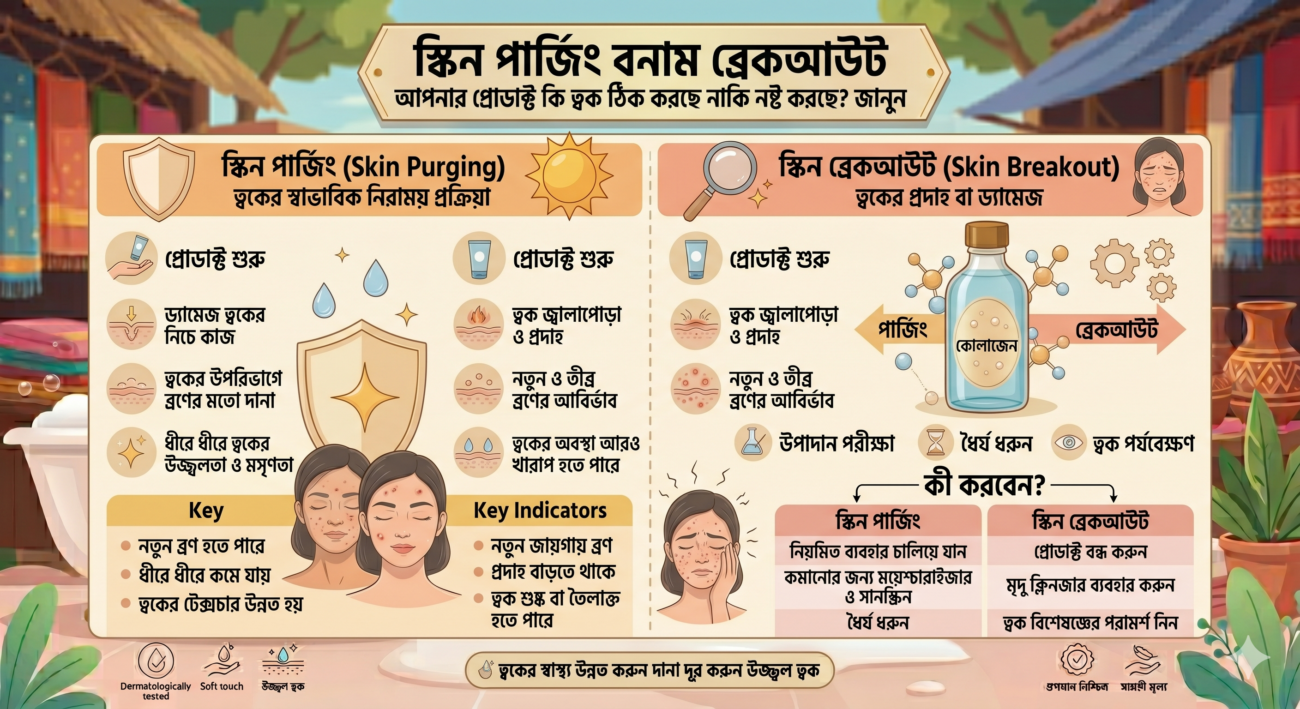
নতুন স্কিনকেয়ার প্রোডাক্ট শুরু করার পর ব্রণ বেড়ে গেছে? এখন ছেড়ে দেবেন নাকি চালিয়ে যাবেন?...
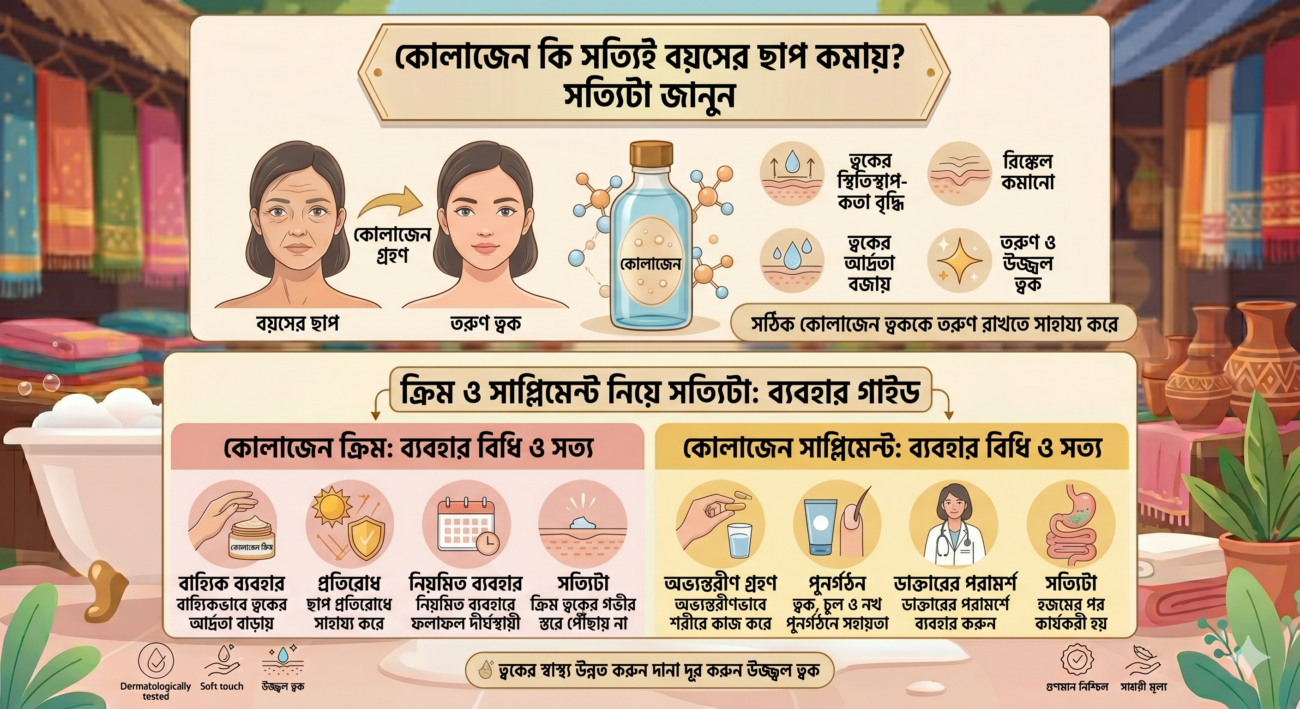
কোলাজেন — অ্যান্টি-এজিং মার্কেটে এই শব্দটা সবচেয়ে বেশি ব্যবহৃত হয়। কোলাজেন ক্রিম, কোলাজেন সাপ্লিমেন্ট, কোলাজেন...
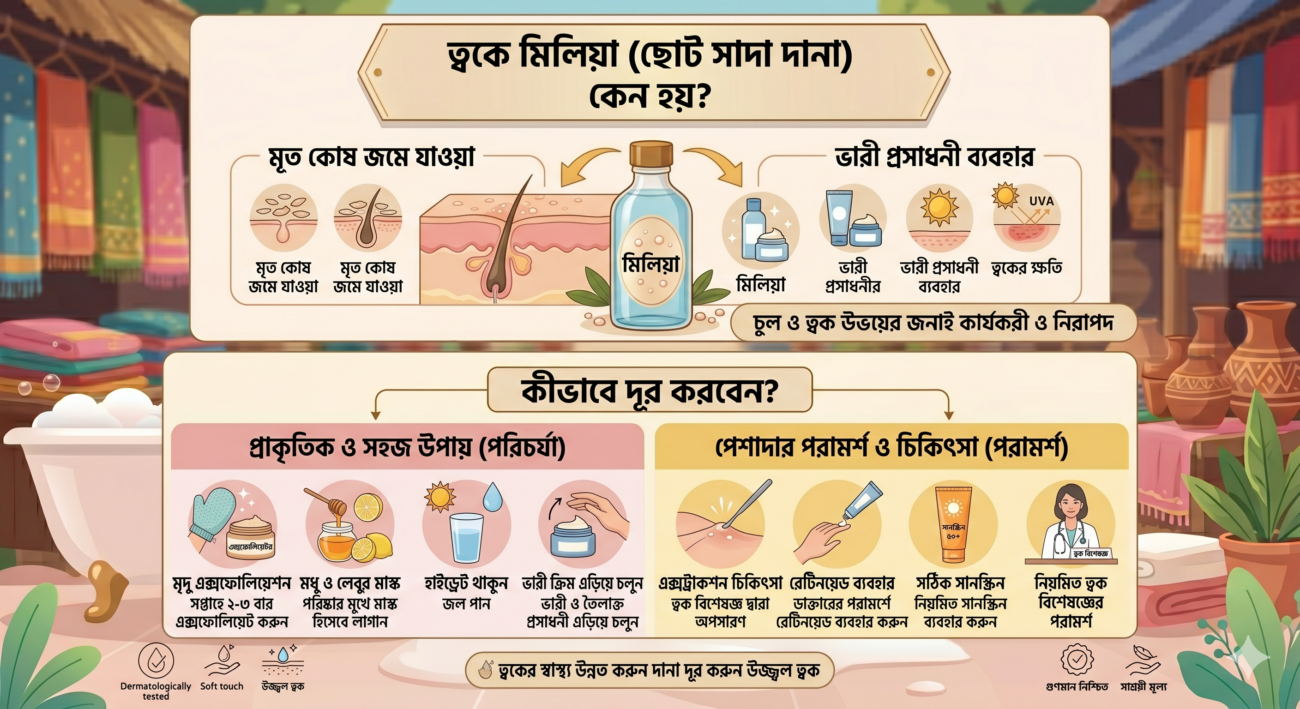
চোখের চারপাশে বা গালে ছোট ছোট শক্ত সাদা দানা দেখা দিচ্ছে? এগুলো হয়তো মিলিয়া। ব্রণের...



 Serums and Treatments
 Moisturizer
 Cleanser
 Face Mask
 Acne Treatment Products
 Sun Protection
 Skin Care Sets & Kits
 Eye Care Products
 Lip Care Products
 Toners & Exfoliators
 Active Ingredient Products
 Body Butter
 Men’s Face Wash
 Moisturizer for Men
 Men’s Hair Care Products
 Brightening Skincare Products
 Acne Skincare Products
 Pore Minimizing Products
 Anti-Aging Skincare Products
 Pigmentation Treatment Products
 Dehydration Skincare Products
 Blackheads & Whiteheads Treatment Products
 Bumpy Skin Treatment Products
 Blemish & Spot Treatment Products
 Dark Circles Treatment Products
 Sensitive Skin Care Products
