
Table of Contents
Essential oils are concentrated plant extracts containing volatile aromatic compounds that provide antimicrobial, anti-inflammatory, and antioxidant benefits when diluted to safe concentrations (0.5–2% for face, 1–5% for body) in carrier oils.
Undiluted essential oils contain allergens and irritants (linalool, limonene, citral) that cause contact dermatitis in 1–3% of the general population—making proper dilution and patch testing essential safety practices.
The skincare industry uses essential oils for two purposes: therapeutic benefits (tea tree for acne, chamomile for inflammation) and fragrance (lavender, rose). Understanding the distinction helps consumers choose products that deliver genuine skin benefits rather than simply pleasant scent.
Which Essential Oils Have Proven Skincare Benefits?
3 essential oils carry clinical evidence for skincare application: tea tree oil (antibacterial against Propionibacterium acnes at 5% concentration, comparable to 5% benzoyl peroxide for mild acne), chamomile (bisabolol reduces inflammation and redness by 25–40%), and rosehip (rich in trans-retinoic acid, a natural retinoid that improves photodamage).
Other essential oils marketed for skincare—lavender, peppermint, eucalyptus—provide aromatherapy benefits but limited dermatological evidence for topical skin improvement.
Essential oil products at GlowBD | All oils | Face oils | Body oils
What Are the Risks of Essential Oils on Skin?
Essential oils carry 4 dermatological risks: contact dermatitis (allergic reaction to specific compounds), phototoxicity (citrus oils cause severe burns under UV exposure), skin barrier disruption (volatile compounds dissolve lipids), and sensitization (repeated exposure develops allergy over time).
These risks apply only to undiluted or improperly diluted essential oils—properly formulated products at 0.5–2% concentration minimize these concerns.
How to Use Essential Oils Safely in Skincare?
Always dilute essential oils in a carrier oil (jojoba, squalane, argan) before skin application: 1–2% for face (1–2 drops per teaspoon of carrier), 2–5% for body.
Never apply undiluted essential oils directly to skin. Perform a 48-hour patch test on the inner forearm before facial use. Avoid citrus essential oils (lemon, lime, bergamot, grapefruit) before sun exposure—they contain furocoumarins that cause phototoxic burns at UV Index above 3.
Frequently Asked Questions
Q: Are essential oils safe for sensitive skin?
A: Most essential oils are not recommended for sensitive skin due to their volatile compound content. The exceptions are chamomile (bisabolol) and centella-derived oils, which demonstrate anti-inflammatory rather than irritant effects. Sensitive skin benefits more from fragrance-free formulations with ceramides, panthenol, and centella extract.
Q: Can tea tree oil replace acne medication?
A: Tea tree oil at 5% concentration shows efficacy comparable to 5% benzoyl peroxide for mild comedonal acne, with fewer side effects but slower onset of action (12 weeks vs. 4–8 weeks). It does not replace prescription treatments for moderate-to-severe inflammatory or cystic acne. Use tea tree as a spot treatment alongside a complete acne-care routine

You May Also Like
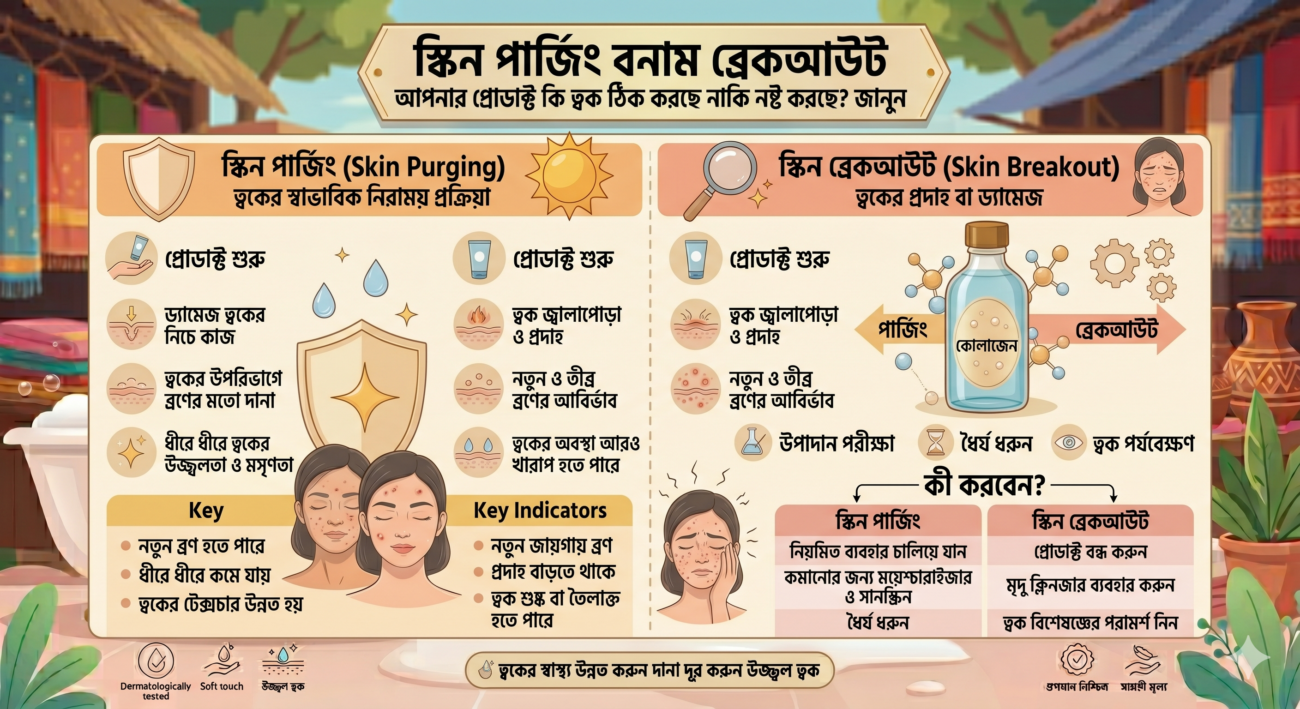
নতুন স্কিনকেয়ার প্রোডাক্ট শুরু করার পর ব্রণ বেড়ে গেছে? এখন ছেড়ে দেবেন নাকি চালিয়ে যাবেন?...

কোলাজেন — অ্যান্টি-এজিং মার্কেটে এই শব্দটা সবচেয়ে বেশি ব্যবহৃত হয়। কোলাজেন ক্রিম, কোলাজেন সাপ্লিমেন্ট, কোলাজেন...

চোখের চারপাশে বা গালে ছোট ছোট শক্ত সাদা দানা দেখা দিচ্ছে? এগুলো হয়তো মিলিয়া। ব্রণের...



 Serums and Treatments
 Moisturizer
 Cleanser
 Face Mask
 Acne Treatment Products
 Sun Protection
 Skin Care Sets & Kits
 Eye Care Products
 Lip Care Products
 Toners & Exfoliators
 Active Ingredient Products
 Body Butter
 Men’s Face Wash
 Moisturizer for Men
 Men’s Hair Care Products
 Brightening Skincare Products
 Acne Skincare Products
 Pore Minimizing Products
 Anti-Aging Skincare Products
 Pigmentation Treatment Products
 Dehydration Skincare Products
 Blackheads & Whiteheads Treatment Products
 Bumpy Skin Treatment Products
 Blemish & Spot Treatment Products
 Dark Circles Treatment Products
 Sensitive Skin Care Products
