
Table of Contents
Chemical exfoliating toners — formulated with AHAs (alpha hydroxy acids), BHAs (beta hydroxy acids), or PHAs (polyhydroxy acids) — are the most effective leave-on exfoliant format available in skincare. They remove dead skin cells through chemical bonds rather than physical friction, producing smoother texture, clearer pores, and more even skin tone without the microtrauma of physical scrubs. For Bangladesh, where post-acne hyperpigmentation, oily pores, and humidity-driven congestion are endemic skin concerns, the right exfoliating toner is one of the most impactful products in a routine. The challenge is choosing between the three acid types, each suited to different concerns.
Shop AHA/BHA exfoliating toners , chemical exfoliant toners , and exfoliating toner pads at the GlowBD online shop .
What Is the Difference Between AHA, BHA, and PHA?
What does AHA toner do?
AHAs (glycolic acid, lactic acid, mandelic acid) are water-soluble acids that exfoliate the skin surface — dissolving the bonds between dead skin cells (corneodesmosomes) so they shed more efficiently. AHAs do not penetrate pores. Primary benefits: smoother texture, reduced hyperpigmentation (PIH and sun spots), improved skin radiance. Best for: normal, dry, and combination skin; post-acne dark spots; sun-damaged skin. Not ideal for: very oily skin with significant blackhead congestion (BHA is superior for this).
What does BHA toner do?
BHA (salicylic acid) is an oil-soluble acid that penetrates the lipid layer inside hair follicles, dissolving sebum and dead-cell plugs within the pore. Primary benefits: blackhead and whitehead reduction, oil control, reduced inflammatory acne. Best for: oily and acne-prone skin; blackhead-congested T-zones; skin with visible enlarged pores. Most effective format for Bangladesh’s high-humidity, high-sebum environment where pore congestion is the primary concern for a significant proportion of the population.
What does PHA toner do?
PHAs (gluconolactone, lactobionic acid) are large-molecule polyhydroxy acids that exfoliate even more slowly and superficially than mandelic acid. Their size (too large to penetrate deeply) makes them the gentlest chemical exfoliants available. PHAs are also humectants — they attract moisture while exfoliating. Primary benefits: gentle exfoliation with simultaneous hydration; suitable for sensitive and rosacea-prone skin; minimal irritation. Best for: Fitzpatrick IV–VI skin with PIH risk from stronger acids; rosacea; eczema; beginners to chemical exfoliation.
Which Exfoliating Toner Is Right for Your Skin Type?
Oily and acne-prone skin: 2% salicylic acid (BHA) toner — used 5–7 nights per week once adapted; the most effective OTC pore-clearing exfoliant. Combination skin: BHA on the T-zone; lactic acid (AHA) on the dry U-zone — or use a combined AHA/BHA toner on the full face 3–4 nights per week. Dry skin: Lactic acid (AHA) toner at 5–10% — provides exfoliation and hydration simultaneously. Sensitive skin: PHA toner — gentlest exfoliation with hydrating benefits; safe for daily use. PIH and dark spots: Glycolic acid (AHA) at 5–10% — fastest-acting for surface melanin removal; start slowly for Fitzpatrick IV+ skin. Fitzpatrick IV–VI (darker tones): Mandelic acid (AHA) first, then transition to glycolic only once skin is adapted — lowest PIH risk of all AHAs.
How to Use an Exfoliating Toner Correctly?
Application method: Apply to a cotton pad and sweep across cleansed, dry skin — or pat directly with clean hands for less product waste and less irritation. Timing: First leave-on step after cleansing, before hydrating toner or serum. Frequency: Start 2 nights per week; increase to 4–5 nights over 6–8 weeks as skin adapts. What to avoid: Do not apply over broken skin, active irritation, or on the same night as strong retinol (0.05%+). Morning use: AHA/BHA toners can be used in the morning but require SPF 50 immediately after — exfoliants increase photosensitivity by 15–25%. Most users find evening-only use simpler and equally effective.
What Are Combined AHA + BHA Toners?
Some toners combine AHAs and BHAs in a single formulation — addressing both surface exfoliation (AHA) and pore-deep exfoliation (BHA) simultaneously. These are appropriate for combination and acne-prone skin dealing with both congestion and texture/hyperpigmentation. Popular combined formats: glycolic acid (5–7%) + salicylic acid (0.5–1%); lactic acid (5%) + salicylic acid (0.5%). Avoid starting with combined AHA+BHA if you are new to chemical exfoliants — learn how your skin responds to each individually before combining.
Frequently Asked Questions About Exfoliating Toners
Can you use an exfoliating toner every day?
Once your skin has adapted over 6–8 weeks, daily use of lower-concentration AHA/BHA toners (5% AHA, 1% BHA) is safe for most skin types. Start at 2–3 nights per week and increase gradually.
Should you moisturise after an exfoliating toner?
Yes — always follow an exfoliating toner with a moisturiser. Exfoliation temporarily increases TEWL (moisture loss); moisturiser replenishes and seals the barrier.
Can you use vitamin C and an AHA toner in the same routine?
Use them at different times of day — AHA toner at night, vitamin C serum in the morning. Both lower skin pH; same-evening use can cause irritation.
What percentage of AHA/BHA toner is effective?
AHA: 5–10% in leave-on toners. BHA: 1–2% in leave-on toners. PHA: 5–10%. Below these concentrations, clinical exfoliant benefit is marginal.
Do exfoliating toners cause purging?
Yes — chemical exfoliants accelerate cell turnover, which can temporarily bring pre-existing congestion (microcomedones) to the surface as a purge. This is temporary (2–4 weeks) and resolves with continued use. If breakouts appear in new areas or continue beyond 8 weeks, discontinue.

You May Also Like
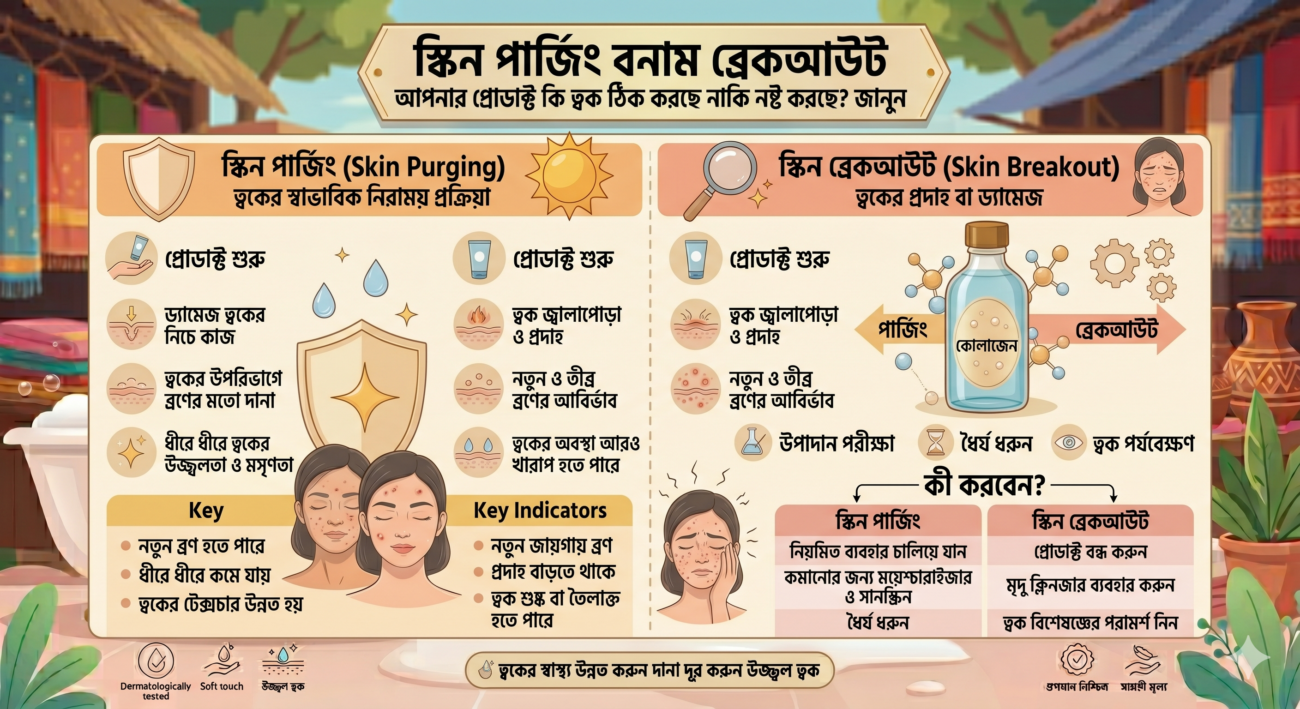
নতুন স্কিনকেয়ার প্রোডাক্ট শুরু করার পর ব্রণ বেড়ে গেছে? এখন ছেড়ে দেবেন নাকি চালিয়ে যাবেন?...
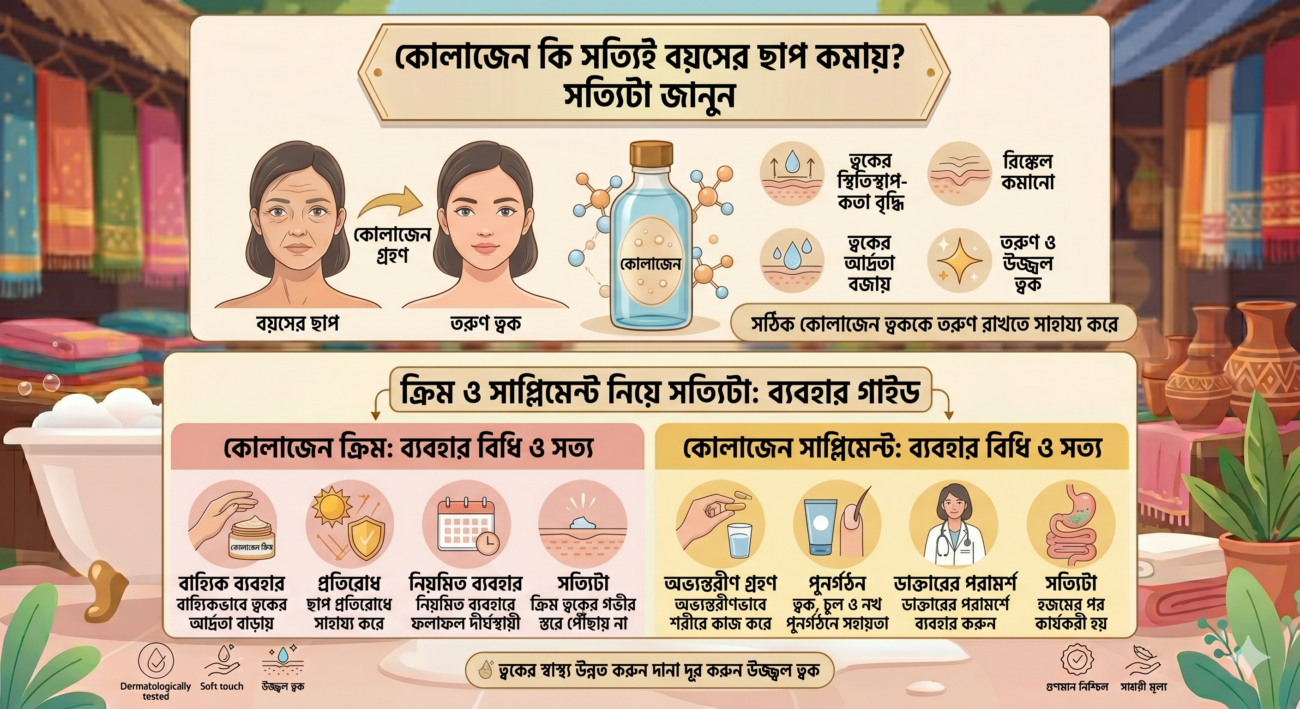
কোলাজেন — অ্যান্টি-এজিং মার্কেটে এই শব্দটা সবচেয়ে বেশি ব্যবহৃত হয়। কোলাজেন ক্রিম, কোলাজেন সাপ্লিমেন্ট, কোলাজেন...
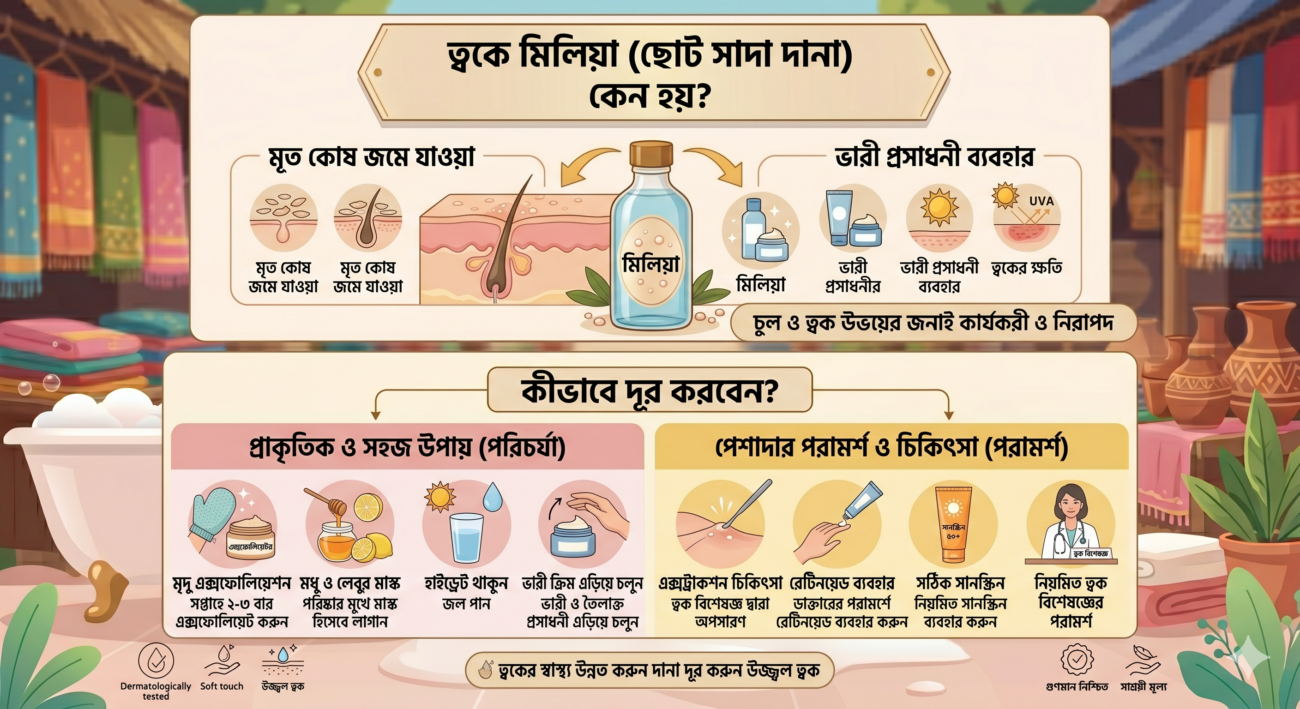
চোখের চারপাশে বা গালে ছোট ছোট শক্ত সাদা দানা দেখা দিচ্ছে? এগুলো হয়তো মিলিয়া। ব্রণের...



 Serums and Treatments
 Moisturizer
 Cleanser
 Face Mask
 Acne Treatment Products
 Sun Protection
 Skin Care Sets & Kits
 Eye Care Products
 Lip Care Products
 Toners & Exfoliators
 Active Ingredient Products
 Body Butter
 Men’s Face Wash
 Moisturizer for Men
 Men’s Hair Care Products
 Brightening Skincare Products
 Acne Skincare Products
 Pore Minimizing Products
 Anti-Aging Skincare Products
 Pigmentation Treatment Products
 Dehydration Skincare Products
 Blackheads & Whiteheads Treatment Products
 Bumpy Skin Treatment Products
 Blemish & Spot Treatment Products
 Dark Circles Treatment Products
 Sensitive Skin Care Products
