
Table of Contents
Body skincare is the most neglected area of most Bangladeshi skincare routines — the majority of product investment and attention goes to the face, while the arms, legs, torso, and back receive little more than a daily soap wash. Yet the body’s skin faces significant challenges: keratosis pilaris (KP) on the upper arms and thighs affecting an estimated 40–50% of the adult population; hyperpigmentation on the knees, elbows, and inner thighs from friction and sun exposure; dry, rough skin on the shins and forearms; and significant sun-induced uneven tone on all exposed areas. Bangladesh’s climate adds specific concerns — humidity-driven body acne on the back and chest, and UV Index 10–12 creating substantial body sun damage for anyone who spends time outdoors without protection.
Shop body lotions , body scrubs , and body sunscreen — buy cosmetics online BD .
What Are the Key Body Skin Concerns in Bangladesh?
What is keratosis pilaris and how common is it in Bangladesh?
Keratosis pilaris (KP) — colloquially called “chicken skin” — appears as small, rough bumps on the upper arms, thighs, buttocks, and sometimes cheeks. It is caused by excess keratin accumulating in hair follicles, creating a plug that blocks the follicle opening. KP affects approximately 40–50% of adults globally and is more common in individuals with dry skin tendencies and in higher-humidity climates where skin does not shed dead cells as efficiently. In Bangladesh, the combination of genetic predisposition and humidity creates very high KP prevalence. KP is not a hygiene issue — it is a keratinisation disorder that responds to regular AHA exfoliation and consistent moisturisation.
Why do elbows and knees get darker?
The skin over elbows and knees is naturally thicker than surrounding skin — it requires extra elasticity for joint movement, so the dermis accumulates more collagen and the epidermis thickens. This thicker skin accumulates dead cells faster, creating a rough, darker appearance amplified by: (1) friction from surfaces (floors, desks, clothes) causing micro-inflammation and PIH; (2) sun exposure on uncovered areas in Bangladesh’s high-UV environment; (3) inadequate moisturisation in areas that receive little natural sebum. AHA exfoliation (glycolic or lactic acid body lotion) + daily moisturisation + SPF on exposed areas addresses all three causes.
What Does an Effective Body Skincare Routine Look Like?
Step 1: Body cleansing
Use a pH-balanced body wash (pH 5.5–6.0) rather than traditional bar soap (pH 8–10). Bar soap’s high alkalinity disrupts the skin’s acid mantle, increasing TEWL and dryness — particularly problematic in Bangladesh’s winter when ambient humidity drops to 40–60%. For body acne (bacne) on the chest and back: use a body wash with 2% salicylic acid or benzoyl peroxide 3–4x per week in problem areas. Massage for 60 seconds and rinse completely.
Step 2: Body exfoliation
Chemical exfoliation (preferred): AHA body lotion (lactic acid 5–12% or glycolic acid 5–10%) applied after showering to slightly damp skin — the most effective and consistent body exfoliation method. Reduces KP within 4–6 weeks of daily use. Fades knee and elbow hyperpigmentation within 8–12 weeks. Physical exfoliation (supplementary): Body scrub 2x per week before showering — most useful for rough patches on elbows, knees, and heels. Use rounded-particle scrubs (sugar, jojoba beads) rather than sharp-particle scrubs (walnut shell). Frequency: AHA body lotion: daily. Physical scrub: 2x per week maximum.
Step 3: Body moisturisation
Apply body moisturiser within 3 minutes of showering on damp skin — the “soak and seal” method traps surface moisture and significantly outperforms dry-skin application. In Bangladesh: lightweight body lotion in summer and monsoon months; richer body cream or body butter in winter (November–February) when skin is drier. Key ingredients for body: lactic acid (dual exfoliant and humectant), urea (5–10% — powerful humectant and mild exfoliant for rough areas), ceramides (barrier repair), glycerin (humectant), and shea butter (emollient for dry areas).
Step 4: Body SPF
Bangladesh’s UV Index 10–12 damages exposed body skin as aggressively as face skin — causing hyperpigmentation, collagen degradation, and long-term texture changes on arms, legs, décolletage, and the back of hands. Apply SPF 50 PA++++ to all sun-exposed body areas: arms, legs, hands, back of neck, and décolletage. Body SPF formulas are available at lower cost per ml than face SPF — use generously. Reapply every 2 hours when outdoors.
How to Treat Body Acne (Bacne)?
Cleansing: 2% salicylic acid body wash used daily in the affected area (back, chest, shoulders). Treatment: Benzoyl peroxide spray or lotion (2.5–5%) applied to back acne after cleansing — reach back areas more easily with a spray format. Fabric: Wear 100% cotton or moisture-wicking fabrics — synthetic fabrics trap sweat against skin in Bangladesh’s humidity, amplifying bacne. Post-shower: Apply body moisturiser only to non-acne areas; in acne-prone zones, a lightweight non-comedogenic lotion or gel is preferable to heavy body butter. Shower promptly: After exercise or sweating, shower within 30 minutes — sweat left on skin for extended periods significantly increases back acne frequency.
Frequently Asked Questions About Body Skincare
How do you get rid of keratosis pilaris?
KP cannot be permanently cured — it is a genetic keratinisation condition. But it responds well to daily AHA body lotion (lactic acid 10–12% or glycolic acid 10%) and consistent moisturisation. Results are visible within 4–6 weeks and maintained with continued use.
How do you lighten dark elbows and knees?
AHA body lotion (lactic acid or glycolic acid) applied daily + physical scrub 2x per week + SPF on exposed areas when outdoors. Visible fading within 8–12 weeks of consistent treatment. Niacinamide body lotion also helps by inhibiting melanin transfer in affected areas.
Should you use face skincare on the body?
Face actives (niacinamide, AHA, retinol) work on body skin but are cost-inefficient — body-specific formulations deliver the same actives at lower cost per ml. Use face products on the body for targeted problem areas only; use body-specific products for general coverage.
Is body SPF necessary if you wear clothes?
For covered areas, clothing provides UV protection (standard fabric UPF 5–50 depending on weave). Exposed areas (arms, legs in summer, décolletage, back of hands, neck) require SPF 50 PA++++ — these are the areas where body sun damage and hyperpigmentation develop fastest.
How often should you exfoliate body skin?
AHA body lotion: daily use is appropriate for KP and rough texture. Physical body scrub: 2–3x per week maximum. Combining both on the same day is over-exfoliation — use the physical scrub before showering and the AHA lotion after, on different days.

You May Also Like
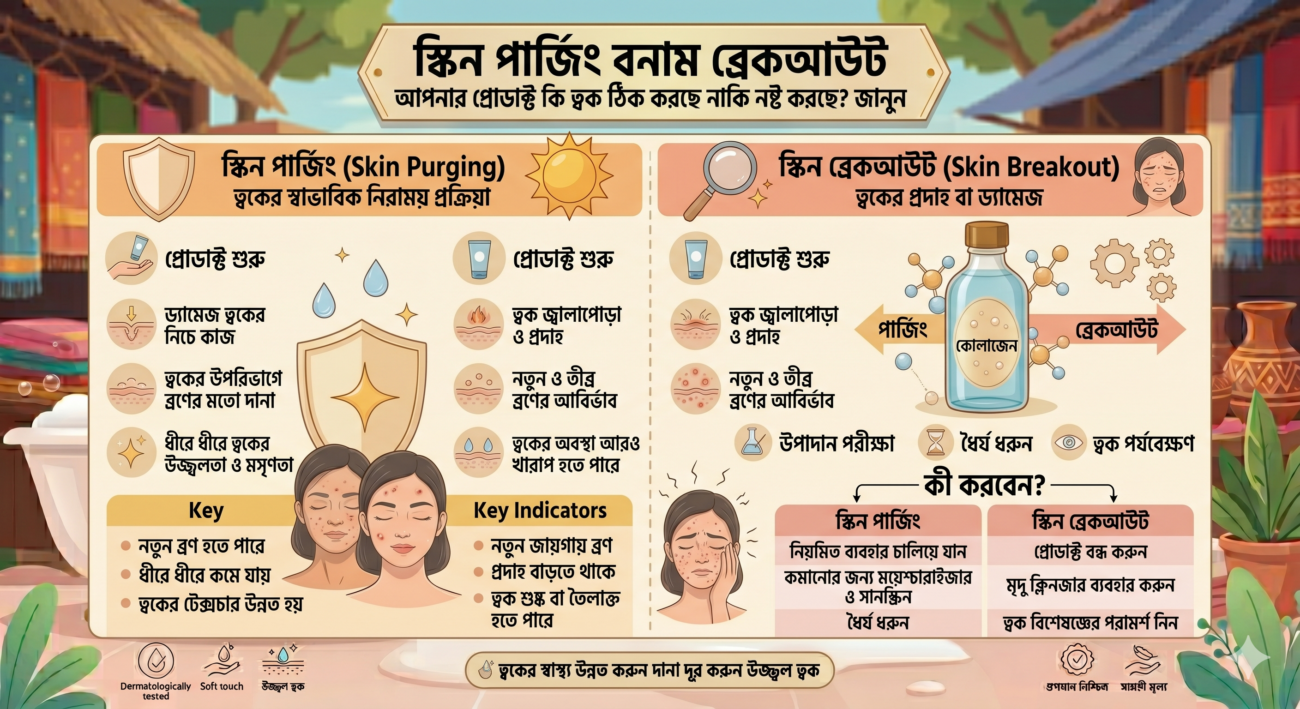
নতুন স্কিনকেয়ার প্রোডাক্ট শুরু করার পর ব্রণ বেড়ে গেছে? এখন ছেড়ে দেবেন নাকি চালিয়ে যাবেন?...
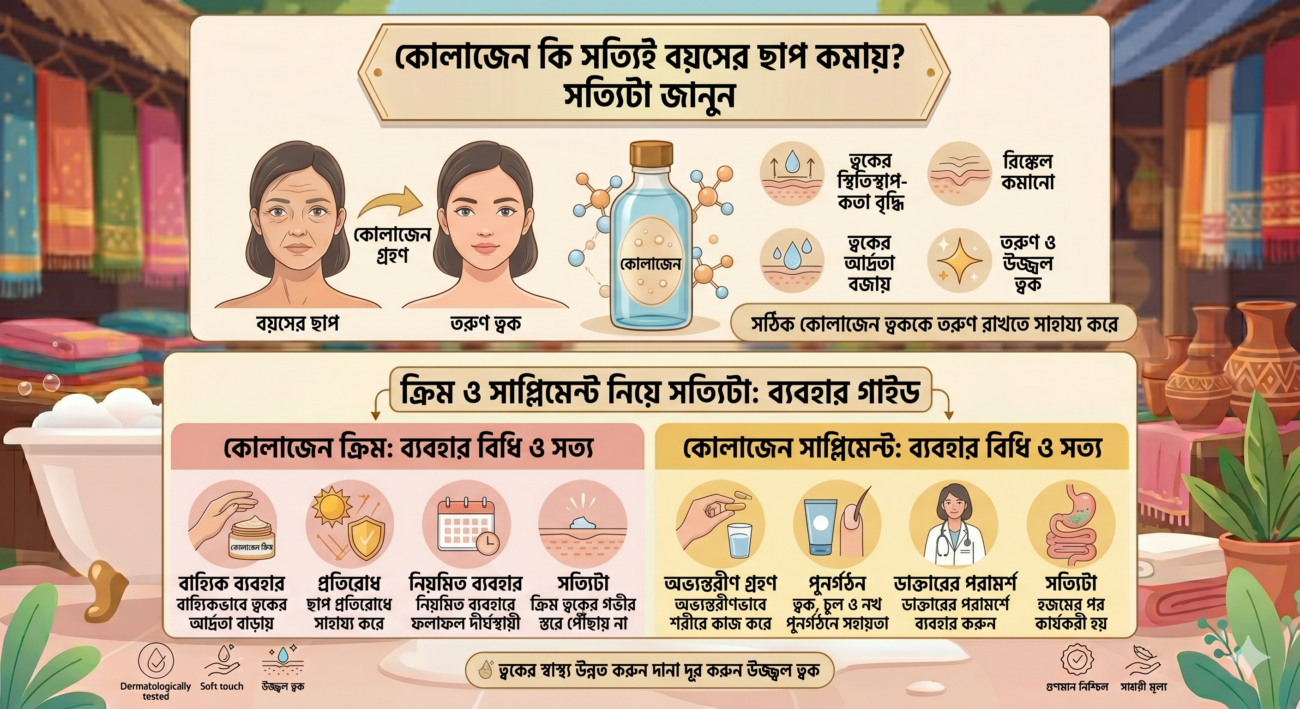
কোলাজেন — অ্যান্টি-এজিং মার্কেটে এই শব্দটা সবচেয়ে বেশি ব্যবহৃত হয়। কোলাজেন ক্রিম, কোলাজেন সাপ্লিমেন্ট, কোলাজেন...
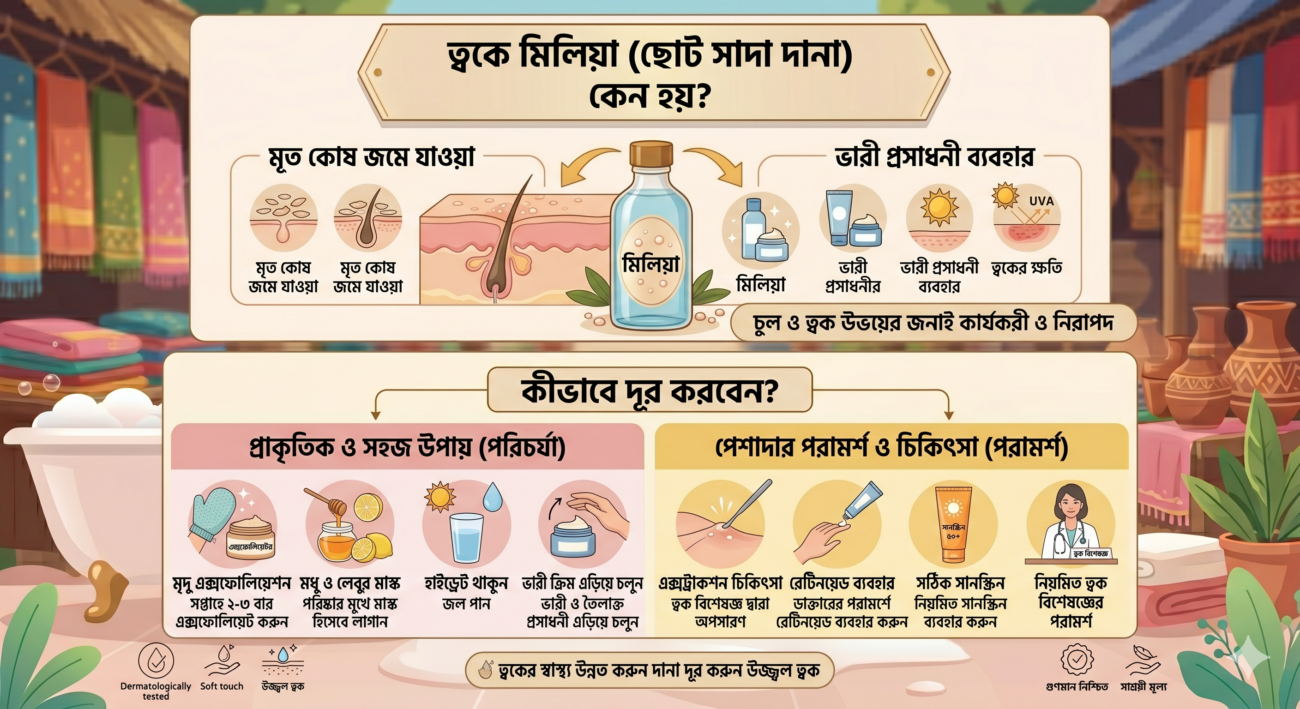
চোখের চারপাশে বা গালে ছোট ছোট শক্ত সাদা দানা দেখা দিচ্ছে? এগুলো হয়তো মিলিয়া। ব্রণের...



 Serums and Treatments
 Moisturizer
 Cleanser
 Face Mask
 Acne Treatment Products
 Sun Protection
 Skin Care Sets & Kits
 Eye Care Products
 Lip Care Products
 Toners & Exfoliators
 Active Ingredient Products
 Body Butter
 Men’s Face Wash
 Moisturizer for Men
 Men’s Hair Care Products
 Brightening Skincare Products
 Acne Skincare Products
 Pore Minimizing Products
 Anti-Aging Skincare Products
 Pigmentation Treatment Products
 Dehydration Skincare Products
 Blackheads & Whiteheads Treatment Products
 Bumpy Skin Treatment Products
 Blemish & Spot Treatment Products
 Dark Circles Treatment Products
 Sensitive Skin Care Products
