
Table of Contents
Facial mists — spray bottles delivering fine droplets of water, hydrating actives, or skincare ingredients to the face — occupy a unique and often questioned position in skincare routines. They are used for refreshing skin mid-day, setting makeup, adding a hydration layer between routine steps, boosting product absorption, and delivering instant relief in hot or dry environments. For Bangladesh, where temperatures regularly reach 38–42°C in summer and workplaces often have air conditioning that significantly drops ambient humidity, a facial mist provides genuine practical value — but only when understood correctly.
Shop hydrating toners and mists , essences , and hydrating serums — the best beauty products in Bangladesh .
What Does a Facial Mist Actually Do?
Does a facial mist hydrate skin?
Plain water mist (thermal spring water sprays) provides temporary relief and a cooling sensation but does not deliver lasting hydration — water evaporates from skin within minutes, and if it evaporates faster than the skin can absorb it, it can actually draw moisture out of the skin in low-humidity environments (below 60% RH). Mists formulated with humectants (glycerin, hyaluronic acid, sodium PCA) genuinely add hydration by attracting water to the skin surface. The difference is significant: a thermal water spray in Bangladesh’s winter (40–60% RH) provides 3–5 minutes of comfort; a glycerin-based mist provides 30–60 minutes of measurable surface hydration increase.
Can a facial mist boost absorption of products?
Applying a facial mist immediately before a serum or essence (damp-skin application) improves humectant absorption — ingredients like hyaluronic acid and niacinamide penetrate more efficiently when the skin surface is lightly hydrated. This is the basis of the K-Beauty “7-skin method” — applying multiple thin layers of toner/mist sequentially. In a standard routine, misting before applying a hydrating serum on slightly damp skin accelerates and enhances HA absorption compared to application on dry skin.
When Does a Facial Mist Genuinely Help?
Midday refresh in Bangladesh’s summer: When skin becomes oily and congested from heat and humidity, a quick mist with niacinamide or thermal water provides instant refreshing without disturbing makeup. Post-gym or post-commute: After sweating, a mist with centella asiatica or green tea extract cools and calms skin before rinsing is possible. Setting makeup: Spraying after makeup application sets powder products and adds natural-looking dewy finish without disturbing application. Office air conditioning: AC environments in Bangladesh’s offices drop humidity below 40% — significantly lower than outdoor humidity. A humectant mist used 1–2x during the day in an AC environment provides measurable skin comfort and TEWL reduction. SPF reapplication: SPF setting sprays that provide both misting and sun protection (SPF 30–50) allow easy reapplication over makeup.
When Is a Facial Mist Not Necessary?
Mists are redundant if: your routine already includes a hydrating toner and serum with adequate humectants; you are in a naturally high-humidity environment (outdoors in Bangladesh’s monsoon); you are concerned about adding another product cost without clear benefit. A toner applied with hands or a cotton pad delivers equivalent or greater hydration than a mist. A mist is a convenience product — it adds comfort and practical mid-day maintenance but is not a required routine step for skin health outcomes. Whether it is worth including depends on your specific daily lifestyle and skin needs.
What Should a Good Facial Mist Contain?
Essential: Humectants — glycerin (3–5%), sodium hyaluronate, sodium PCA, panthenol. These attract moisture and maintain skin hydration beyond initial spray evaporation. Beneficial additions: Niacinamide (2–5%) for sebum control and barrier support; centella asiatica or aloe vera for soothing; antioxidants (green tea extract, vitamin C derivative) for environmental protection. Avoid: Mists with high alcohol content (drying), fragrance (sensitising for regular contact use on skin), and no humectants (plain water-only mists are minimally effective for hydration).
Frequently Asked Questions About Facial Mists
Can you use a facial mist instead of a toner?
A humectant-rich facial mist applied after cleansing functions similarly to a hydrating toner. However, mists deliver less product per application than cotton-pad toner application, so active ingredient delivery is lower. For a treatment toner (AHA, BHA, niacinamide-concentrated), a mist format is insufficient — standard application provides better results.
Should you mist before or after moisturiser?
Mist before moisturiser — the damp skin surface enhances humectant absorption, and moisturiser then seals in the moisture from both the mist and the skin’s surface.
Can facial mist replace sunscreen reapplication?
SPF setting sprays with SPF 30–50 can top up sun protection over makeup — but provide less coverage than directly applied sunscreen. They are better than no reapplication but not equivalent to reapplying SPF 50 PA++++.
How often can you use a facial mist during the day?
As often as needed — 1–4 times during the day in an AC office or hot outdoor environment is typical. There is no upper limit on mist frequency with well-formulated humectant-based products.
Is a DIY rose water mist effective?
Rose water contains mild anti-inflammatory compounds (geraniol, citronellol) and has a refreshing scent. However, without added humectants (glycerin, HA), it evaporates quickly and delivers limited lasting hydration. Adding 3–5% glycerin to a rose water base significantly improves its functional moisturising performance.

You May Also Like
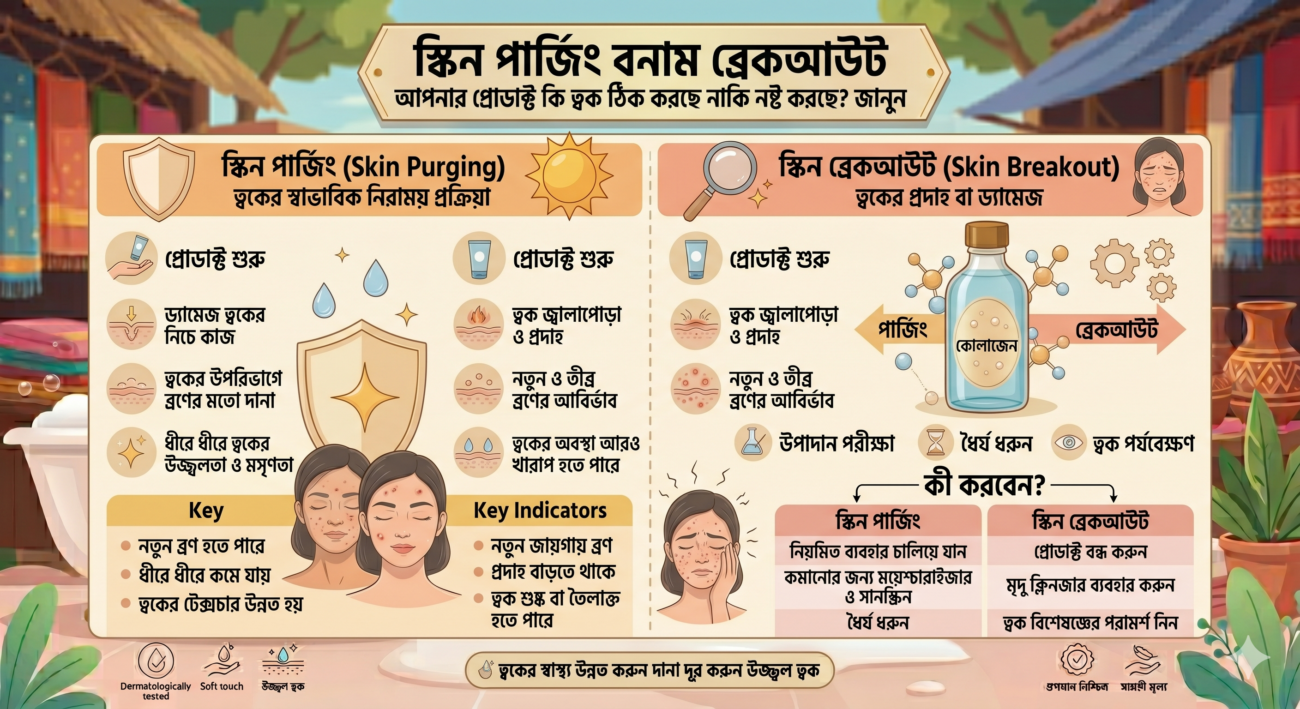
নতুন স্কিনকেয়ার প্রোডাক্ট শুরু করার পর ব্রণ বেড়ে গেছে? এখন ছেড়ে দেবেন নাকি চালিয়ে যাবেন?...
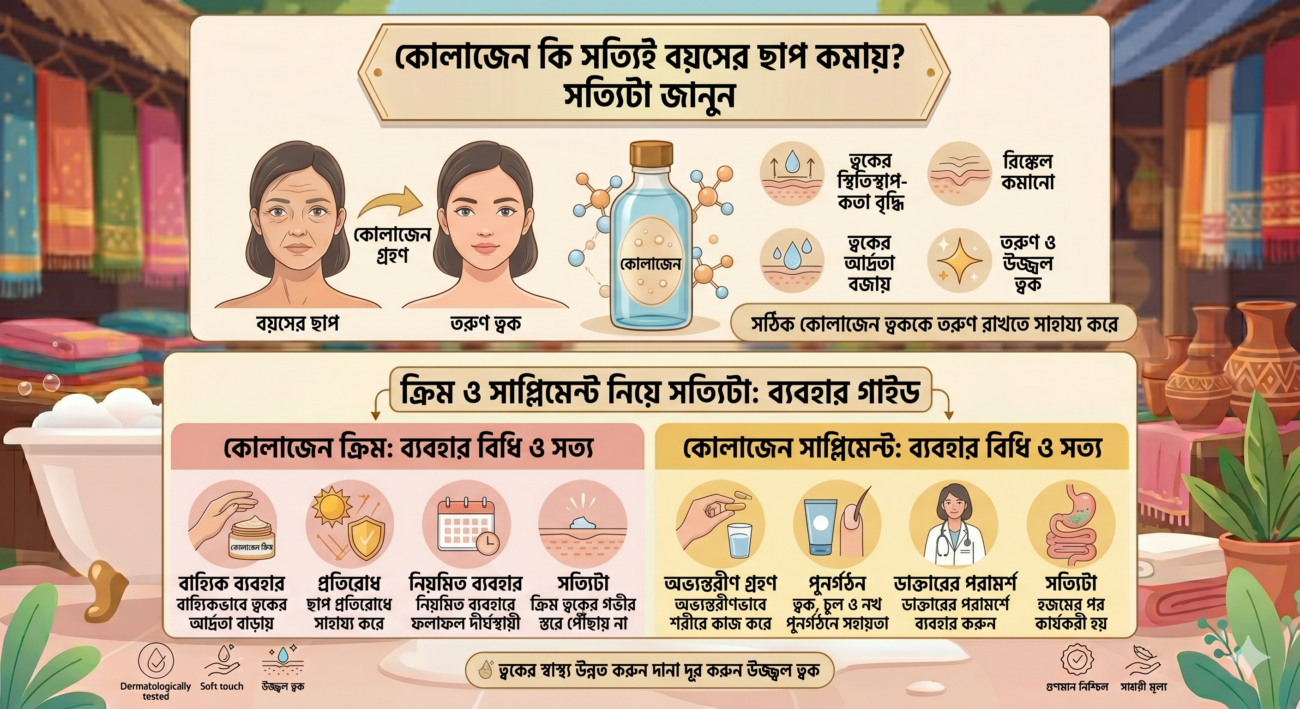
কোলাজেন — অ্যান্টি-এজিং মার্কেটে এই শব্দটা সবচেয়ে বেশি ব্যবহৃত হয়। কোলাজেন ক্রিম, কোলাজেন সাপ্লিমেন্ট, কোলাজেন...
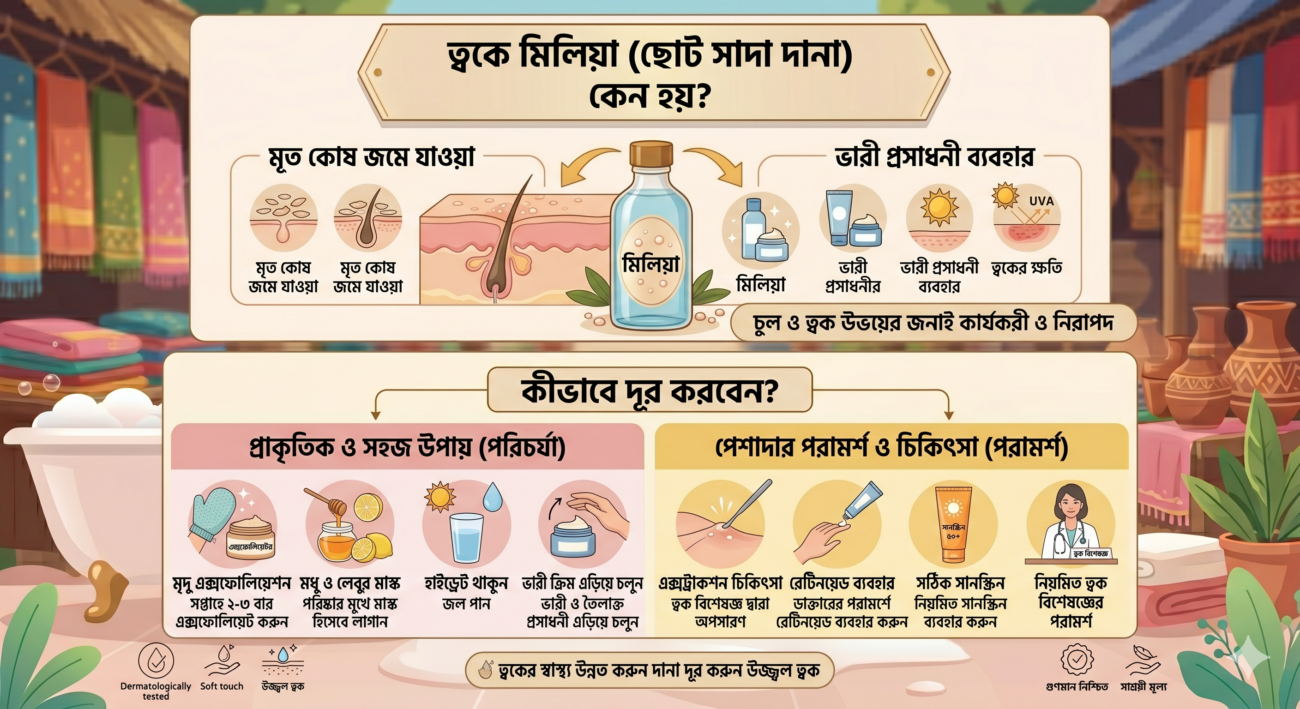
চোখের চারপাশে বা গালে ছোট ছোট শক্ত সাদা দানা দেখা দিচ্ছে? এগুলো হয়তো মিলিয়া। ব্রণের...



 Serums and Treatments
 Moisturizer
 Cleanser
 Face Mask
 Acne Treatment Products
 Sun Protection
 Skin Care Sets & Kits
 Eye Care Products
 Lip Care Products
 Toners & Exfoliators
 Active Ingredient Products
 Body Butter
 Men’s Face Wash
 Moisturizer for Men
 Men’s Hair Care Products
 Brightening Skincare Products
 Acne Skincare Products
 Pore Minimizing Products
 Anti-Aging Skincare Products
 Pigmentation Treatment Products
 Dehydration Skincare Products
 Blackheads & Whiteheads Treatment Products
 Bumpy Skin Treatment Products
 Blemish & Spot Treatment Products
 Dark Circles Treatment Products
 Sensitive Skin Care Products
