
Table of Contents
Vitamin C is the most studied topical antioxidant in dermatology — with documented benefits for UV protection, hyperpigmentation treatment, collagen stimulation, and skin brightening. But “vitamin C serum” is not a single ingredient: it encompasses at least eight distinct forms with markedly different stability, penetration, potency, and skin compatibility profiles. In Bangladesh’s high-humidity environment, where vitamin C stability is a significant formulation challenge (L-ascorbic acid oxidises rapidly in moisture), understanding which form to choose — and what to look for on an ingredient label — directly determines whether your vitamin C serum delivers results.
Shop vitamin C serums and brightening serums with buy beauty items Bangladesh .
What Is L-Ascorbic Acid and Why Is It the Gold Standard?
L-ascorbic acid (LAA) is the pure, active form of vitamin C — the only form that does not require enzymatic conversion in skin cells to produce antioxidant and melanin-inhibiting effects. At 10–20% concentration and pH 2.5–3.5, it is the most potent and fastest-acting vitamin C form. Clinical studies on vitamin C’s collagen stimulation, tyrosinase inhibition, and antioxidant protection are almost entirely conducted with LAA — making it the evidence basis for all other vitamin C claims. Its limitations: instability (oxidises to yellow, then brown, rendering it ineffective within weeks of exposure to air, light, or humidity), low pH (causes stinging in sensitive skin), and higher irritation potential.
What Are Vitamin C Derivatives and Are They as Effective?
Ascorbyl glucoside (AA2G)
Ascorbyl glucoside is one of the most stable vitamin C derivatives — it is water-soluble, maintains efficacy in formulations for 12–24 months, and converts to L-ascorbic acid in skin cells via enzymatic hydrolysis. Effective at 2–10%; clinical studies show comparable brightening to LAA over equivalent treatment periods (though slower-acting). Best for: Bangladesh’s humid climate (highly stable in moisture), sensitive skin (milder pH), and users who want a vitamin C that does not oxidise rapidly.
Ethyl ascorbic acid (3-O-Ethyl Ascorbic Acid)
Ethyl ascorbic acid is considered the most potent derivative — it is both water and oil-soluble, penetrates skin more effectively than ascorbyl glucoside, and converts efficiently to LAA in skin. Effective at 2–10%; produces brightening and antioxidant results comparable to LAA at lower concentrations. More stable than LAA but less stable than AA2G. Widely used in K-Beauty vitamin C serums available at GlowBD. Best for: users who want derivative potency close to LAA without the oxidation instability.
Sodium ascorbyl phosphate (SAP)
Sodium ascorbyl phosphate is highly water-soluble and exceptionally stable — does not oxidise significantly for 12+ months. Effective at 5–15% for brightening. Converts to LAA in skin via phosphatase enzymes. Also has documented antibacterial properties against C. acnes — making it the preferred vitamin C form for acne-prone skin. Best for: oily and acne-prone skin; long-product-shelf-life environments; Bangladesh’s humid climate.
Ascorbyl tetraisopalmitate (oil-soluble vitamin C)
Ascorbyl tetraisopalmitate is oil-soluble, making it uniquely suited to oil-based vitamin C serums and products targeting deeper dermal penetration. It is highly stable and non-irritating. Best for: dry skin; vitamin C in facial oils or rich serums; users who cannot tolerate water-based LAA formulations. Less effective for surface-level brightening than water-soluble forms.
Which Vitamin C Form Is Best for Bangladesh’s Climate?
Stability in humidity: Bangladesh’s 70–95% summer humidity rapidly degrades L-ascorbic acid in packaging. Best stable choices: ascorbyl glucoside > sodium ascorbyl phosphate > ethyl ascorbic acid > LAA. Fastest brightening: LAA 15–20% (if used fresh, well-packaged) > ethyl ascorbic acid 10% > ascorbyl glucoside 10% > SAP 15%. Acne-prone skin: Sodium ascorbyl phosphate (antibacterial + brightening). Sensitive skin: Ascorbyl glucoside or SAP (mild pH, non-irritating). Best all-round for Bangladesh: Ethyl ascorbic acid at 7–10% — excellent stability, high potency, works in humid conditions, suitable for most skin types.
How to Tell If Your Vitamin C Serum Has Oxidised?
Fresh LAA serums should be clear or very pale yellow. Oxidised serums turn: light yellow (mild oxidation — reduced but some activity), dark yellow/orange (significant oxidation — minimal activity), brown (fully oxidised — no vitamin C activity, may cause free radical damage). Derivatives oxidise less visibly — ascorbyl glucoside and SAP remain clear even when expired. Store all vitamin C serums away from light and heat, in airtight packaging (pump bottles preferred over open-mouth jars), in a cool location. In Bangladesh’s climate, refrigerating LAA serums significantly extends their effective life.
Frequently Asked Questions About Vitamin C Serum Forms
What percentage of vitamin C serum is most effective?
LAA: 10–20%. Ethyl ascorbic acid: 5–10%. Ascorbyl glucoside: 5–10%. SAP: 10–15%. Below effective thresholds, antioxidant and brightening benefits are marginal.
Can vitamin C serum be used twice a day?
Vitamin C is most effective in the morning as an antioxidant layer before SPF. Evening use is optional — some derivatives (AA2G, SAP) work well twice daily. LAA twice daily may cause irritation for sensitive skin.
How long does vitamin C take to brighten skin?
Visible brightening of dark spots: 4–8 weeks with effective concentrations. Full results: 8–12 weeks. Maintenance requires continued daily use since melanin production restarts when vitamin C is discontinued.
Can vitamin C and niacinamide be used together?
Yes — modern research confirms they are compatible. The concern that they form nicotinic acid requires temperatures above 100°C — not achievable in skincare. Use vitamin C first, allow absorption, then apply niacinamide.
Does vitamin C serum need SPF?
Yes — vitamin C does not replace SPF. It works as an additional antioxidant layer under SPF, neutralising UV-generated free radicals that SPF blocks but does not eliminate entirely. Always use SPF 50 over vitamin C in the morning.

You May Also Like
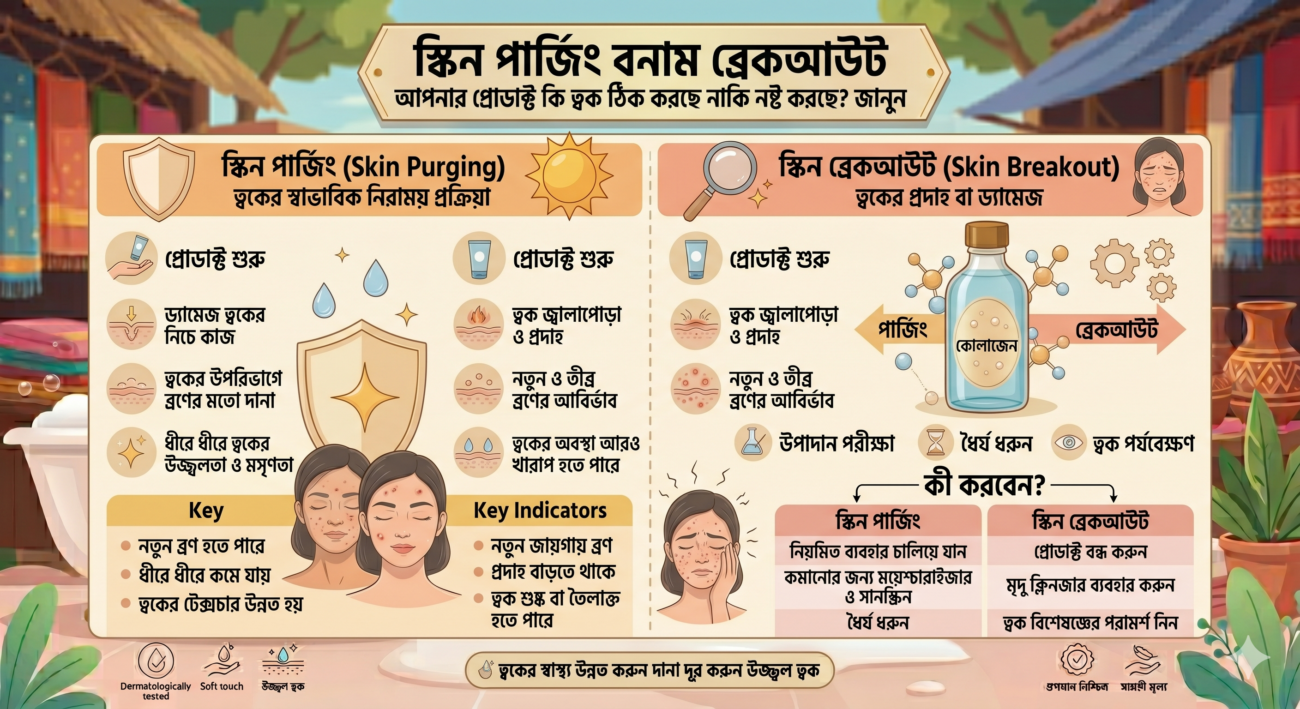
নতুন স্কিনকেয়ার প্রোডাক্ট শুরু করার পর ব্রণ বেড়ে গেছে? এখন ছেড়ে দেবেন নাকি চালিয়ে যাবেন?...
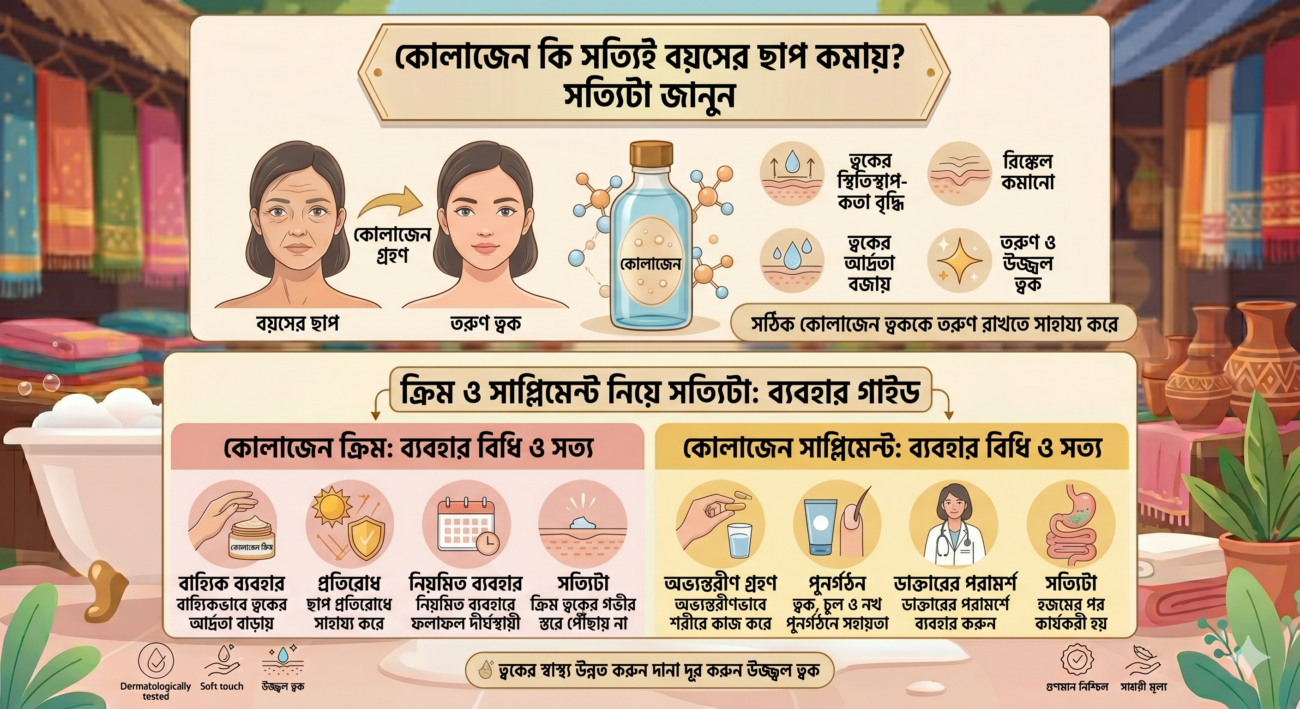
কোলাজেন — অ্যান্টি-এজিং মার্কেটে এই শব্দটা সবচেয়ে বেশি ব্যবহৃত হয়। কোলাজেন ক্রিম, কোলাজেন সাপ্লিমেন্ট, কোলাজেন...
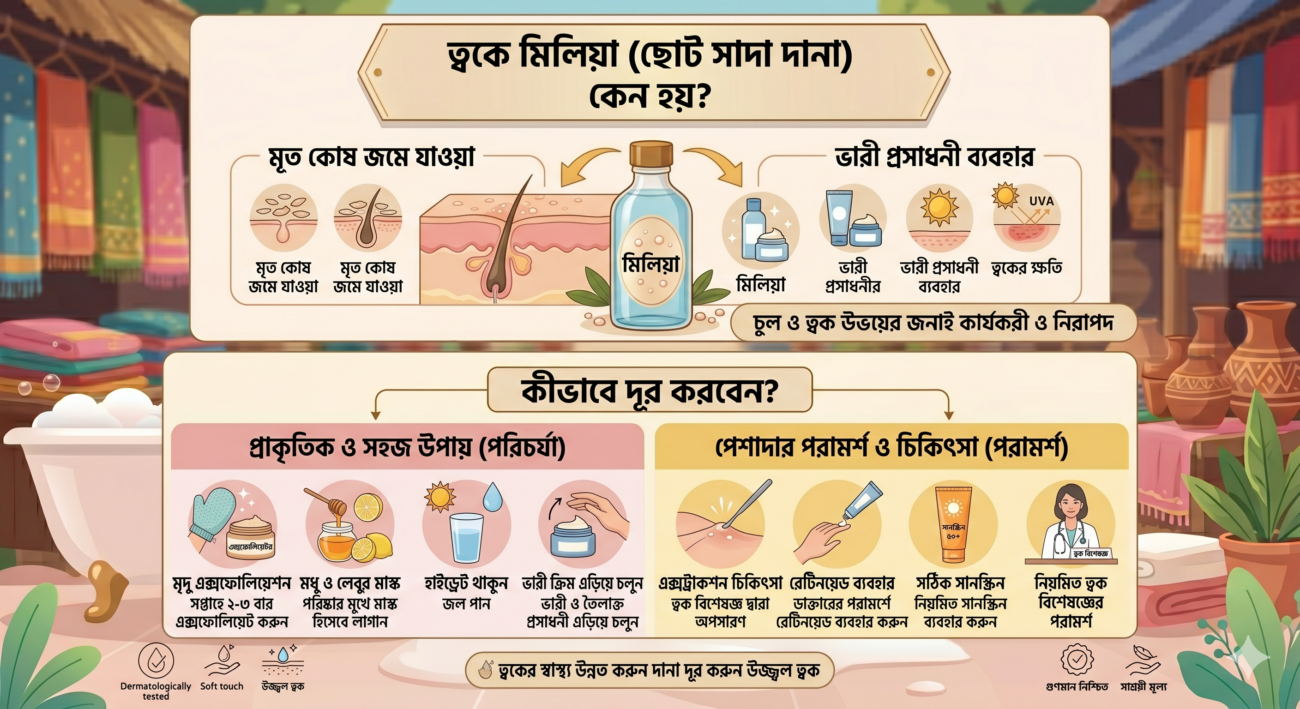
চোখের চারপাশে বা গালে ছোট ছোট শক্ত সাদা দানা দেখা দিচ্ছে? এগুলো হয়তো মিলিয়া। ব্রণের...



 Serums and Treatments
 Moisturizer
 Cleanser
 Face Mask
 Acne Treatment Products
 Sun Protection
 Skin Care Sets & Kits
 Eye Care Products
 Lip Care Products
 Toners & Exfoliators
 Active Ingredient Products
 Body Butter
 Men’s Face Wash
 Moisturizer for Men
 Men’s Hair Care Products
 Brightening Skincare Products
 Acne Skincare Products
 Pore Minimizing Products
 Anti-Aging Skincare Products
 Pigmentation Treatment Products
 Dehydration Skincare Products
 Blackheads & Whiteheads Treatment Products
 Bumpy Skin Treatment Products
 Blemish & Spot Treatment Products
 Dark Circles Treatment Products
 Sensitive Skin Care Products
