
Table of Contents
A combination skin routine requires 6 steps that address two simultaneous zones: an oily T-zone (forehead, nose, chin) and a dry U-zone (cheeks, jaw) — using balancing cleanser → niacinamide toner → zone-targeted serum → dual moisturizing → SPF 50 → weekly multi-masking . Combination skin is the most common skin type in Bangladesh, affecting an estimated 55–65% of adults due to high heat and sebaceous gland variation across facial zones.
All combination skin products — balancing cleansers, niacinamide serums, and zone-specific moisturizers — are available as the best beauty products in Bangladesh at GlowBD, with formulations suited to Bangladesh’s climate.
What Defines Combination Skin and How Does Bangladesh’s Climate Affect It?
Combination skin has 5+ sebaceous glands per cm² on the T-zone compared to 1–2 per cm² on the cheeks , producing simultaneous oiliness and dryness. Bangladesh’s high humidity (70–90% in summer and monsoon) amplifies T-zone oiliness, while indoor air conditioning (reducing ambient humidity to 30–40%) dries the cheek zone — worsening the combination pattern throughout the year.
The seasonal swing between monsoon humidity and winter dryness makes combination skin management in Bangladesh a year-round balancing challenge that requires routine adjustments across 3 seasons.
What Are the 6 Steps of a Combination Skin Routine?
Step 1: What Cleanser Balances Combination Skin Without Over-Drying?
A pH 5.5 balanced gel cleanser — neither stripping nor overly creamy — is the optimal first step for combination skin , because it removes excess T-zone sebum without disturbing the already-dry U-zone lipid layer.
Apply a balancing gel face wash to the entire face for a maximum of 60 seconds. Use cool to lukewarm water — hot water removes lipids from the already-dry U-zone. Pat dry gently; do not rub the cheek area.
Avoid using separate cleansers for each zone — water temperature and cleansing duration are the key variables, not separate products.
Step 2: Which Toner Works for Both Oily and Dry Zones?
A niacinamide-based toner normalizes sebum production in the T-zone and simultaneously hydrates the drier cheeks, making it the most dual-function toner ingredient for combination skin .
Apply a pore-minimizing or niacinamide toner by pressing lightly with palms across the full face. For more targeted control, apply a BHA toner with a cotton pad only to the T-zone and a hydrating toner by palm to the cheeks on the same routine day.
Step 3: What Serum Addresses Both Zones in Combination Skin?
Niacinamide serum at 5% concentration is the universal serum for combination skin because it reduces T-zone sebum output through 5-alpha reductase inhibition while strengthening the ceramide barrier on the drier U-zone cheeks — addressing both zones’ primary concerns with one product.
Apply 3–4 drops of niacinamide or combination skin serum to the full face after toner. On days when cheek dryness is pronounced, apply a hyaluronic acid serum to the cheeks only before the niacinamide serum.
Step 4: How Should Combination Skin Apply Moisturizer to Two Zones Differently?
Zone moisturizing — applying a lightweight gel to the T-zone and a medium cream to the U-zone — is the most effective moisturizing method for combination skin , eliminating the either/or compromise of a single formula that either congests the T-zone or fails to hydrate the cheeks.
Apply a lightweight oil-free soothing gel to the T-zone (forehead, nose, chin). Apply a ceramide cream moisturizer to the cheeks and jawline. During monsoon months (June–September), switch the entire face to the gel formula. During winter (November–February), apply the cream across the full face.
Step 5: What SPF Works for Combination Skin’s Dual Needs?
A hybrid mineral-chemical SPF 50 with a semi-matte finish is ideal for combination skin in Bangladesh , controlling T-zone shine while maintaining sufficient hydration for dry cheeks. Pure matte-finish SPFs over-dry the U-zone; pure luminous SPFs amplify T-zone oiliness.
Apply SPF 50 broad-spectrum sunscreen as the last morning step, using the 5-dot method (forehead, both cheeks, nose, chin). Reapply every 2 hours during outdoor exposure.
Step 6: How Does Multi-Masking Help Combination Skin Weekly?
Multi-masking — applying a clay mask to the T-zone and a hydrating sheet or cream mask to the cheeks simultaneously — is the most effective weekly treatment for combination skin , treating both zones in one 15-minute session without compromise.
Use a clay mask on the forehead, nose, and chin. Apply a hydrating or centella-based sheet mask to the cheeks and jaw. Multi-mask 1–2 times per week, preferably on evenings after cleansing.
How Does Combination Skin Change Across Bangladesh’s 3 Seasons?
Combination skin patterns shift significantly with Bangladesh’s seasons: monsoon (June–September) amplifies T-zone oiliness to its peak while the U-zone may normalize; summer (March–May) increases overall sebum; winter (November–February) moderates T-zone activity while the U-zone becomes notably drier — requiring corresponding routine adjustments.
Monsoon routine: all-over gel formula. Summer routine: lightweight SPF + BHA toner focus. Winter routine: cream on U-zone, reduce BHA frequency to 2x per week.
What Skincare Ingredients Are Best for Combination Skin?
6 ingredients that address combination skin’s dual needs:
- Niacinamide (5%) — balances sebum and hydration across both zones simultaneously.
- Hyaluronic acid — draws moisture to dry cheeks without adding oil.
- Ceramides — repairs the lipid barrier on dry U-zone skin.
- Salicylic acid (BHA, 0.5–1%) — clears T-zone pores without applying to dry cheeks.
- Glycerin — humectant safe and beneficial for all zones.
- Centella asiatica — reduces inflammation in congested T-zone without drying cheeks.
What Skincare Mistakes Does Combination Skin Make Most Often?
4 common combination skin mistakes in Bangladesh:
- Using a single heavy cream moisturizer across the whole face — congests the T-zone and creates closed comedones.
- Over-cleansing the T-zone — stripping sebum triggers compensatory overproduction within 2–3 hours.
- Skipping moisturizer on oily areas — dehydrated oily skin produces more sebum as a compensatory mechanism.
- Using high-concentration BHA toner across the entire face — over-dries the U-zone cheeks that do not require pore exfoliation.
Frequently Asked Questions: Combination Skin Routine in Bangladesh
What is combination skin and how do I identify it?
Combination skin produces visible oil on the forehead, nose, and chin (T-zone) within 2–3 hours of cleansing while the cheeks and jawline (U-zone) feel normal, tight, or dry. The simultaneous presence of both oily and dry zones on the same face — observable by blotting paper test — defines combination skin type.
Can combination skin use the same moisturizer on the full face?
A single lightweight gel-cream moisturizer can be applied to the full face for combination skin during Bangladesh’s humid monsoon and summer seasons — the light texture hydrates U-zone cheeks adequately without congesting the T-zone. During Bangladesh’s winter, zone moisturizing (cream on U-zone, gel on T-zone) prevents cheek dryness while controlling T-zone congestion.
Which toner is best for combination skin?
A niacinamide 5% toner applied to the full face is best for combination skin — niacinamide reduces T-zone sebum through 5-alpha reductase inhibition and hydrates the dry U-zone through ceramide synthesis stimulation. BHA toners should be applied only to the T-zone to avoid over-exfoliating already dry cheek skin.
How often should combination skin use a clay mask?
Combination skin should use a clay mask on the T-zone 1–2 times per week — applying clay to the full face removes the lipids that dry cheeks need. Multi-masking (clay on T-zone, hydrating mask on U-zone) treats both zones in one session without the compromise of a single full-face mask formula.
Does combination skin change during monsoon season in Bangladesh?
Combination skin in Bangladesh’s monsoon season (June–September) shifts toward overall oiliness — the 85–95% humidity increases sebum production across all facial zones including cheeks, effectively normalizing the U-zone during this period. A lightweight gel formula applied to the full face is sufficient during monsoon; zone moisturizing resumes in October as humidity drops.
What is the best SPF for combination skin?
A hybrid SPF 50 with a semi-matte finish is best for combination skin in Bangladesh — it controls T-zone shine while providing the light hydration that dry cheeks require. Pure matte formulas over-dry the U-zone; luminous SPFs amplify T-zone oiliness. Korean hybrid SPF formulations achieve this balance at BDT 400–900.

You May Also Like
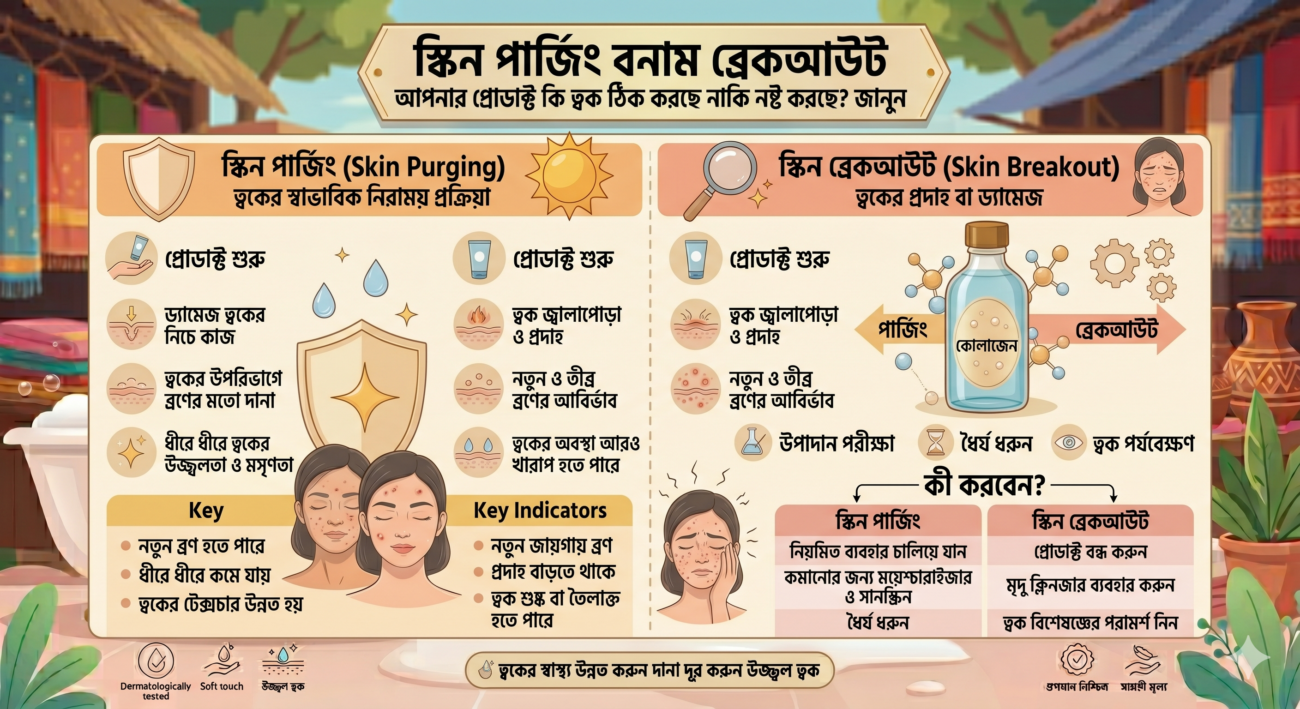
নতুন স্কিনকেয়ার প্রোডাক্ট শুরু করার পর ব্রণ বেড়ে গেছে? এখন ছেড়ে দেবেন নাকি চালিয়ে যাবেন?...
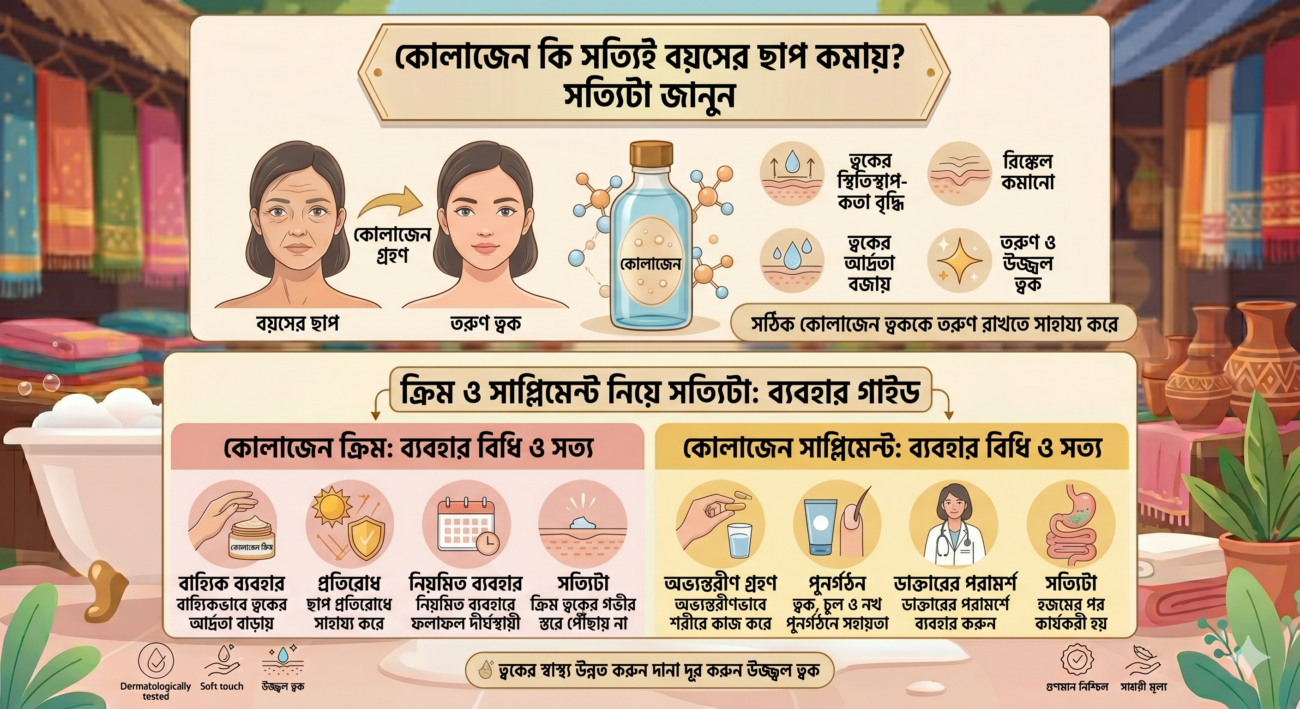
কোলাজেন — অ্যান্টি-এজিং মার্কেটে এই শব্দটা সবচেয়ে বেশি ব্যবহৃত হয়। কোলাজেন ক্রিম, কোলাজেন সাপ্লিমেন্ট, কোলাজেন...
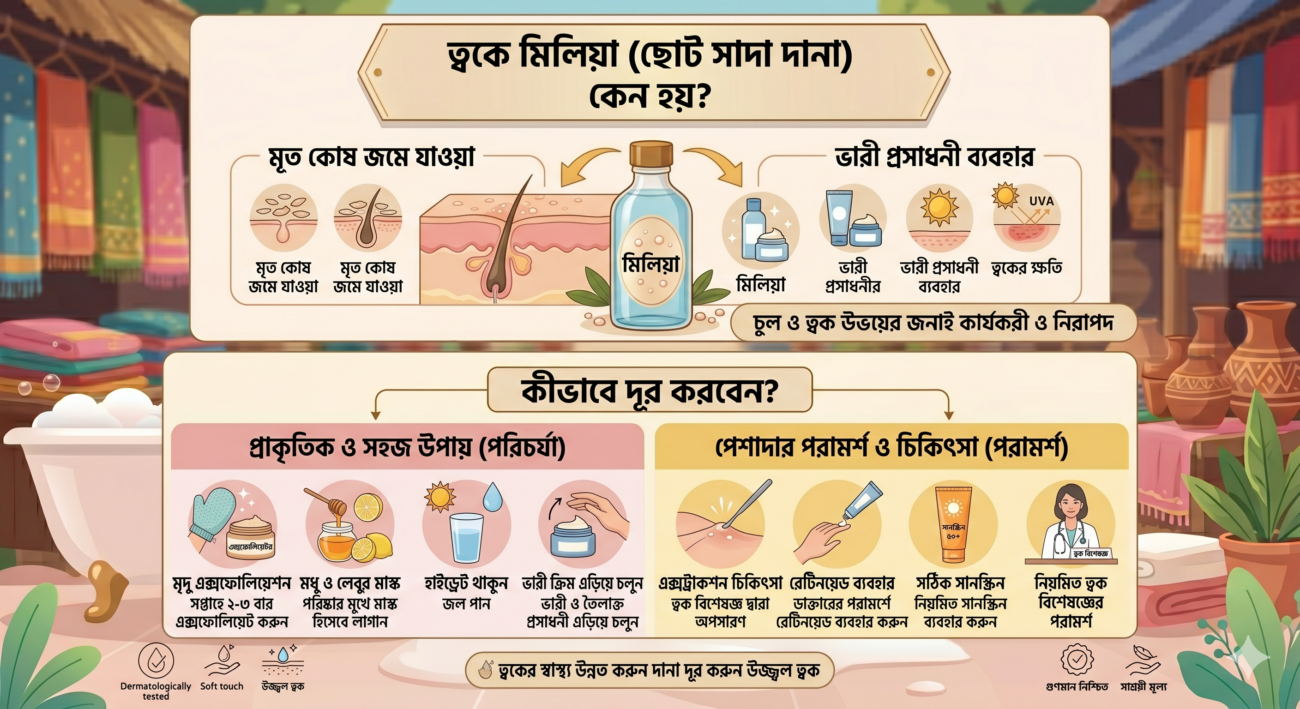
চোখের চারপাশে বা গালে ছোট ছোট শক্ত সাদা দানা দেখা দিচ্ছে? এগুলো হয়তো মিলিয়া। ব্রণের...



 Serums and Treatments
 Moisturizer
 Cleanser
 Face Mask
 Acne Treatment Products
 Sun Protection
 Skin Care Sets & Kits
 Eye Care Products
 Lip Care Products
 Toners & Exfoliators
 Active Ingredient Products
 Body Butter
 Men’s Face Wash
 Moisturizer for Men
 Men’s Hair Care Products
 Brightening Skincare Products
 Acne Skincare Products
 Pore Minimizing Products
 Anti-Aging Skincare Products
 Pigmentation Treatment Products
 Dehydration Skincare Products
 Blackheads & Whiteheads Treatment Products
 Bumpy Skin Treatment Products
 Blemish & Spot Treatment Products
 Dark Circles Treatment Products
 Sensitive Skin Care Products
