
Table of Contents
Chemical exfoliation uses acids to dissolve the desmosome bonds holding dead keratinocytes to the skin surface, accelerating their removal to reveal smoother, brighter skin beneath—without the micro-tear risk that physical scrubs create.
3 families of chemical exfoliants exist: AHAs (water-soluble, surface-exfoliating, best for texture and pigmentation), BHAs (oil-soluble, pore-penetrating, best for acne and blackheads), and PHAs (large-molecule, gentle, best for sensitive skin). Each family serves a different skin concern and works through a distinct mechanism.
What Are AHAs and What Do They Treat?
Alpha hydroxy acids (glycolic acid, lactic acid, mandelic acid) are water-soluble exfoliants that dissolve the bonds between dead cells on the skin surface, treating dullness, rough texture, fine lines, and surface-level hyperpigmentation.
Glycolic acid (smallest molecule, deepest penetration) is the strongest AHA. Lactic acid (mid-size, hydrating properties) suits dry skin. Mandelic acid (largest AHA molecule, gentlest) suits sensitive and melanin-rich skin (lowest PIH risk for Fitzpatrick IV–V).
AHA concentration guide: 5–8% for daily-use toners, 10–15% for weekly treatment masks, 20–30% for professional peels. Start at 5% every other night and increase concentration gradually over 4–8 weeks.
What Are BHAs and What Do They Treat?
Beta hydroxy acid (salicylic acid) is oil-soluble, enabling it to penetrate inside sebum-filled pores and dissolve the sebum-keratin plugs that cause blackheads, whiteheads, and acne—a capability that water-soluble AHAs do not have.
BHA also provides anti-inflammatory properties (aspirin is a BHA derivative), reducing the redness and swelling of inflammatory acne while clearing the pore.
BHA concentration guide: 0.5–1% for daily-use cleansers, 1–2% for daily-use toners and serums, 2% for spot treatment. BHA is gentler than equivalent-concentration AHA and tolerated daily by most oily and combination skin types.
Exfoliators at GlowBD | Toner/exfoliator products | Exfoliating toners
What Are PHAs and Why Are They the Gentlest Option?
Polyhydroxy acids (gluconolactone, lactobionic acid) have larger molecular structures than AHAs, preventing deep penetration and limiting their activity to the outermost skin layer—providing gentle exfoliation with minimal irritation, stinging, or photosensitivity.
PHAs also function as humectants (attracting moisture to the skin surface), making them the only exfoliant family that simultaneously exfoliates and hydrates. PHAs are the recommended chemical exfoliant for sensitive, reactive, rosacea-prone, and barrier-compromised skin.
How to Choose Between AHA, BHA, and PHA?
- Choose AHA when: Primary concerns are dullness, rough texture, fine lines, and surface pigmentation. Best for dry to normal skin.
- Choose BHA when: Primary concerns are blackheads, whiteheads, acne, and enlarged pores. Best for oily and acne-prone skin.
- Choose PHA when: Skin is sensitive, reactive, rosacea-prone, or currently on retinoids. Best for any skin type that cannot tolerate AHA/BHA.
- Combine AHA + BHA when: Skin has both surface texture issues and pore congestion. Use AHA toner + BHA cleanser, or alternate AHA and BHA on different nights.
How Often Should Chemical Exfoliants Be Used?
Beginner frequency: 2–3 times weekly for AHA, 3–4 times weekly for BHA (gentler), daily for PHA. Increase frequency gradually over 4–8 weeks based on tolerance. Signs of over-exfoliation (tightness, redness, stinging with normally comfortable products) indicate frequency should be reduced. Most skin types reach optimal results at 3–4 exfoliation sessions per week—daily exfoliation provides minimal additional benefit while increasing barrier risk.
Frequently Asked Questions
Q: Can chemical exfoliants be used with retinol?
A: Separate exfoliants and retinol to alternate nights during the first 8–12 weeks of retinol use to prevent compounding irritation. After the skin has adapted to retinol, cautious same-night use is possible: apply exfoliant first, wait 20 minutes, then apply retinol. Sensitive skin should maintain the alternate-night separation permanently.
Q: Do chemical exfoliants cause sun sensitivity?
A: AHAs increase photosensitivity by 18–22% for 7 days after application (the fresh cells exposed are more UV-vulnerable). BHA causes minimal photosensitivity. PHA causes no measurable photosensitivity. Apply SPF 50+ PA++++ daily when using any chemical exfoliant, even on indoor days, to protect the freshly revealed cells from UV damage.
Q: What is the difference between exfoliation and purging?
A: Exfoliation removes dead surface cells (immediate smooth texture). Purging is the temporary worsening of acne that occurs when exfoliating actives accelerate the turnover of already-clogged pores beneath the surface—bringing them to a head faster than they would have naturally. Purging lasts 4–6 weeks and only occurs in areas that normally break out. Breakouts in unusual areas or lasting beyond 6 weeks indicate a reaction, not purging.

You May Also Like
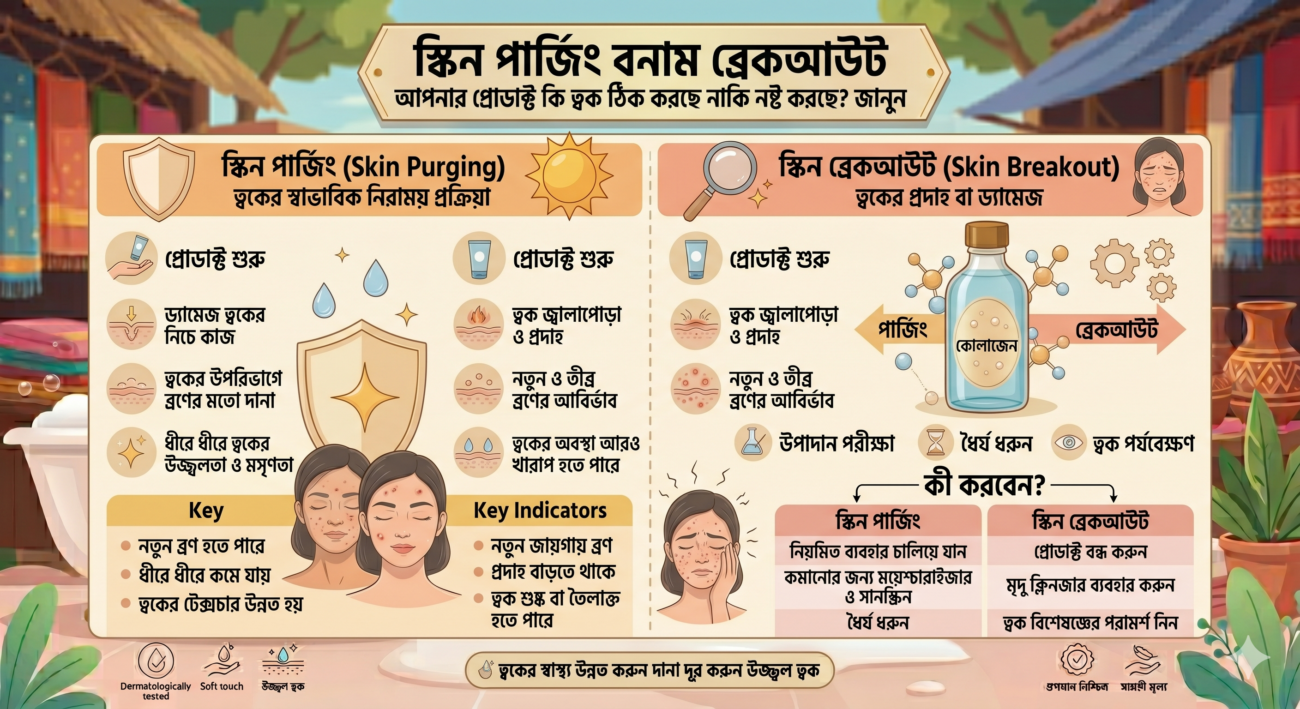
নতুন স্কিনকেয়ার প্রোডাক্ট শুরু করার পর ব্রণ বেড়ে গেছে? এখন ছেড়ে দেবেন নাকি চালিয়ে যাবেন?...
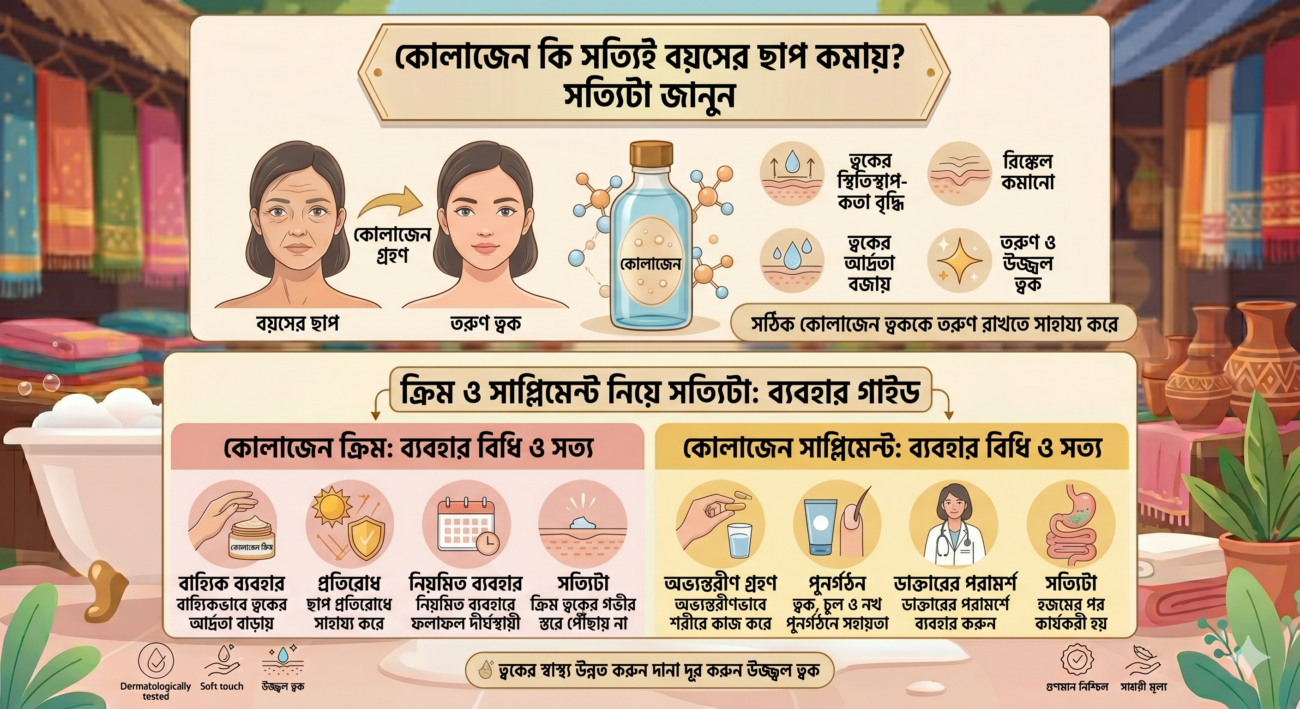
কোলাজেন — অ্যান্টি-এজিং মার্কেটে এই শব্দটা সবচেয়ে বেশি ব্যবহৃত হয়। কোলাজেন ক্রিম, কোলাজেন সাপ্লিমেন্ট, কোলাজেন...
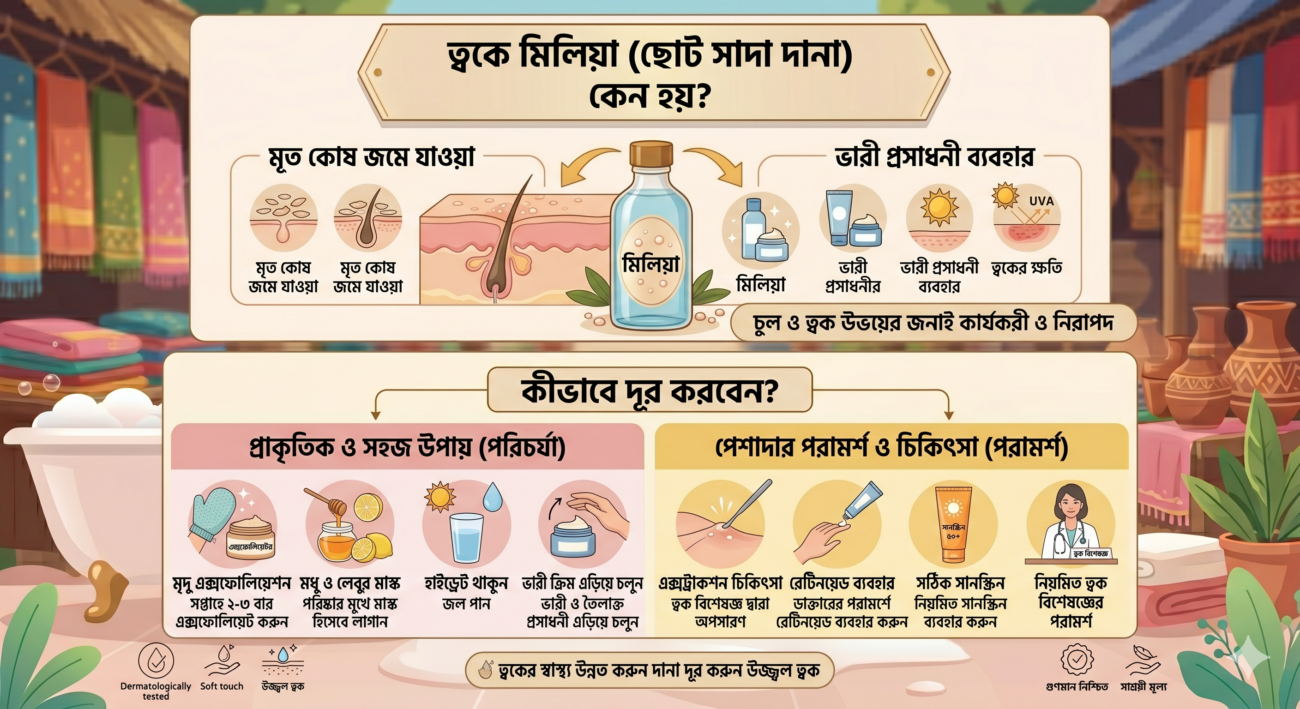
চোখের চারপাশে বা গালে ছোট ছোট শক্ত সাদা দানা দেখা দিচ্ছে? এগুলো হয়তো মিলিয়া। ব্রণের...



 Serums and Treatments
 Moisturizer
 Cleanser
 Face Mask
 Acne Treatment Products
 Sun Protection
 Skin Care Sets & Kits
 Eye Care Products
 Lip Care Products
 Toners & Exfoliators
 Active Ingredient Products
 Body Butter
 Men’s Face Wash
 Moisturizer for Men
 Men’s Hair Care Products
 Brightening Skincare Products
 Acne Skincare Products
 Pore Minimizing Products
 Anti-Aging Skincare Products
 Pigmentation Treatment Products
 Dehydration Skincare Products
 Blackheads & Whiteheads Treatment Products
 Bumpy Skin Treatment Products
 Blemish & Spot Treatment Products
 Dark Circles Treatment Products
 Sensitive Skin Care Products
