
Table of Contents
Skin type is determined by genetics (sebaceous gland size and activity, barrier lipid composition, melanocyte density) and categorized into 5 types: oily (excess sebum, enlarged pores, acne-prone), dry (low sebum, tight feeling, flaking), combination (oily T-zone with normal-to-dry cheeks), normal (balanced sebum, minimal concerns), and sensitive (reactive to products and environmental triggers).
Correctly identifying skin type is the single most important step in building an effective routine—using oily-skin products on dry skin or vice versa worsens every concern.
How to Determine Your Skin Type at Home?
What Is the Bare-Face Test?
Cleanse the face with a gentle cleanser, pat dry, and apply no products for 2 hours.
Observe the skin at the 2-hour mark: oily skin shows visible shine across the entire face, dry skin feels tight with visible flaking, combination skin shows shine only on the T-zone (forehead, nose, chin) with comfortable or tight cheeks, normal skin feels comfortable with no shine or tightness, and sensitive skin shows redness or irritation from the cleanser alone.
What Is the Blotting Sheet Test?
After the 2-hour bare-face period, press a clean blotting sheet against each facial zone (forehead, nose, each cheek, chin) for 5 seconds.
Oily skin leaves visible oil on all zones. Combination skin leaves oil on the T-zone sheets only. Dry skin leaves no oil on any sheet. This test provides a visual, tangible confirmation of sebum distribution patterns.
What Are the Characteristics of Each Skin Type?
- Oily skin: Visible shine within 1–2 hours of cleansing, enlarged pores on nose and cheeks, prone to blackheads and acne, makeup slides off by midday. Common in 60–70% of Bangladeshi adults under 35.
- Dry skin: Tight feeling after cleansing, visible flaking on cheeks and around the nose, dull appearance, fine lines appear earlier. More common in Bangladeshi adults over 40 and during winter months.
- Combination skin: Oily T-zone with normal-to-dry cheeks. The most common skin type globally and in Bangladesh. Requires zone-specific product application in some cases.
- Normal skin: Balanced sebum, small pores, no persistent concerns. Rare in Bangladesh’s climate—most “normal” skin is actually mild combination.
- Sensitive skin: Reacts to products with redness, stinging, burning, or breakouts. May overlap with any sebum type (oily-sensitive, dry-sensitive). Requires fragrance-free, minimal-ingredient products.
Skincare products | Cleansers | Moisturizers | Sensitive skin products
Can Skin Type Change Over Time?
Skin type is genetically determined but its expression changes with 4 factors: age (sebum production decreases after 40, shifting oily skin toward combination or dry), hormones (pregnancy, menopause, PCOS alter sebum output), climate (humidity increases oiliness, dry air increases dryness), and medications (isotretinoin dramatically reduces sebum, corticosteroids thin the barrier).
Reassess skin type annually or after significant hormonal, environmental, or medical changes.
Frequently Asked Questions
Q: Can skin be oily and dehydrated at the same time?
A: Dehydrated-oily skin is extremely common—the skin overproduces sebum (oil) while lacking water (hydration). This occurs when harsh cleansers strip the water content, triggering compensatory oil production. The skin feels oily on the surface but tight and uncomfortable underneath. Treat with hydrating (water-based) products, not mattifying products that strip more moisture.
Q: Does skin type affect which ingredients to use?
A: Skin type determines the product vehicle (gel vs. cream) more than the active ingredient choice. Niacinamide, vitamin C, retinol, and hyaluronic acid benefit all skin types—but oily skin uses them in lightweight gel or water-based formulations, while dry skin uses them in richer cream or oil-based formulations. The active is the same; the delivery format differs.

You May Also Like
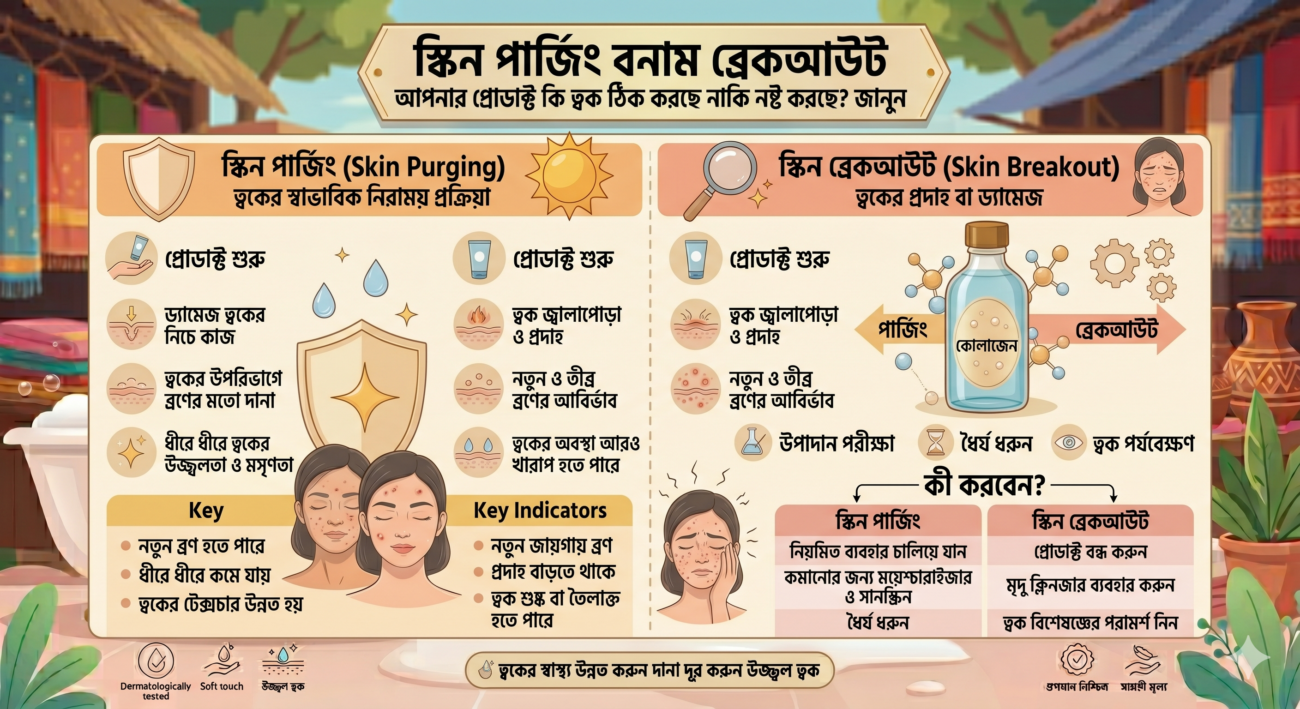
নতুন স্কিনকেয়ার প্রোডাক্ট শুরু করার পর ব্রণ বেড়ে গেছে? এখন ছেড়ে দেবেন নাকি চালিয়ে যাবেন?...
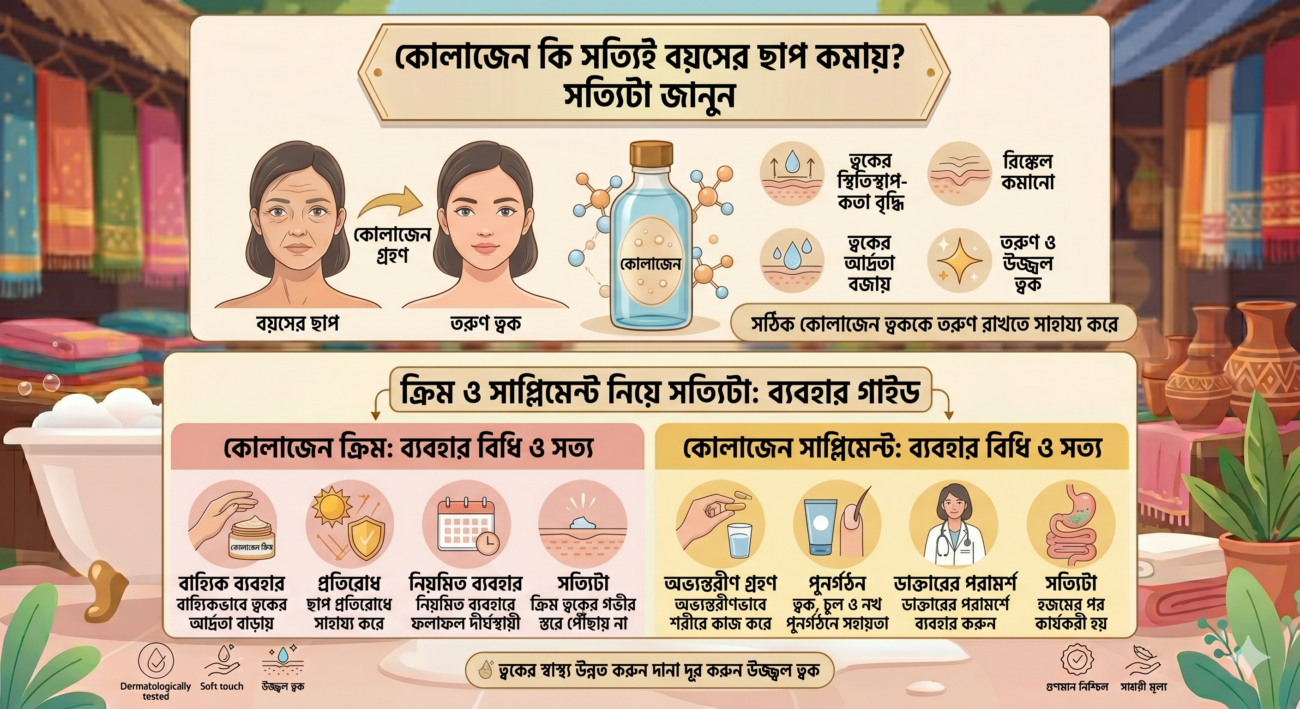
কোলাজেন — অ্যান্টি-এজিং মার্কেটে এই শব্দটা সবচেয়ে বেশি ব্যবহৃত হয়। কোলাজেন ক্রিম, কোলাজেন সাপ্লিমেন্ট, কোলাজেন...
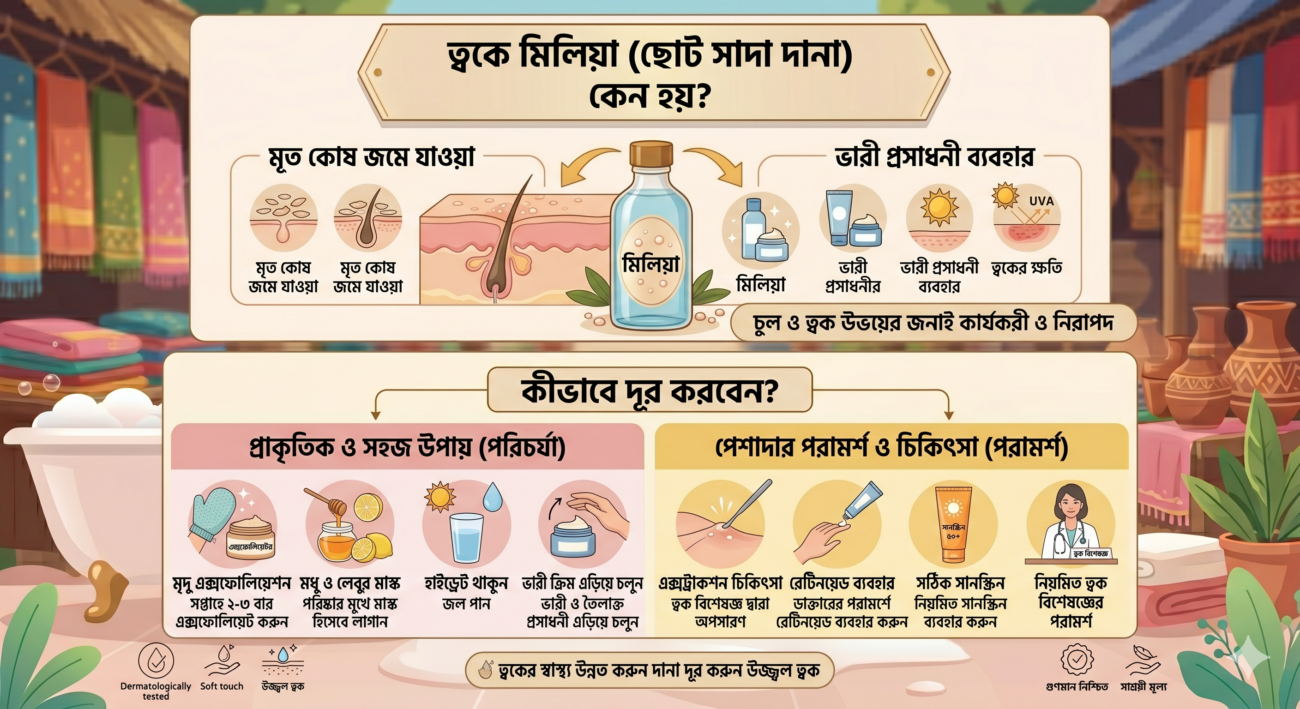
চোখের চারপাশে বা গালে ছোট ছোট শক্ত সাদা দানা দেখা দিচ্ছে? এগুলো হয়তো মিলিয়া। ব্রণের...



 Serums and Treatments
 Moisturizer
 Cleanser
 Face Mask
 Acne Treatment Products
 Sun Protection
 Skin Care Sets & Kits
 Eye Care Products
 Lip Care Products
 Toners & Exfoliators
 Active Ingredient Products
 Body Butter
 Men’s Face Wash
 Moisturizer for Men
 Men’s Hair Care Products
 Brightening Skincare Products
 Acne Skincare Products
 Pore Minimizing Products
 Anti-Aging Skincare Products
 Pigmentation Treatment Products
 Dehydration Skincare Products
 Blackheads & Whiteheads Treatment Products
 Bumpy Skin Treatment Products
 Blemish & Spot Treatment Products
 Dark Circles Treatment Products
 Sensitive Skin Care Products
