
Table of Contents
Clay masks absorb excess sebum and draw impurities from pores through ionic attraction between negatively charged clay minerals and positively charged oil, dirt, and bacteria—but leaving a clay mask on too long or using it too frequently reverses the benefit by stripping the skin’s natural moisture barrier, causing rebound oil production within 24–48 hours.
The difference between an effective clay mask session and a damaging one comes down to timing, frequency, and post-mask moisturization.
What Is the Correct Clay Mask Application Technique?
Step 1: How Should Skin Be Prepared Before a Clay Mask?
Apply clay mask to clean, dry skin after cleansing.
Do not apply to damp skin—water dilutes the clay concentration and reduces its oil-absorbing capacity. Do not apply over serums or moisturizer—the product layer prevents the clay from making direct contact with the pores.
Step 2: How Thick Should the Clay Mask Layer Be?
Apply an opaque, even layer approximately 2–3 mm thick across the face, avoiding the eye area, lips, and any areas with active irritation or broken skin.
A layer too thin dries too fast and provides insufficient clay contact time. A layer too thick wastes product without added benefit—the outer layer does not contact the skin.
Clay masks at GlowBD: https://glowbd.com/product-category/clay-mask | All face masks: https://glowbd.com/product-category/face-mask
Step 3: How Long Should a Clay Mask Stay On?
Leave the clay mask on for 10–15 minutes or until it begins to lighten in color around the edges—but remove before it fully dries, cracks, and tightens.
A fully dried clay mask pulls moisture out of the skin along with oil, increasing TEWL by 15–25% and triggering the compensatory oil production the mask was intended to reduce. The ideal removal point is when the mask is 80% dry—still slightly tacky at the thickest areas.
Step 4: How Should a Clay Mask Be Removed?
Remove with a damp, warm washcloth using gentle circular motions.
Do not peel or scrape dried clay off the skin—the mechanical force damages the stratum corneum and causes micro-tears. Alternatively, splash warm water onto the face until the clay softens, then rinse thoroughly.
Step 5: What Should Be Applied After a Clay Mask?
Immediately follow with hydrating toner, serum (hyaluronic acid or niacinamide), and moisturizer to replenish the moisture the clay absorbed along with the excess oil.
Skipping post-mask moisturization is the single most common clay mask mistake—it leaves the skin in a dehydrated, barrier-compromised state.
How Often Should Clay Masks Be Used?
Use clay masks 1–2 times weekly for oily and combination skin.
Once weekly is sufficient for normal skin. Avoid clay masks entirely on dry, sensitive, or barrier-damaged skin—the oil-stripping effect worsens these conditions. On combination skin, apply the clay mask to the T-zone only (forehead, nose, chin) and skip the drier cheek areas.
Frequently Asked Questions
Q: Which type of clay is best for oily skin?
A: Bentonite clay provides the strongest oil absorption for very oily skin. Kaolin clay provides gentle oil absorption for normal-to-slightly-oily skin. French green clay (illite) falls between the two. For Bangladeshi monsoon season when oil production peaks, bentonite delivers the most visible pore-clearing results. For winter, switch to gentler kaolin.
Q: Can clay mask be mixed with other ingredients?
A: Clay mask powder can be mixed with honey (humectant to counteract drying), yogurt (lactic acid for gentle exfoliation), or rose water (hydration + anti-inflammation) to reduce the drying effect while maintaining oil-absorbing benefits. Do not mix with essential oils (irritation risk) or acidic serums (unpredictable pH interaction).

You May Also Like
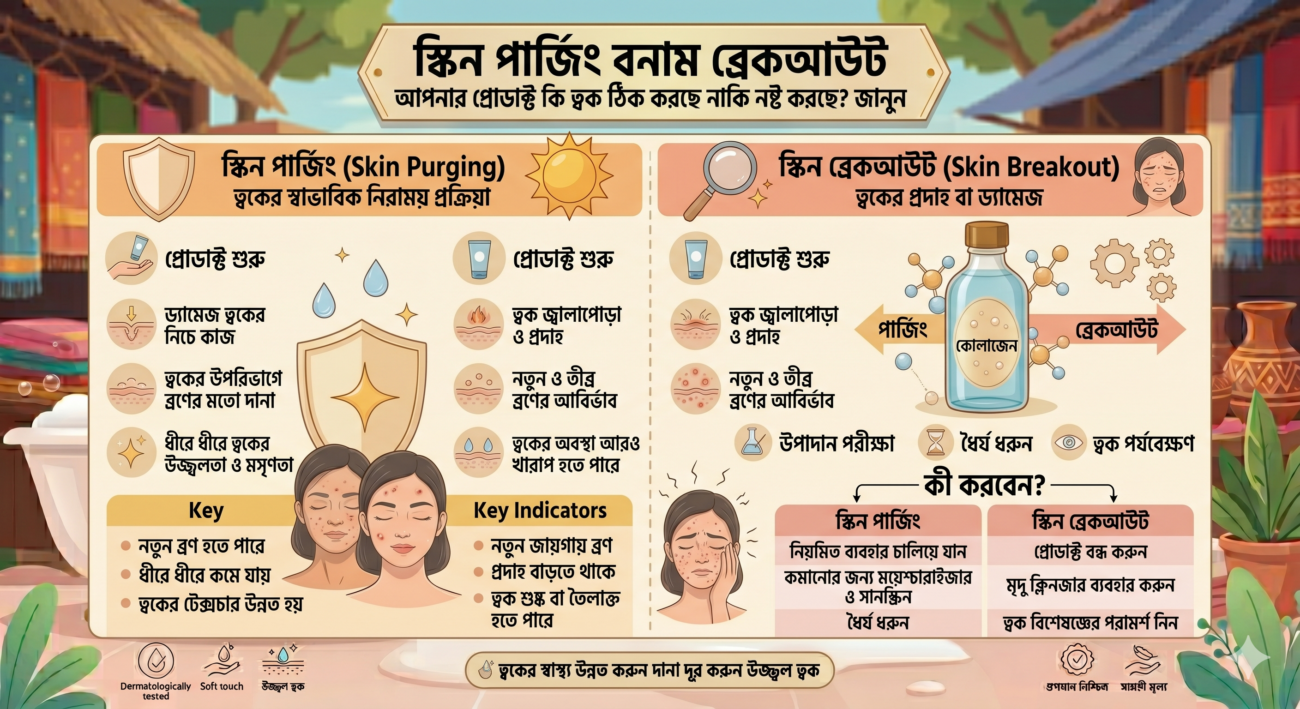
নতুন স্কিনকেয়ার প্রোডাক্ট শুরু করার পর ব্রণ বেড়ে গেছে? এখন ছেড়ে দেবেন নাকি চালিয়ে যাবেন?...

কোলাজেন — অ্যান্টি-এজিং মার্কেটে এই শব্দটা সবচেয়ে বেশি ব্যবহৃত হয়। কোলাজেন ক্রিম, কোলাজেন সাপ্লিমেন্ট, কোলাজেন...

চোখের চারপাশে বা গালে ছোট ছোট শক্ত সাদা দানা দেখা দিচ্ছে? এগুলো হয়তো মিলিয়া। ব্রণের...



 Serums and Treatments
 Moisturizer
 Cleanser
 Face Mask
 Acne Treatment Products
 Sun Protection
 Skin Care Sets & Kits
 Eye Care Products
 Lip Care Products
 Toners & Exfoliators
 Active Ingredient Products
 Body Butter
 Men’s Face Wash
 Moisturizer for Men
 Men’s Hair Care Products
 Brightening Skincare Products
 Acne Skincare Products
 Pore Minimizing Products
 Anti-Aging Skincare Products
 Pigmentation Treatment Products
 Dehydration Skincare Products
 Blackheads & Whiteheads Treatment Products
 Bumpy Skin Treatment Products
 Blemish & Spot Treatment Products
 Dark Circles Treatment Products
 Sensitive Skin Care Products
