
Table of Contents
Fewer than 10% of Bangladeshi men apply sunscreen daily despite the country’s UV Index of 6–11 year-round, resulting in accelerated photoaging (wrinkles, sagging, dark spots appearing 10–15 years earlier than SPF-protected skin), cumulative UV-driven DNA damage, and a skin cancer risk that makes men globally 2x more likely than women to develop and die from melanoma.
Male reluctance toward sunscreen stems from product associations with cosmetics, greasy textures of outdated formulations, and lack of awareness that UV causes 80% of visible facial aging.
What Does UV Damage Actually Do to Male Skin?
UV radiation causes 3 categories of damage to male skin: photoaging (collagen and elastin degradation producing wrinkles, sagging, and leathery texture 15–20 years before chronological aging would), hyperpigmentation (dark spots, uneven tone, and melasma-like patches on the forehead and cheeks), and DNA mutations (accumulating with each unprotected exposure, increasing skin cancer risk with every decade of sun exposure).
Men accumulate more total UV exposure than women because outdoor work, sports, and commuting habits result in higher cumulative doses.
What Type of Sunscreen Works Best for Men?
Men prefer sunscreens with 3 characteristics: matte or satin finish (no shine on oily male skin), fast absorption (under 30 seconds, no white cast), and minimal fragrance.
Korean and Japanese sunscreens consistently meet these criteria with fluid, gel, or essence textures that feel lightweight, absorb instantly, and leave no visible residue on Fitzpatrick IV–V skin tones.
Chemical and hybrid sunscreens (combining organic UV filters with micronized zinc oxide) provide the best cosmetic experience for men: invisible finish, broad-spectrum protection, and no white cast.
Pure physical (mineral) sunscreens in non-tinted formulations leave a noticeable white-gray cast on medium-to-dark skin that most men refuse to tolerate daily.
Sun protection at GlowBD | SPF products | Men’s care products
How Should Men Apply Sunscreen Correctly?
Apply two finger-lengths (approximately 1.2 ml) of sunscreen to the face and ears every morning as the final skincare step.
Spread evenly across the forehead, nose, cheeks, chin, ears, and back of neck. Allow 15–20 minutes for chemical filters to form a uniform protective film before sun exposure. Reapply every 2 hours during continuous outdoor activity, or immediately after towel-drying.
How to Make Sunscreen Part of a Simple Men’s Routine?
The simplest integration: keep the sunscreen bottle next to the toothbrush.
Apply sunscreen as the automatic final step of the morning routine, immediately after moisturizer. For men who resist a multi-step routine, use a moisturizer-SPF combination product (SPF 30–50) that delivers hydration and UV protection in a single application under 30 seconds.
Frequently Asked Questions
Q: Does dark skin need sunscreen?
A: Melanin in darker skin provides a natural SPF equivalent of 5–13—insufficient for protection against photoaging, hyperpigmentation, and skin cancer. UV radiation penetrates all skin tones. Darker skin is less likely to develop melanoma but more likely to develop it at advanced, harder-to-treat stages due to delayed diagnosis from the misconception that dark skin does not need sun protection.
Q: Does sunscreen make the face oily?
A: Older, first-generation sunscreens used heavy occlusive bases that contributed to oiliness. Modern gel, fluid, and essence sunscreens from Korean and Japanese brands use water-based, silicone-free formulations that absorb instantly and provide a matte or satin finish. Choose a sunscreen labeled “oil-free,” “matte finish,” or “for oily skin” to avoid midday shine.
Q: Can sweat reduce sunscreen effectiveness?
A: Heavy sweating dilutes and removes sunscreen from the skin surface within 40–80 minutes depending on formulation. Water-resistant sunscreens maintain their SPF for 40–80 minutes of continuous sweating (as labeled). In Bangladesh’s heat, reapply water-resistant sunscreen every 2 hours during outdoor work or exercise, and immediately after wiping sweat with a towel.
Q: Is SPF in a moisturizer enough for men?
A: SPF moisturizers at 30–50 SPF protect adequately for indoor-dominant routines with short commutes. The limitation is application volume: men typically under-apply moisturizer (using half the recommended amount), which halves the effective SPF. For reliable protection, apply the full two finger-lengths amount, or use a separate dedicated sunscreen after moisturizer.

You May Also Like
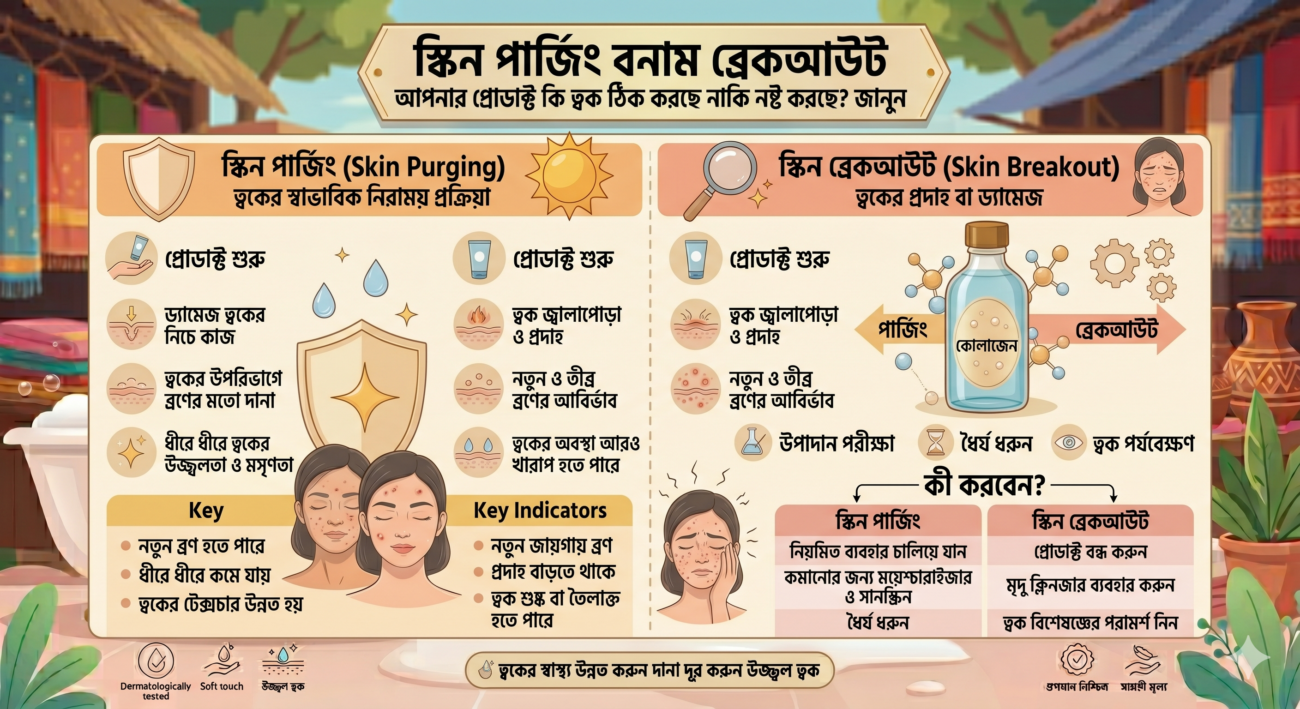
নতুন স্কিনকেয়ার প্রোডাক্ট শুরু করার পর ব্রণ বেড়ে গেছে? এখন ছেড়ে দেবেন নাকি চালিয়ে যাবেন?...
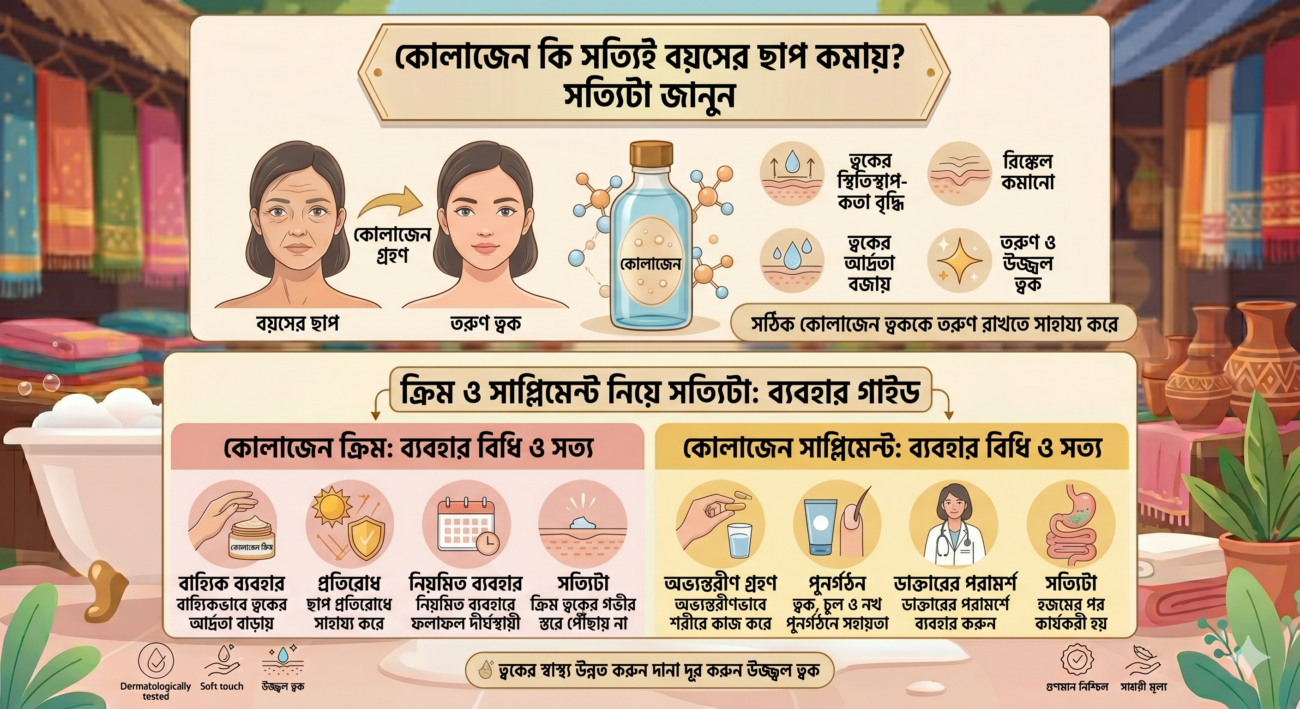
কোলাজেন — অ্যান্টি-এজিং মার্কেটে এই শব্দটা সবচেয়ে বেশি ব্যবহৃত হয়। কোলাজেন ক্রিম, কোলাজেন সাপ্লিমেন্ট, কোলাজেন...
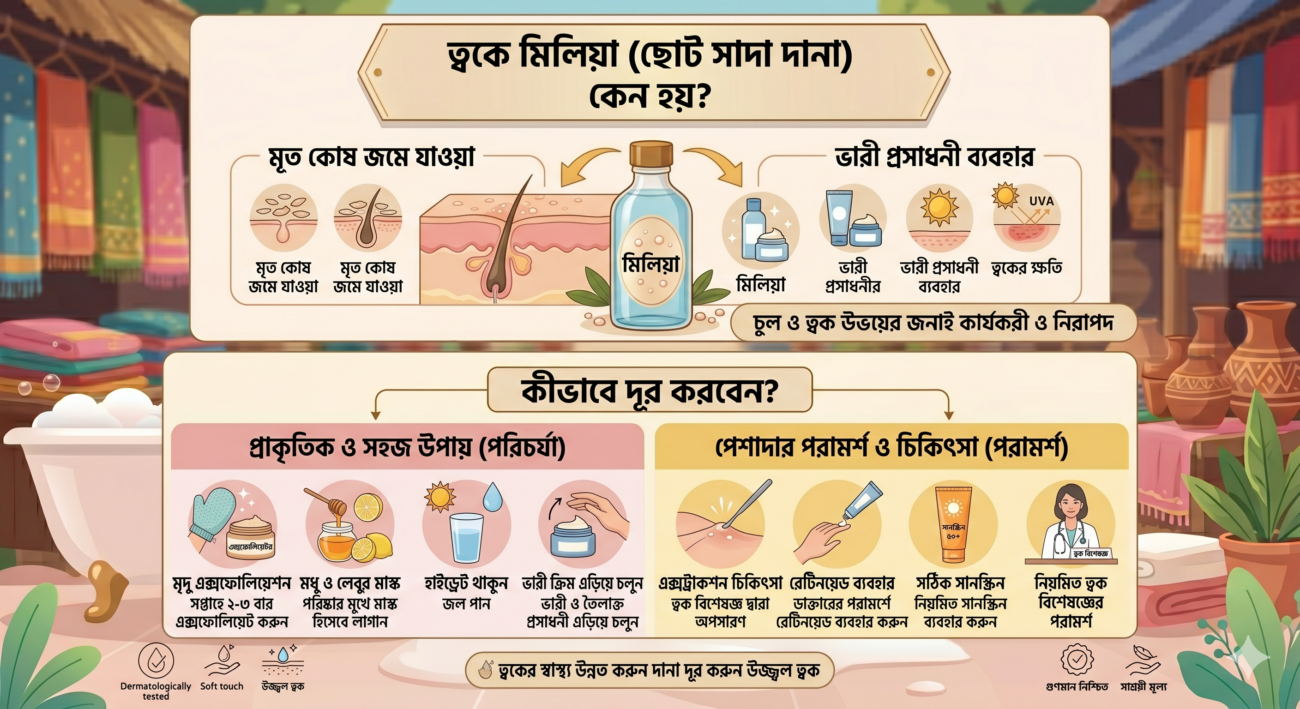
চোখের চারপাশে বা গালে ছোট ছোট শক্ত সাদা দানা দেখা দিচ্ছে? এগুলো হয়তো মিলিয়া। ব্রণের...



 Serums and Treatments
 Moisturizer
 Cleanser
 Face Mask
 Acne Treatment Products
 Sun Protection
 Skin Care Sets & Kits
 Eye Care Products
 Lip Care Products
 Toners & Exfoliators
 Active Ingredient Products
 Body Butter
 Men’s Face Wash
 Moisturizer for Men
 Men’s Hair Care Products
 Brightening Skincare Products
 Acne Skincare Products
 Pore Minimizing Products
 Anti-Aging Skincare Products
 Pigmentation Treatment Products
 Dehydration Skincare Products
 Blackheads & Whiteheads Treatment Products
 Bumpy Skin Treatment Products
 Blemish & Spot Treatment Products
 Dark Circles Treatment Products
 Sensitive Skin Care Products
