
Table of Contents
Sunscreen is the single most effective anti-aging, anti-pigmentation, and skin cancer prevention product in skincare—blocking 93–99% of UV radiation that causes 80% of visible skin aging (photoaging), 90% of hyperpigmentation, and virtually all non-melanoma skin cancers.
Bangladesh receives UV Index 6–11 year-round (classified as “high” to “extreme” by the WHO), making daily SPF application the most impactful skincare habit for Bangladeshi consumers.
Despite this, sunscreen adoption in Bangladesh remains below 15% of the adult population. The primary barriers—white cast, heavy texture, and greasy feel—have been eliminated by modern Korean and Japanese sunscreen formulations that feel invisible on skin while providing SPF 50+ PA++++ protection.
What Is the Difference Between UVA and UVB Radiation?
UVB rays (280–320 nm) cause sunburn, DNA damage, and skin cancer risk, while UVA rays (320–400 nm) penetrate deeper into the dermis to destroy collagen, cause hyperpigmentation, and accelerate photoaging.
UVA constitutes 95% of UV radiation reaching Earth’s surface and maintains 80–95% intensity year-round—even on cloudy days and through window glass.
What Do SPF and PA Ratings Mean?
SPF (Sun Protection Factor) measures UVB protection: SPF 30 blocks 97% of UVB, SPF 50 blocks 98%. PA rating measures UVA protection on a 4-tier scale: PA+ (some), PA++ (moderate), PA+++ (high), PA++++ (extremely high).
Always choose SPF 50+ PA++++ for Bangladesh’s high UV index—the PA++++ rating is critical because UVA causes the hyperpigmentation that is the primary skin concern for Bangladeshi consumers.
SPF products at GlowBD | Sun protection | Body sunscreen
What Is the Difference Between Physical and Chemical Sunscreen?
Physical (mineral) sunscreens use zinc oxide and/or titanium dioxide to reflect UV rays off the skin surface. Chemical sunscreens use organic UV filters (avobenzone, octinoxate, newer-generation Tinosorb S/M) that absorb UV energy and convert it to heat.
Modern sunscreens often combine both types for broad-spectrum protection with cosmetically elegant textures.
- Physical sunscreen: Immediate protection upon application. No chemical absorption into skin. Can leave white cast on darker skin tones.
- Chemical sunscreen: Absorbs into skin within 15 minutes. No white cast. Requires 15–20 minutes before sun exposure for activation.
- Hybrid sunscreen: Combines mineral + chemical filters. Provides broadest protection with minimal white cast. Recommended for Bangladeshi skin tones.
How Much Sunscreen Should Be Applied?
Apply a two-finger-length strip (approximately 1/4 teaspoon or 1.25 ml) to the face and neck to achieve the labeled SPF protection.
Most people apply only 25–50% of this amount, reducing SPF 50 protection to the equivalent of SPF 12–25. Under-application is the primary reason sunscreen “fails” to prevent tanning and hyperpigmentation.
How Often Should Sunscreen Be Reapplied?
Reapply sunscreen every 2 hours during continuous outdoor exposure, immediately after swimming, heavy sweating, or towel-drying the face.
Indoor workers with minimal window exposure can apply once in the morning. Glass blocks UVB but allows 75–80% of UVA to pass through—so window-adjacent desks still require morning SPF application.
Frequently Asked Questions
Q: Does sunscreen prevent tanning?
A: SPF 50+ PA++++ significantly reduces tanning by blocking 98% of UVB and the highest level of UVA. Some tanning still occurs because no sunscreen blocks 100% of UV radiation. Consistent SPF application is the most effective method to prevent the UV-induced melanin overproduction that causes hyperpigmentation in Bangladeshi skin.
Q: Can sunscreen be used under makeup?
A: Apply sunscreen as the last skincare step, wait 2–3 minutes for it to set, then apply makeup on top. Chemical and hybrid sunscreens layer better under makeup than thick mineral formulations. Sunscreen cushion compacts from Korean brands combine SPF 50+ protection with makeup coverage in a single product for convenient midday reapplication.
Q: Is SPF in moisturizer enough?
A: SPF in moisturizer provides inadequate protection because consumers apply moisturizer at 50–70% of the quantity needed for labeled SPF. A separate sunscreen product applied at the correct two-finger amount after moisturizer provides reliable, measurable UV protection.

You May Also Like
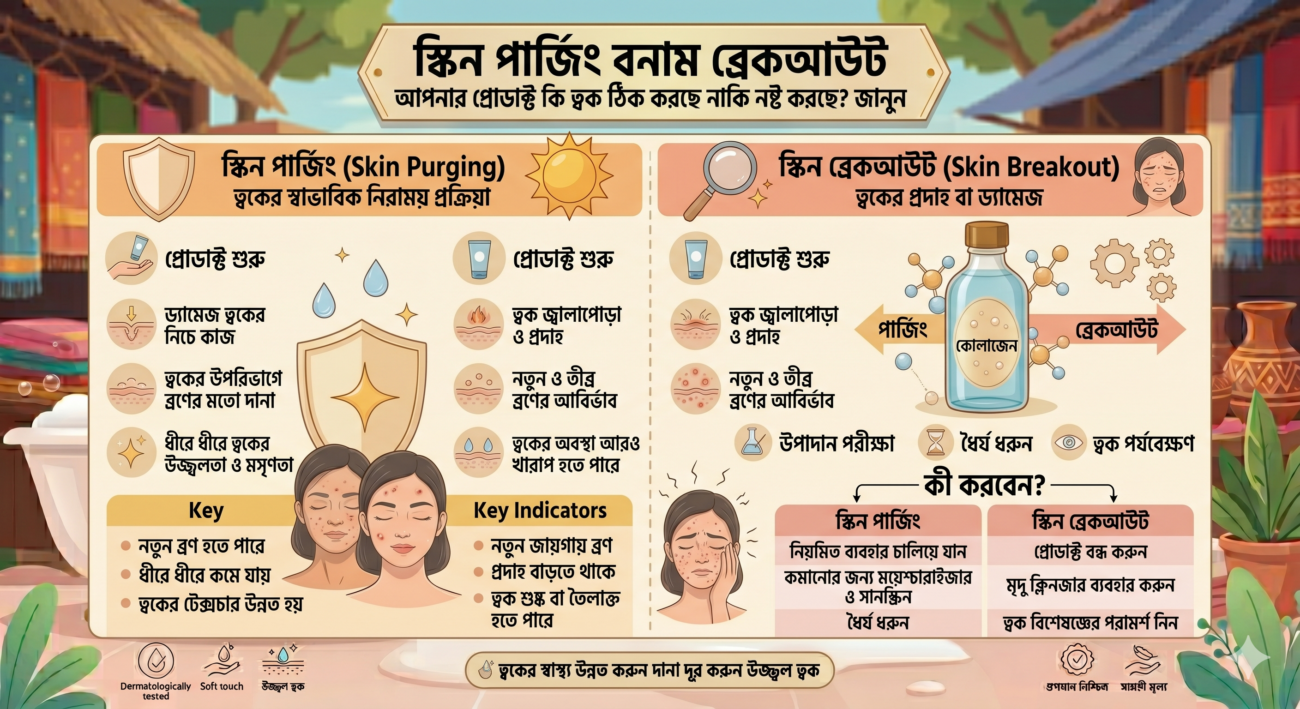
নতুন স্কিনকেয়ার প্রোডাক্ট শুরু করার পর ব্রণ বেড়ে গেছে? এখন ছেড়ে দেবেন নাকি চালিয়ে যাবেন?...
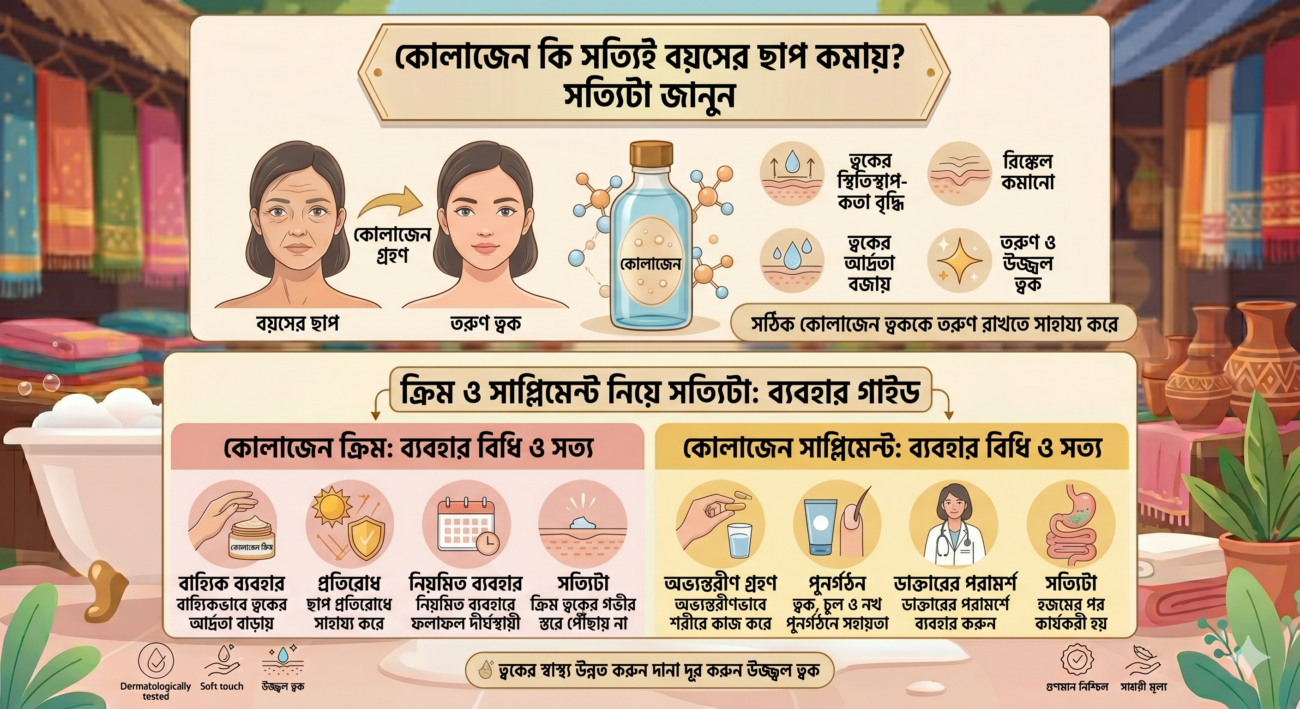
কোলাজেন — অ্যান্টি-এজিং মার্কেটে এই শব্দটা সবচেয়ে বেশি ব্যবহৃত হয়। কোলাজেন ক্রিম, কোলাজেন সাপ্লিমেন্ট, কোলাজেন...
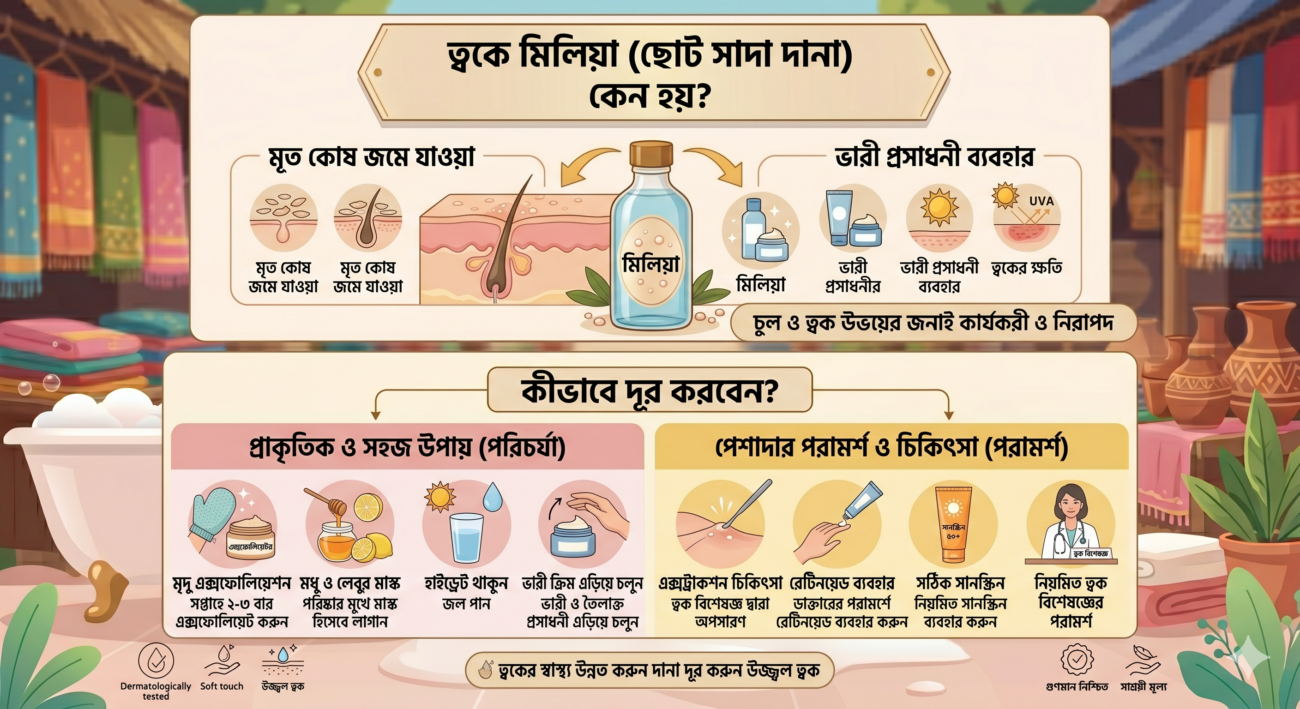
চোখের চারপাশে বা গালে ছোট ছোট শক্ত সাদা দানা দেখা দিচ্ছে? এগুলো হয়তো মিলিয়া। ব্রণের...



 Serums and Treatments
 Moisturizer
 Cleanser
 Face Mask
 Acne Treatment Products
 Sun Protection
 Skin Care Sets & Kits
 Eye Care Products
 Lip Care Products
 Toners & Exfoliators
 Active Ingredient Products
 Body Butter
 Men’s Face Wash
 Moisturizer for Men
 Men’s Hair Care Products
 Brightening Skincare Products
 Acne Skincare Products
 Pore Minimizing Products
 Anti-Aging Skincare Products
 Pigmentation Treatment Products
 Dehydration Skincare Products
 Blackheads & Whiteheads Treatment Products
 Bumpy Skin Treatment Products
 Blemish & Spot Treatment Products
 Dark Circles Treatment Products
 Sensitive Skin Care Products
