
Table of Contents
Collagen is the primary structural protein in human skin, constituting 75–80% of dermal dry weight and providing the tensile strength, firmness, and elasticity that define youthful skin appearance.
Collagen production declines by 1–1.5% per year after age 25, resulting in cumulative loss of 20–30% by age 50—the primary driver of visible wrinkles, sagging, and skin thinning.
The critical question for consumers is whether topical collagen products can reverse this decline. The evidence-based answer: topical collagen molecules are too large (300,000 Daltons) to penetrate the stratum corneum. However, collagen-boosting ingredients (peptides, retinoids, vitamin C) effectively stimulate the skin’s own collagen production from within.
Can Topical Collagen Penetrate the Skin?
Intact collagen molecules (300,000 Daltons) cannot penetrate the skin barrier—the stratum corneum allows passage only for molecules below 500 Daltons.
Topical collagen products provide surface-level hydration and temporary plumping through hygroscopic (water-attracting) properties, but they do not add structural collagen to the dermis.
Hydrolyzed collagen (broken into smaller peptide fragments of 2,000–10,000 Daltons) penetrates slightly deeper but still does not reach the dermal layer where structural collagen resides. The most effective approach is stimulating the skin’s own fibroblasts to produce new collagen using signal peptides, retinoids, and vitamin C.
Collagen products at GlowBD | Anti-aging products | Peptide products
Which Ingredients Stimulate Collagen Production Most Effectively?
5 ingredients carry the strongest clinical evidence for stimulating endogenous collagen synthesis: retinoids (vitamin A derivatives), vitamin C (L-ascorbic acid), peptides (signal peptides like Matrixyl), growth factors (EGF, TGF-beta), and niacinamide (vitamin B3).
Each ingredient activates different signaling pathways in fibroblasts, and combining 2–3 produces additive collagen-building effects.
Frequently Asked Questions
Q: Are collagen supplements more effective than topical products?
A: Oral collagen peptides (hydrolyzed collagen at 2.5–10 grams daily) show clinical evidence of improving skin elasticity and hydration after 8–12 weeks of supplementation. They deliver collagen peptides to the dermis through blood circulation—bypassing the skin barrier limitation of topical products. Combining oral supplements with topical collagen-boosting actives provides the most comprehensive approach.
Q: Does collagen loss accelerate during menopause?
A: Collagen loss accelerates dramatically during menopause, with women losing approximately 30% of dermal collagen within the first 5 postmenopausal years due to estrogen decline. Starting collagen-stimulating skincare (retinoids, peptides) before perimenopause provides a protective buffer against this accelerated loss.

You May Also Like
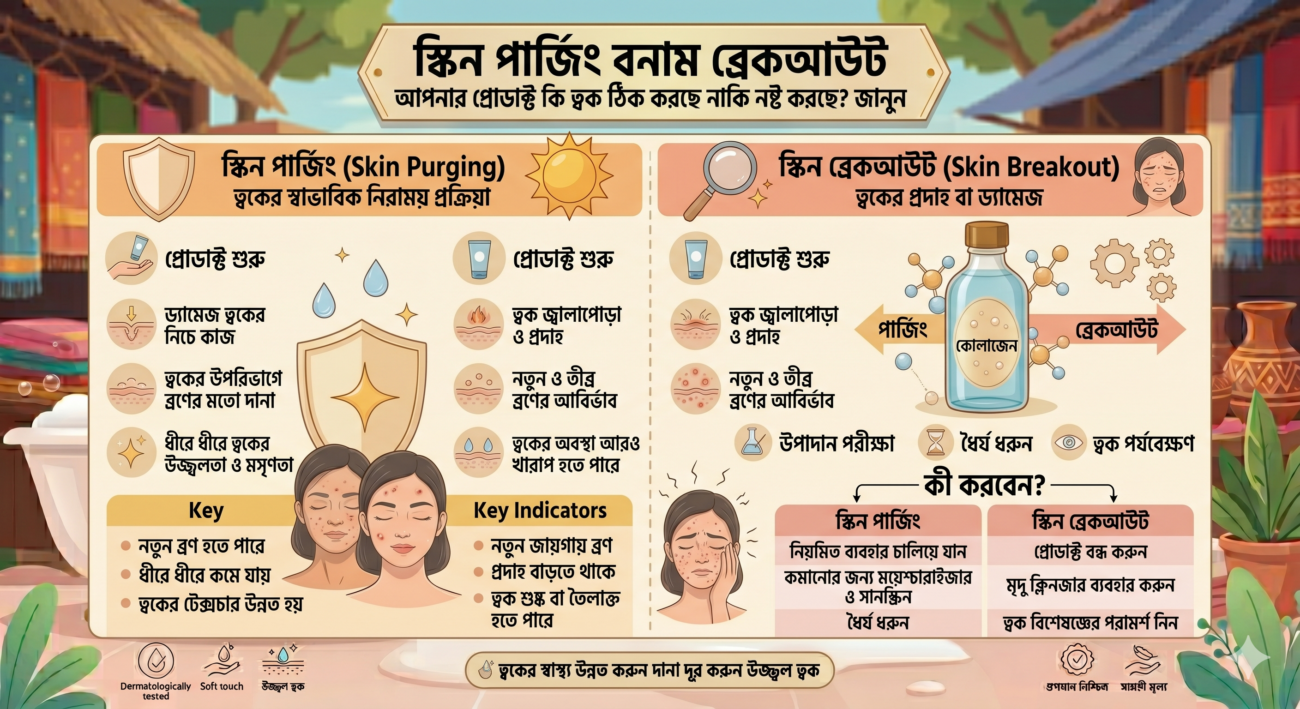
নতুন স্কিনকেয়ার প্রোডাক্ট শুরু করার পর ব্রণ বেড়ে গেছে? এখন ছেড়ে দেবেন নাকি চালিয়ে যাবেন?...
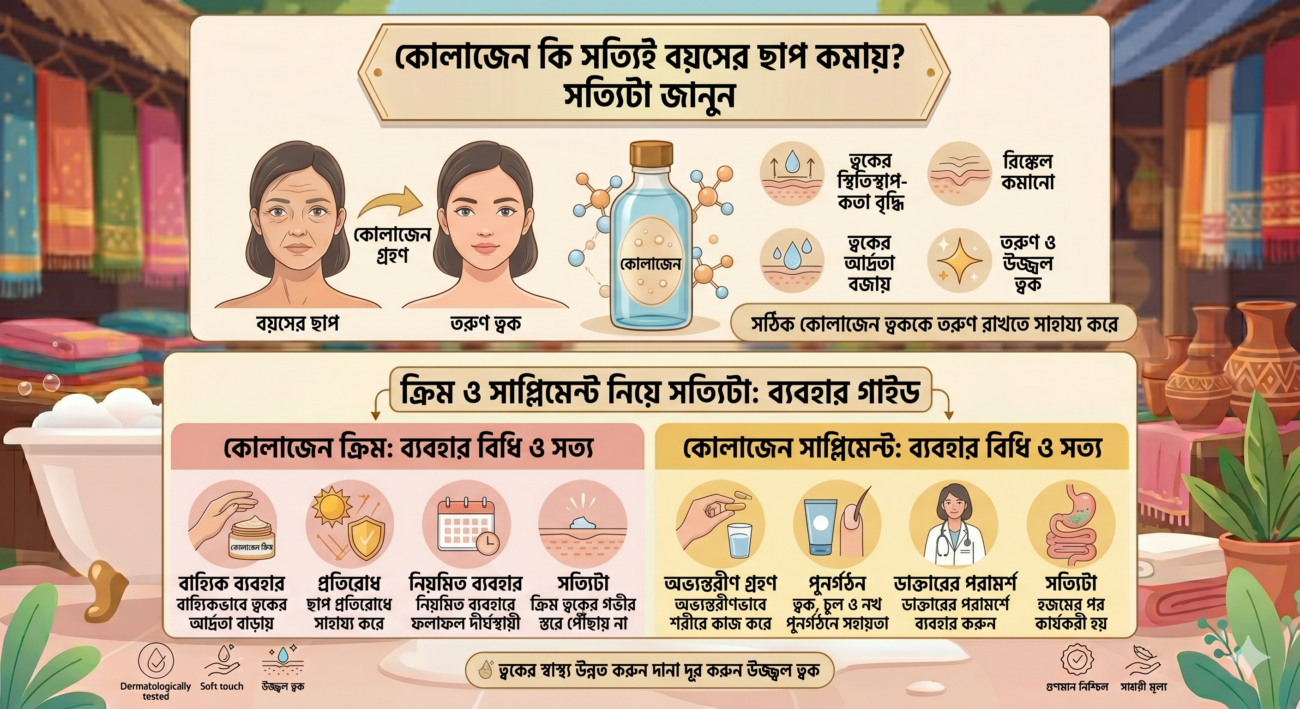
কোলাজেন — অ্যান্টি-এজিং মার্কেটে এই শব্দটা সবচেয়ে বেশি ব্যবহৃত হয়। কোলাজেন ক্রিম, কোলাজেন সাপ্লিমেন্ট, কোলাজেন...

চোখের চারপাশে বা গালে ছোট ছোট শক্ত সাদা দানা দেখা দিচ্ছে? এগুলো হয়তো মিলিয়া। ব্রণের...



 Serums and Treatments
 Moisturizer
 Cleanser
 Face Mask
 Acne Treatment Products
 Sun Protection
 Skin Care Sets & Kits
 Eye Care Products
 Lip Care Products
 Toners & Exfoliators
 Active Ingredient Products
 Body Butter
 Men’s Face Wash
 Moisturizer for Men
 Men’s Hair Care Products
 Brightening Skincare Products
 Acne Skincare Products
 Pore Minimizing Products
 Anti-Aging Skincare Products
 Pigmentation Treatment Products
 Dehydration Skincare Products
 Blackheads & Whiteheads Treatment Products
 Bumpy Skin Treatment Products
 Blemish & Spot Treatment Products
 Dark Circles Treatment Products
 Sensitive Skin Care Products
