
Table of Contents
Peptides are short chains of 2–50 amino acids that function as cell-signaling molecules, instructing skin cells to produce more collagen, elastin, and hyaluronic acid.
Over 100 clinical studies validate peptides as effective anti-aging ingredients, with copper peptides (GHK-Cu) and Matrixyl (palmitoyl pentapeptide-4) demonstrating 15–30% improvement in wrinkle depth and skin firmness over 12–24 weeks.
Peptides differ from retinoids in mechanism: retinoids accelerate cell turnover through retinoic acid receptor activation, while peptides stimulate production of structural proteins through cell-signaling pathways. This makes peptides complementary to retinoids rather than competitive—using both addresses aging through two independent mechanisms.
What Are the 4 Types of Skincare Peptides?
4 peptide categories address different skin concerns: signal peptides (stimulate collagen production), carrier peptides (deliver trace minerals like copper to skin cells), enzyme-inhibitor peptides (prevent collagen breakdown), and neurotransmitter peptides (relax facial muscles to reduce expression lines).
Most anti-aging serums combine 2–3 peptide types for comprehensive action.
- Signal peptides (Matrixyl 3000, Matrixyl Synthe’6): Send “produce collagen” signals to fibroblasts. Most clinically validated peptide category.
- Carrier peptides (GHK-Cu, copper tripeptide): Deliver copper ions that activate superoxide dismutase (antioxidant) and stimulate collagen/elastin synthesis.
- Neurotransmitter peptides (Argireline/acetyl hexapeptide-3): Reduce neurotransmitter release at the muscular junction, relaxing micro-contractions that cause expression lines. Often called “topical Botox” (though far milder).
- Enzyme-inhibitor peptides: Block matrix metalloproteinases (MMPs) that degrade collagen. Prevent breakdown rather than stimulate production.
Peptide products at GlowBD | Anti-aging serums | Collagen products
How Do Peptides Compare to Retinol for Anti-Aging?
Retinol delivers faster, more dramatic results for wrinkles and texture (12–24 weeks) but carries irritation risk. Peptides deliver gentler, gradual improvement (16–36 weeks) with virtually zero irritation.
The optimal anti-aging strategy uses both: retinol at night for cell turnover and peptides morning and night for collagen signaling—achieving results neither ingredient delivers alone.
How to Apply Peptide Products Effectively?
Apply peptide serum after toner and before moisturizer, using 3—4 drops patted onto the face and neck twice daily.
Peptides are pH-flexible, non-irritating, and compatible with all other skincare actives. They do not require waiting times, pH adjustment, or photosensitivity precautions—making them the easiest anti-aging active to incorporate.
Frequently Asked Questions
Q: At what age should peptide products be started?
A: Start peptide products at 25–28 as a preventive measure. Collagen production declines 1–1.5% annually from age 25—peptides counteract this decline by signaling fibroblasts to maintain collagen output. Earlier adoption provides stronger cumulative protective benefit.
Q: Can peptides replace retinol entirely?
A: Peptides cannot fully replace retinol. Retinol accelerates cell turnover, regulates gene expression, and treats acne—functions peptides do not perform. Peptides are the best alternative for individuals who cannot tolerate retinoids due to sensitivity, pregnancy, or other contraindications.
Q: Do peptides work on all skin types?
A: Peptides work on all skin types with zero contraindications. They cause no irritation, photosensitivity, or purging. Oily, dry, sensitive, combination, and acne-prone skin all benefit from peptide-driven collagen stimulation.

You May Also Like
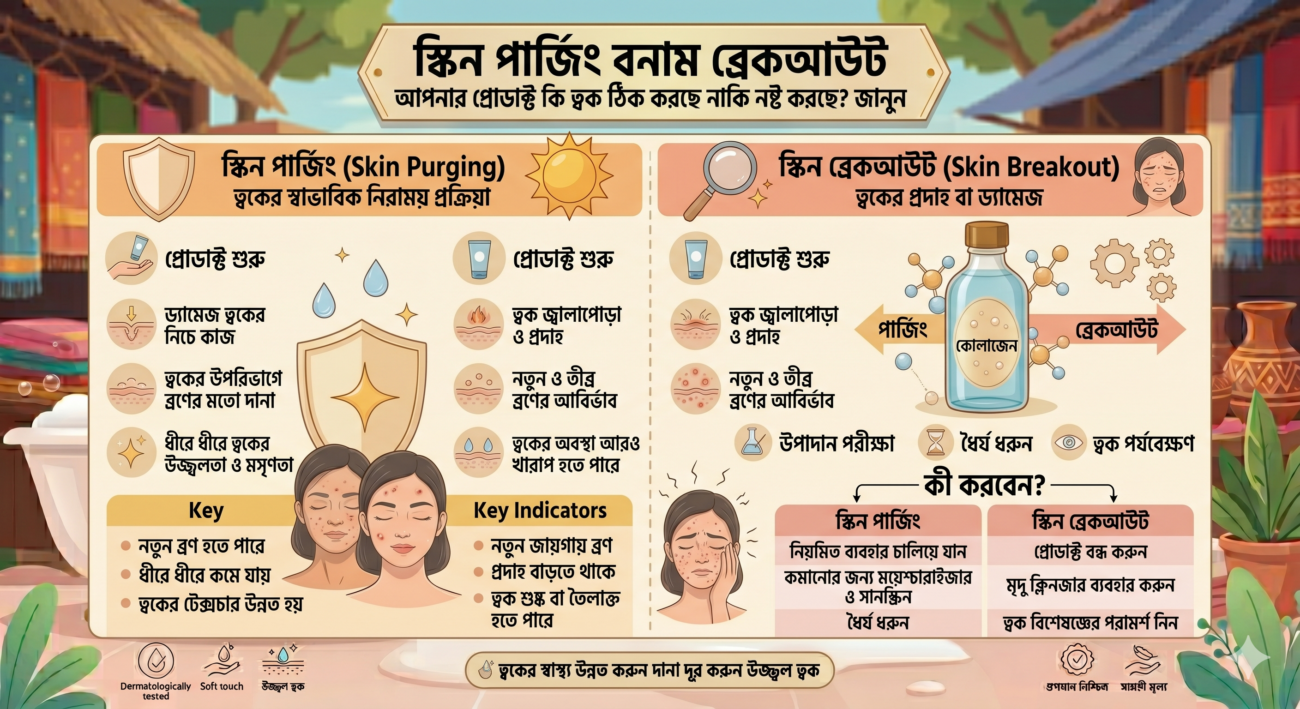
নতুন স্কিনকেয়ার প্রোডাক্ট শুরু করার পর ব্রণ বেড়ে গেছে? এখন ছেড়ে দেবেন নাকি চালিয়ে যাবেন?...
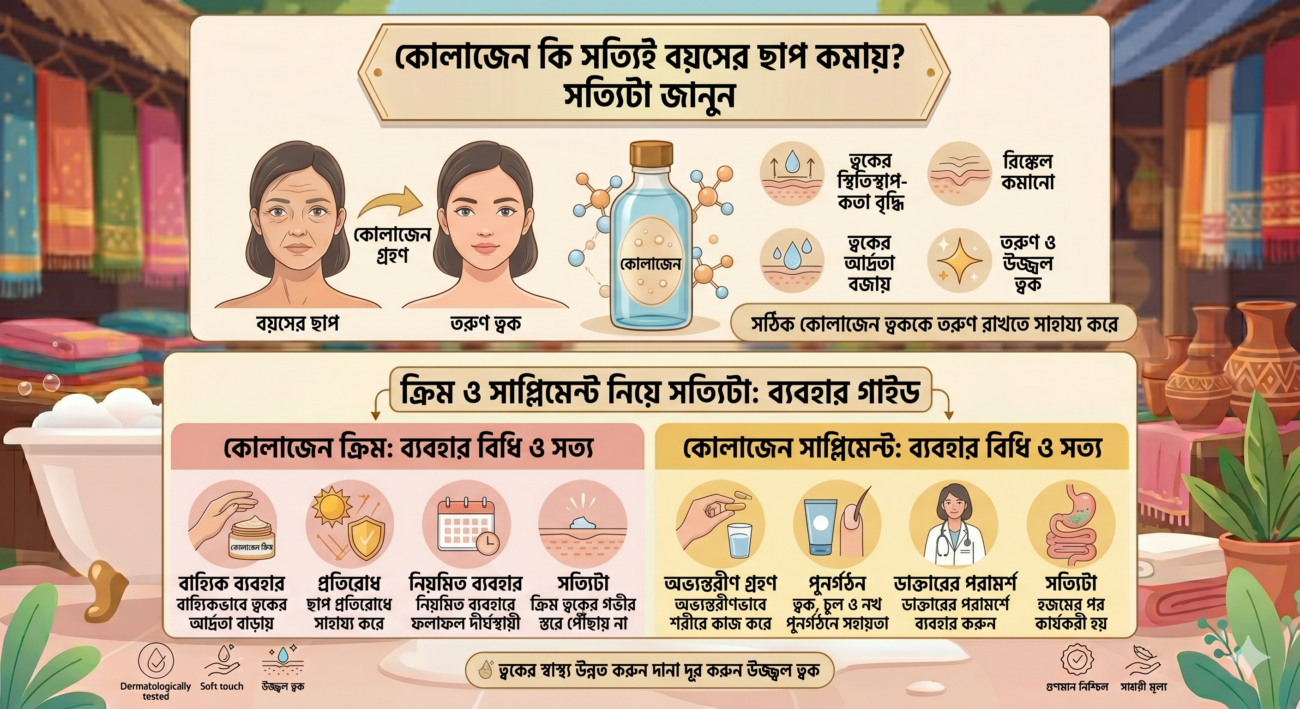
কোলাজেন — অ্যান্টি-এজিং মার্কেটে এই শব্দটা সবচেয়ে বেশি ব্যবহৃত হয়। কোলাজেন ক্রিম, কোলাজেন সাপ্লিমেন্ট, কোলাজেন...
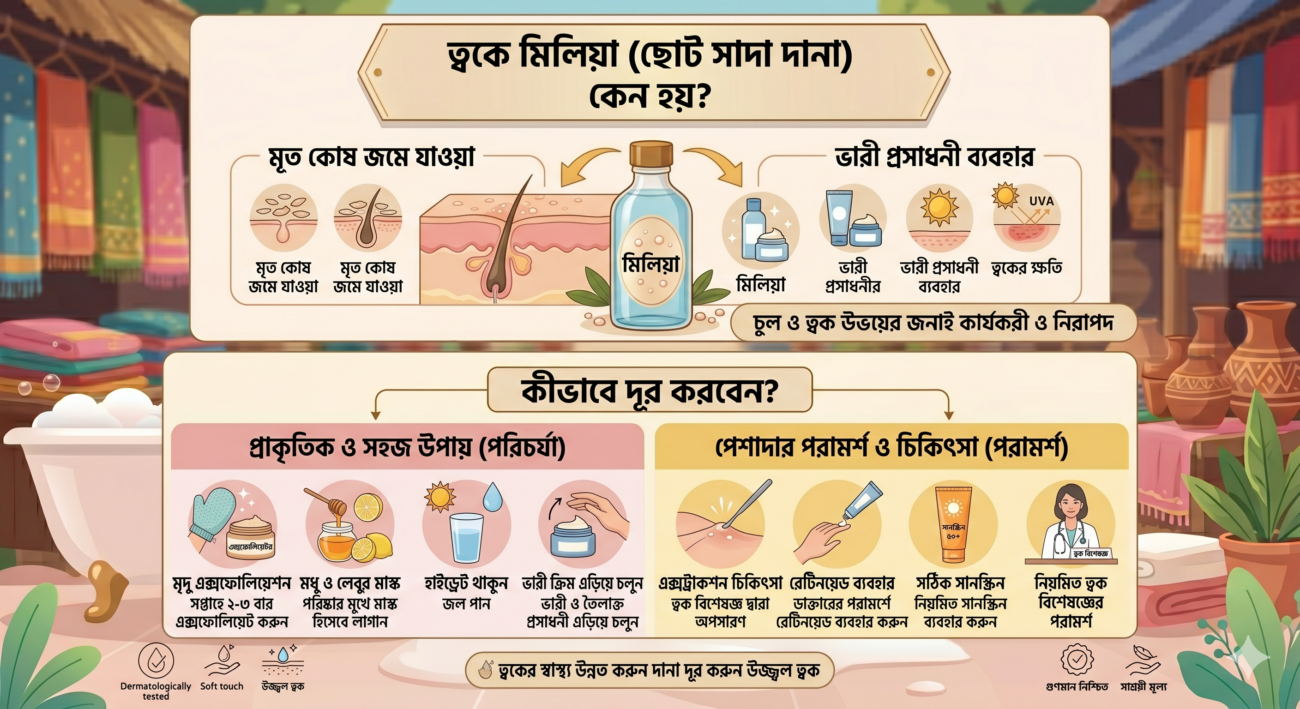
চোখের চারপাশে বা গালে ছোট ছোট শক্ত সাদা দানা দেখা দিচ্ছে? এগুলো হয়তো মিলিয়া। ব্রণের...



 Serums and Treatments
 Moisturizer
 Cleanser
 Face Mask
 Acne Treatment Products
 Sun Protection
 Skin Care Sets & Kits
 Eye Care Products
 Lip Care Products
 Toners & Exfoliators
 Active Ingredient Products
 Body Butter
 Men’s Face Wash
 Moisturizer for Men
 Men’s Hair Care Products
 Brightening Skincare Products
 Acne Skincare Products
 Pore Minimizing Products
 Anti-Aging Skincare Products
 Pigmentation Treatment Products
 Dehydration Skincare Products
 Blackheads & Whiteheads Treatment Products
 Bumpy Skin Treatment Products
 Blemish & Spot Treatment Products
 Dark Circles Treatment Products
 Sensitive Skin Care Products
